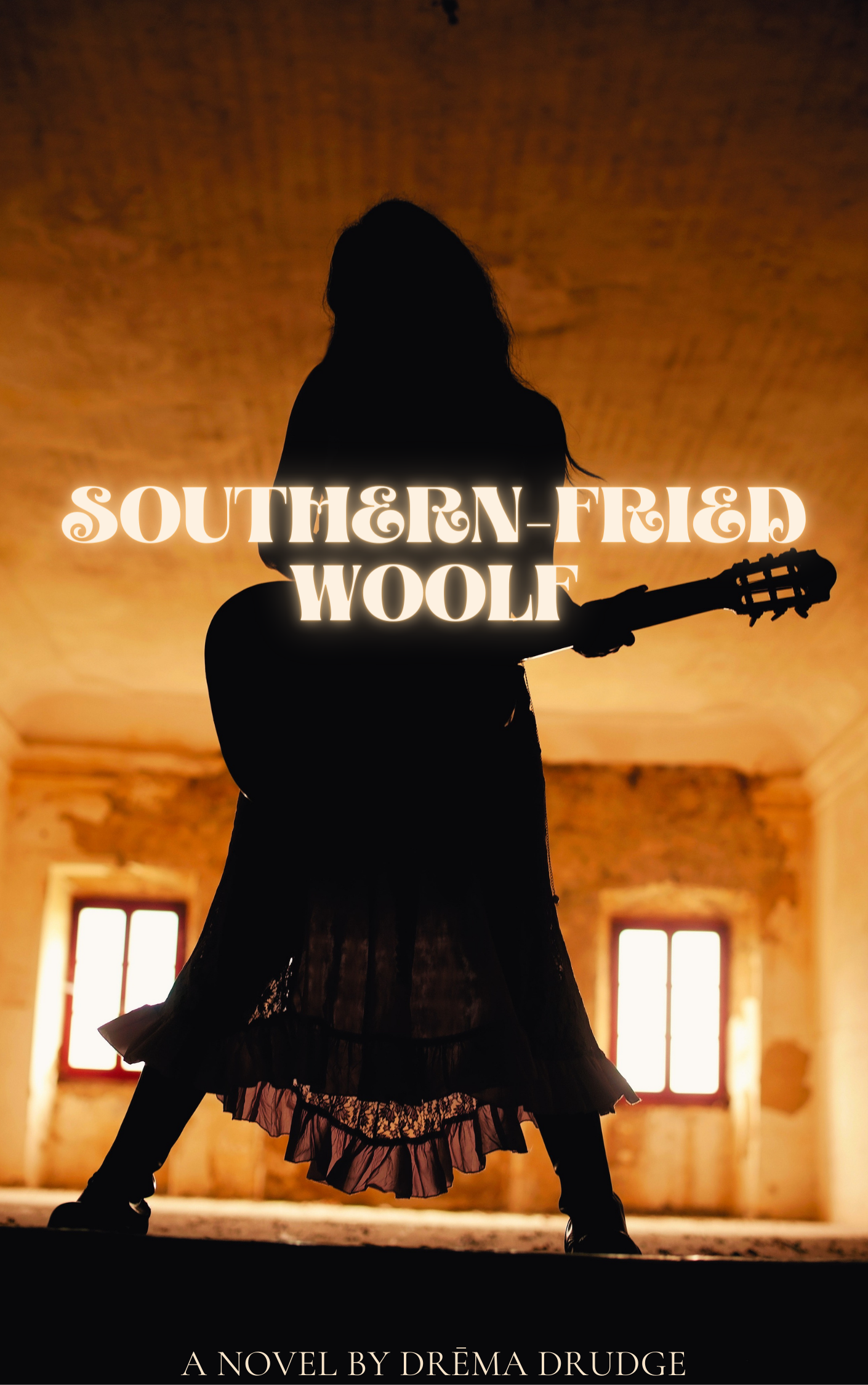
I have some news to share before I get into today’s post: my second novel, Southern-Fried Woolf (SFW), has been longlisted in the Page 100 competition! I’m thrilled.
SFW also received a great editorial review recently. Here’s a line from it: “A celebration of how books and music can help one transcend life’s daily trials, Southern-Fried Woolf is a quick-witted and erudite novel, drenched in a love of literature and music.” I’m dancing over here. Makes me want to say to the reviewer over at SPR “You get me, really get me.”
Now on with the post.
I read Amor Towles’ The Lincoln Highway recently, and I am obsessed! Read it!
In it, there’s a heartwarming scene in which a tough youth named Duchess lovingly makes Fettucine Mio Amore for his friends. It’s very much a last supper scene, and even in the midst of this feast, you can feel the despair, the rush towards ruination that this young man is making. This is a sacred moment of communion.
Before I even discovered that this is a real dish, I knew I’d attempt to recreate it, because it’s central to the novel. (I interact best with art by creating something based on it. In this case, it’s eating the same food that these characters did.)
The recipe isn’t complicated, though I will say that Towles might want to stick to writing novels, as he merely tells the reader to make fettucine for four with no further instructions on how to cook it. Obviously, it’s not difficult to boil pasta, but it seemed an afterthought almost in the recipe.
When my and Barry’s daughter, Mia, was growing up, I made her fettucine alfredo and homemade bread every birthday. It was the only time that I made bread from scratch most years. I told her about Fettucine Mio Amore, and she agrees that I should make it for her the next time we’re together on her birthday. I can’t wait!
The Lincoln Highway is evenly, compellingly written. The language Steinbeckian. Measured. Purposeful.
The plot, something you don’t always get in equal doses with a book this well-written, is sure-footed. Again, not something I expected in what I assumed was literary fiction. That’s not to say the characters aren’t original and memorable, because they decidedly are.
I have stayed with Towles’ book for more than one reason. My current WIP is a novel in third person. Having written my first two novels in first person, that’s what I’m accustomed to writing. I fear this has resulted in too close third in my latest book. So I’m scrutinizing TLH to see how Towles does it.
Spoiler alert: Lincoln Highway is not all in third. I may mimic that. But his novel is a masterclass in writing measured, unheated, unhurried language, and I want to learn how to imitate that.
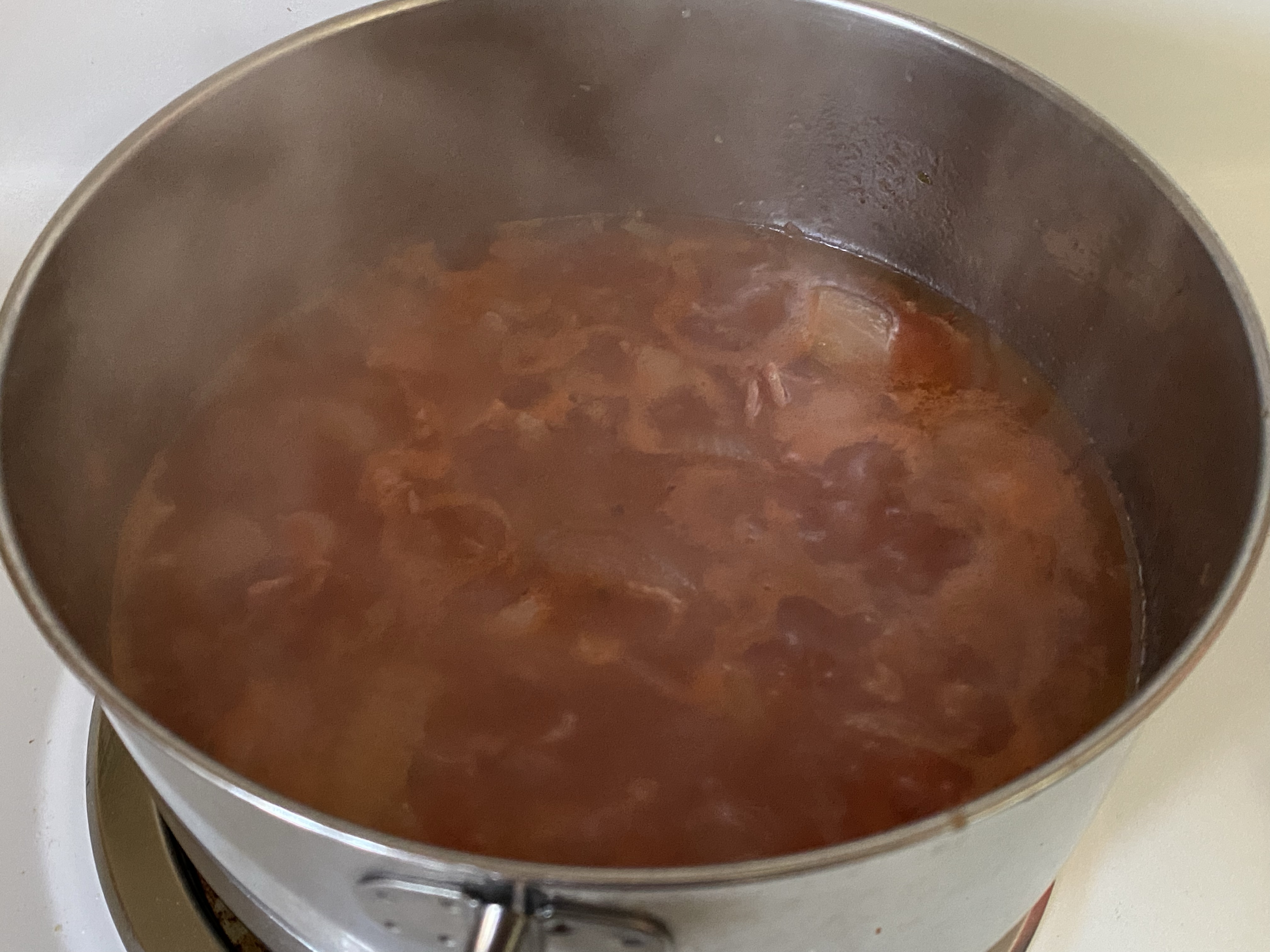
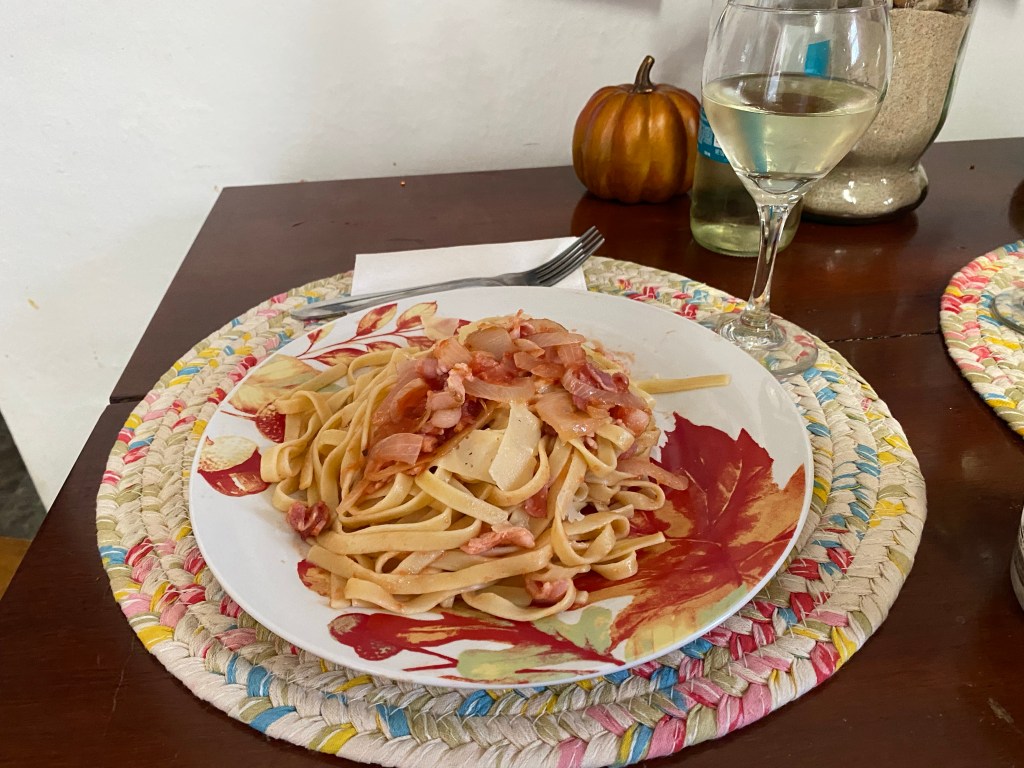
Towles’ pasta recipe resulted in a hearty, satisfying dish, much like Towles’ writing. Simply pairing bacon and bay leaves with fettucine, tomatoes, and wine shouldn’t have been so pleasurable, and yet it was. Makes me feel like heading to the grocery store to buy the ingredients to give this recipe another go.
Bon appetite! And if you do try it, send me a pic.
As for my experiment with my writing, well, that’s ongoing.
Barry and I recently spoke with the ebullient Melissa Hamilton on our podcast. She brought along her sidekick, Sunny, an adorable puppet. (I *may* have a literary greats finger puppet collection and a couple of dusty YouTube videos of me with Kwali the Koala bear, my humble hand puppet, somewhere.) It made me wish we were using the video portion of our call as well as the audio, so you could have seen Sunny, but alas, we are not.
“Think bigger” is Melissa’s motto, one her life exemplifies. She works in science, but she doesn’t see that as being disconnected from her creativity. Besides writing, she also plays piano and plans unicorn parties (among other duties) at the planetarium where she works. I only wish I had asked her to bring a selection to read to us on the podcast – she writes for children, and her voice is readymade for reading in children’s voices. She’s as much fun as she sounds.
ABOVE: Barry and Melissa after class in Kyoto.
We have been on several group trips with Melissa abroad, the last one to Japan where we had Italian food in Hiroshima on a day so hot we thought we’d all pass out. (Our friend Joe joined us for lunch. More on him another time; we saw him in Paris this past July and Barry and I acted in a skit he wrote.) It was so hot Barry went into a guitar shop during lunch and didn’t even ask to touch a guitar, if that tells you anything about just how hot it was.
ABOVE: Melissa and her awesome t-shirt at our farewell dinner in Kyoto.
P.S. We’re proud to announce that our son graduates from rehab today. Next up is a sober living house where he will remain for at least nine months. Today he said he’s really excited to go on this leg of his journey. It does a mother’s heart good. Please continue to think of him as he finds a job and tentatively reenters the world.
Copyright Drema Drudge, 2022, all rights reserved.
Barry and I have, besides working on our new podcast, created a writing pitch challenge.
There are so many moving pieces to a career in writing that it can be overwhelming. Which path to take? Where to start?
We asked ourselves just that as we put this challenge together.
And we decided that it starts with the publication of smaller pieces, for so many reasons.
To build confidence. To share your work in small doses. To establish your name. To get experience and credits. To let people see who you really are, no matter how scary that might be. To get paid. To get feedback.
On and on.
I had so much fun designing these pitching materials. I created the submission tracker that I wanted. I don’t know why they are always so ugly and rigid, LOL. I may be biased, but ours is not. I created a checklist of all of the things to keep in mind before, during, and after pitching. I think it’s pretty useful if I do say so myself. And lastly, I came up with a calendar of querying tips and quotes.
I can’t wait to see how many stories, poems, essays, and more get accepted for publication over the next six weeks.
Once my husband and I discovered a roll of film in a chest drawer in our house. When we had it developed, we were astonished to see photos of us in our first apartment twenty years before. It was unexpected; it was delightful. It was both old and new. I had that same experience reading Talland House.
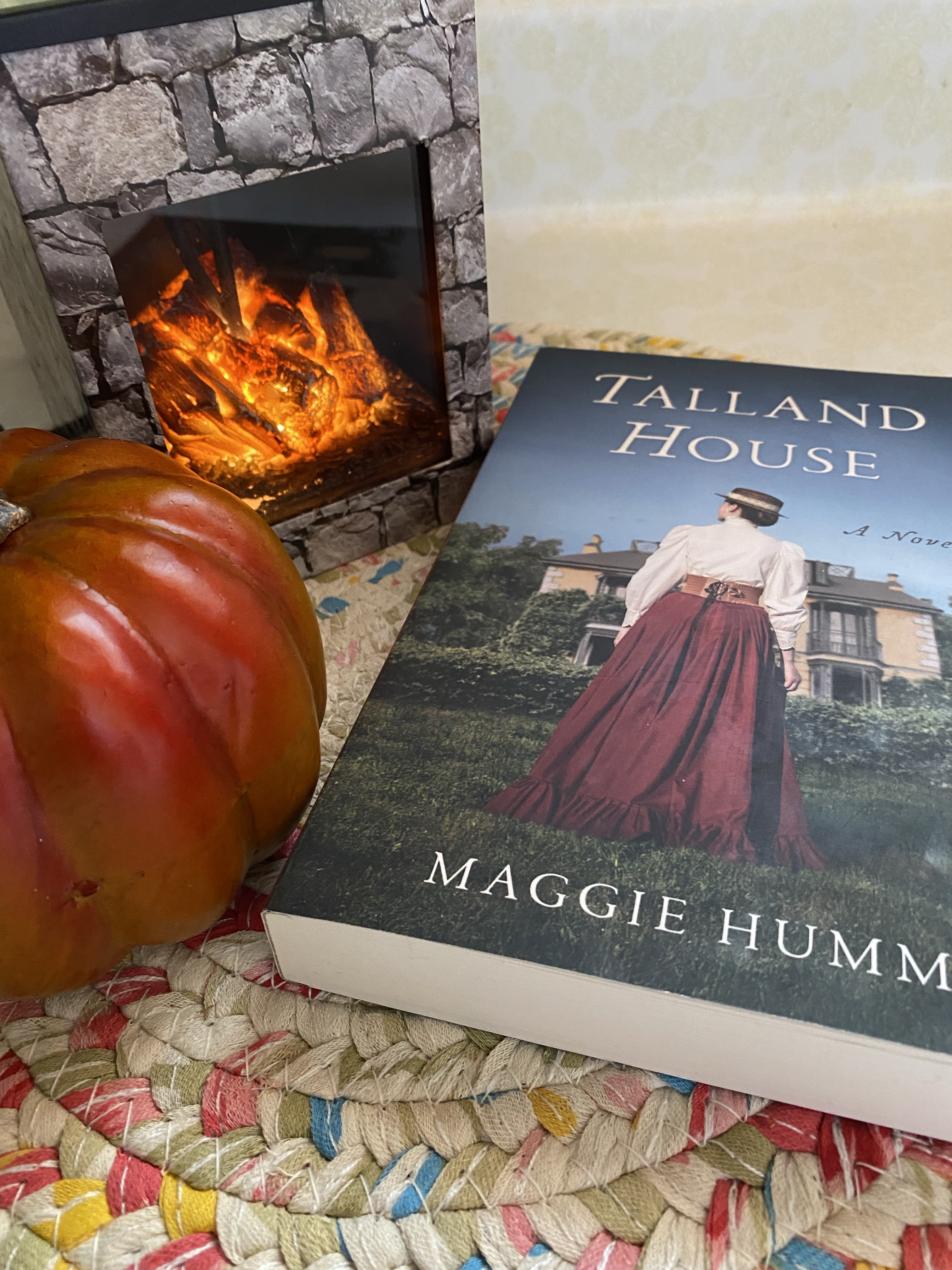
Written by Woolf scholar Maggie Humm, this, her first novel, is destined to please Woolf fans as well as entertain those who are unfamiliar with her work. Talland House does not take up where Lighthouse left off, but it does revisit not only some of the novel’s key scenes, but also updates us on Lily Briscoe’s full life regardless of her marital status. (Still single, and we’re happy about that, because of Mrs. Ramsay’s insistence that she marry in Lighthouse.)
A line by Humm, “In bed, Lily was tired by the weight of everything she didn’t understand…” could well have come from Lighthouse. While Humm does not use stream of consciousness, there is something Woolfian about her prose.
In Lighthouse, Lily closely observes her hosts, the Ramsay family and their summer visitors, but mostly she scrutinizes Mrs. Ramsay, the mother of eight and wife to one irascible academic.
Humm paints the essence of her Lily with the same close attention in which Lily attempted to paint Mrs. Ramsay in Woolf’s novel. What results is a harmonious portrait of the two “Lilys.”
No one who has read Lighthouse will be surprised to learn that Lily is, in Talland House, an accomplished painter whose work is displayed at the Royal Academy in London. What might surprise the reader but fits with the time period is the revelation that she nursed soldiers during the war as well as trained with a pharmacist, something that ties nicely with a plot point regarding Mrs. Ramsay’s mysterious death, a death that unsettled many an original reader of Lighthouse by its unexpected and nearly buried notice, occurring in parentheses as it did. (This could well be the most striking instance of understatement in literature, something to be discussed in depth elsewhere.)
A tender connection mentioned in the author’s note is the author’s loss of her mother at the same age that Woolf lost hers. The reader can’t help but think of that along the journey, and it deepens the feeling in the story.
A novel that fills a gap in literature, a lingering question about a character, is a genre I find particularly satisfying, and this example does not disappoint. (If there is a name for this genre, I do not know it. If there is not, I suggest we choose one.)
Many thanks to Maggie Humm for this bonus peek into Lily Briscoe’s life. Talland House is a treat for Woolf fans as well as those who have never read her work. Although I recommend you get on that, if you haven’t. Start with Orlando.
You may remember that the main character in my next novel’s name is Briscoe. Her mother, a Woolf scholar, named her after Lily. So naturally I was excited to read more about Lily Briscoe. And while Lily is a lovely name, I don’t think my hard-edged character could wear it, so I’m pleased with my choice.
P.S. I am making Amor Towles’ Fettucine Mio Amore from his novel, The Lincoln Highway today. I’m not sure if I’m more obsessed with his book or this recipe. If I remember, I’ll take photos and share. The photos, not the pasta. 😉
Barry and I recently had the honor of interviewing our friend, poet and fiction writer Andrew Najberg. Andrew is one prolific writer and has been published frequently. (Rumor has it that he has more publishing news to share since speaking with us. I can’t wait to hear more about that!) Take a listen if you’d like to know his process.
I’m so glad I’ve been the one editing the episodes. While I’m far from a perfect editor, it gives me the opportunity to revisit what our guest said and reflect upon it in a way I, in my too-often anxious state, cannot in real time. This is one venture I’m so happy we have embarked upon. We’re meeting new writers and catching up with some of our writing friends. Win/win.
Next up will be YA novelist and science teacher, Melissa Hamilton. She brought along a special guest that had me wishing we were using the video portion of the call, too. But I don’t want to spoil it. Look for her episode in two weeks.
Forgive me for this shift here, but this weekend has been…challenging, and I’d like to ask for good vibes and such if you would send them up.
Since I’ve mentioned our son’s struggle with addiction here before, I’d like to share that he is on another leg of his journey. He’s back in rehab, after an impromptu intervention last night.
He showed up on our doorstep yesterday bloody and barefoot, in need of treatment, medical and otherwise, though it’s still somewhat unclear exactly what happened to him.
He will be in the treatment facility for 28 days, following by six months in a sober living house. We live in hope that this time it will “take.”
When we adopted Zack from specialized foster care at the age of 9, we knew the journey would be tough. (He does not mind us sharing his story. He actually joined our family when he was 8, but the adoption process takes time.) He had already been through so much, and that stays with a person. But we also believe he can overcome his past, and that he can overcome this addiction.
Our family tradition, when adopting, is to take the child of the day out for all the ice cream they can eat. I don’t recall just how much ice cream he had on his special day, but he had lots! I’m thinking we should repeat that when he gets released to indicate a new start. (If I had more energy, I’d go dig out adoption day photos.)
I’m trying to keep the tone lightish here, but my heart aches. As my niece’s van began pulling away last night to take him to the treatment center (and bless my niece for all of her help; she has contacts in that field that set everything up), Zack jumped out for one last hug. “You’ve got this,” I said. I believe that.
I always have.
I always will.
Copyright Drema Drudge, 2022. All rights reserved.
I’ve just crossed the 30K wordcount line in my third novel, though a good part of that has involved revisions. I wanted to take the time to say hello.
First, I have had two Virginia Woolf sightings this week. One was in the admittedly juvenile movie, Senior Year, on Netflix. I always say that I’m serious about literature and art, so I can watch whatever silliness I want! I’ve gotta say, I wasn’t crazy about the Woolf reference in the movie, but I hope it will lead some curious watchers to give the book a try. In the movie, a librarian is logging in new books and Woolf’s The Waves passes by and he says something like, “I know nobody’s going to read you.” Challenge accepted, I hope adventurous viewer/readers will say. P.S. We didn’t enjoy the movie after all.
The other Woolf sighting was in Less is Lost, a novel by Andrew Sean Greer. Woolf’s To the Lighthouse is mentioned! In a letter to Less, who is an author, a member of a theater troupe says the troupe puts on literary works as plays and mention a six-hour performance of To the Lighthouse! (I’m assuming this is meant to be humorous, and it is.)
Moving right along…I’ve been looking for our spare sheet(s) this morning with no luck. I told Hubby that I am tired of washing our bedsheet sheet and putting it right back on, mainly because I read an Anne Tyler novel once where a character was scandalized that a relative did that because you’re “supposed” to let your linens air before you put it back on. While I’m not one to do what I’m “supposed” to do, not on that front, anyway, it’s hard to forget that bit of manners. Or is it manner? It’s certainly mannered.
After having searched the linen closet, the towel cabinet, under the bed, in all of our drawers and closets…on and on, I decided to give up and order a new set. It’s not like we will have lost anything if the sheet(s) turn up. That’s right, I’m not even sure whether we’re missing one or two sheets.
You see, we bought a wonderful, marvelous, literally life-changing bed during the pandemic. A Purple mattress and platform. King-sized. (Not a sponsored post.) While the part of me that once upon a time said she NEVER wanted anything larger than a full (because snuggles) was sad to see our old bed go, this bed…ah! I don’t wake up aching every day now. And I don’t hit my husband in the face by accident in my sleep.
And wonder of wonders, there’s room in the bed for my phone, my earbuds, AND my books! (I try to remember to remove them when I fall asleep, but that doesn’t always happen, I must admit.)
Needless to say, I’ve been more focused on the bed than the sheets. But now our poor, well-used sheet will get a rest. Full disclosure: we do have plenty of unfitted sheets, and I know opinions vary on the gaucheness of fitted ones, but there are things in life that I refuse to do, and one of them is spend time wrestling an unfitted sheet onto the bed, knowing I will also have to also wrestle to keep it on once in bed. No thanks. Hospital corners, no matter how crisp, are not for me. (Likewise, please do not bother tucking in the covers. I will only be irritated and will kick them loose.)
What about you, do you do hospital corners? Do you let your linen “rest”?
Recently I submitted the first page of Southern-Fried Woolf to a contest, and I thought if I could do that, maybe I should be brave and share it over here, too. Heads up: this sample contains strong profanity.
I should tell you, I am not trying to be clever with my book. I am unabashedly trying to interest a new generation in Woolf’s writing, and I have surrounded the main character’s “thesis” with what I hope is a compelling, fast-paced story as bait. Obviously, I would be happy if everyone loved it, but time will tell…
One or two words about the main character in my book. She is Briscoe Chambers, 28 years old, her country musician husband’s manager, and she’s also a grad school student, trying to write her thesis to get her degree. At least until she gets this phone call. Now all bets are off.
If it seems as if she questions everything, that’s because she does.
Here goes…
Southern-Fried Woolf, Page One
“…this is what leads naturally on to the next stage—the essay-novel.” The Diary of Virginia Woolf, Wednesday, November 2, 1932
2018 I push my whining phone across the bed with my toes until it dangles over the edge like an imperiled onscreen Marvel superhero. Not that it stops ringing. I admire my freshly polished toenails, (sunset chrome, very cool), but force my fingers to return to the home keys while my thoughts hunt for a similar perch. I sweep my hair off my shoulder with determination; my graduate thesis I have nicknamed Beastis is due too soon to allow interruptions of any kind, I sternly, silently, warn myself. I thwart the creeping dusk with the twist of a lamp switch to extend the day, as if doing so can give me more time as well, and I once again position my fingers. This time, I actually move them:
In what has been seen by some as her most autobiographical work, Virginia Woolf weaves into her novel To the Lighthouse a “femininely” knitted and “masculinely” knotted marriage of covert and subtle madness, though not one without warmth and love. She challenges the reader with a paradox: She makes sacred the domestic arena while revealing madness by the domestic activities themselves, thus showing us the “twisted (and twisting) finger” of the main character, Mrs. Ramsay….
…and of herself,” I type while frowning at my insistent phone, while wondering how much sh*t I’ll get for using the word madness, and especially in relation to Woolf. I highlight it to consider it carefully in light of previous and present scholarship, to decide if it even makes sense to use it.
Hell, madness is a word literature has pretty much co-opted for centuries. Then again, it’s also one that can be seen as making light of mental illness. That’s a topic for my feminist mother, “madness” in women in literature. (Funny the speed of a thought, how a phone can still f*cking ring in the time you’ve had the equivalent of a mini essay go through your head.)
The marimba stops, then almost immediately resumes, bones on metal, until it registers that the noise is my husband’s ringtone. Sh*t.
I groan and lean across the time-softened quilt. My shifting sends a cascade of mini-chocolate bar wrappers onto the floor as I leap and rescue the phone just as it vibrates over the edge.
Wait, could this call mean Michael actually wants to speak to me, even though he has Queen Velvet around? Hope grows the flimsiest bones and then sags back to the ground, the garbage cartilage it was to begin with. Hope, the enemy of peace. Sponsored by Tanqueray and tonic, my thesis writing beverage of choice.
END OF PAGE ONE!
Look for the whole book to come in January 2023. I can’t wait to share it with you!
P.S. Interested in what else has been keeping me busy? Barry and I have started a podcast, MFA Payday for MFA graduates. Episode One is live! To go along with it, I created a free pretty submission tracker. Because even tools should be pretty!
Okay, I can finally spill the beans about what exactly I’ve been working with that mindset coach on: Barry and I have just uploaded our FIRST episode of our podcast, MFA Payday! You can listen now. We interviewed MFA grad, writer and photographer Matt Berman.
Also visit our website where you can sign up for our FREE “Pitch Your Pants Off” submission tracker, if you’re a writer. It’s customizable, an important feature.
I designed it myself, because most trackers are ugly and uninspiring. But it can’t magically submit stories for you, so…(You can do it! You can! And an attractive tracker makes everything easier, don’t you think?)
Barry created the intro and outro music for our show, yay! He’s so creative!
It’s just as well that my car has been in the shop for almost a month. It’s kept me home and focused, so I’m not complaining about that. But I’m ready to get my wheels back! Although I’m feeling a little claustrophobic, so I’m thinking I’ll just walk to my favorite coffeehouse this week to hang out.
My mindset coach has helped push me out of the mud week after week as I’ve attempted to meet my milestones to get this going, so a big shoutout to her for her patience and amazing ability to ask me just the right questions for me to see this realized.
Last Monday she had to hear me say “I don’t want to” like a whiny child when she asked what was blocking me from finishing editing episode one. (It was overwhelming, but I did it! Not perfectly, but I did it! And there are many, many steps to the process.)
I’ve had to learn so many darn things in the past few months. They weren’t difficult singly, but put together, they required lots of time and they all seemed to have a learning curve. (Still working on some things. Somehow an entire INTERVIEW disappeared from our Zoom account. Yikes. I really think that was a malfunction that had nothing to do with me, but who knows?)
Because of Barry’s busy schedule, I’ve taken on the editing, which meant learning how to “punch in” to overdub in spots, cutting bits of audio and splicing them, adding his music to the episodes, and removing filler words…you get the picture. It’s a labor of love, sure, but it’s also been a challenge. Whenever I feel overwhelmed or like I just can’t do it, I breathe, regroup, and remind myself that I can do hard things. It sounds simplistic, but that can be a real anxiety buster. That and a gin and tonic. 😉
It also helps to remember our why: we’re doing this to help MFA in Creative Writing grads learn what to do with their MFA’s. This means so much to us, helping both our friends and others. And ourselves. We truly enjoy speaking with writing “family” we never knew before. So now you know. LOL.
In other news…I’m gearing up for the release of my second novel in early January. I’m getting so excited to share my newest story with the world…lining up publicity for it, reviews, etc. And artwork, cool artwork…I can’t WAIT to share that with you soon.
Don’t tell anyone, but I’m thinking about creating a graphic novel of it as a fun freebie for my readers. Because apparently I don’t have enough going on…
Our daughter and her sweet new puppy, Oskar, visited us a few weeks ago. She’s a digital nomad and has the coolest Caravel Airstream. We loved visiting her at the campground where she set up, (yes, of course we made s’mores), as well as introducing her puppy to Desi and Lucy’s “The Long, Long Trailer” the next day at our house. (It’s one of our family’s favorite films. No wonder Mia bought a trailer!) It was a great week, but as always, it was hard to say goodbye.
Novel number three is progressing nicely. Another deadline looms mid-October. My reader has invited me to linger over scenes and take my time allowing the reader to get to know my characters. I’m taking her up on it! I’m kinda falling for these characters. Yesterday morning found me reading and re-reading a poem by a classic poet, analyzing it, wishing I had a poet friend nearby to ask questions about it. I need to be sure I understand the intent behind a poem because I want to use that intent as a driving force for a section of my novel. I think I need a “phone a poet” feature on my phone.
Oh, what I didn’t say: I am also writing another poem for my book. I feel grossly underqualified to do this, but who else is supposed to write poetry for my book? (Not me, please, not me.)
Thanks for stopping by, my friend. Here’s hoping you are well.
Copyright Drēma Drudge, 2022. All rights reserved.
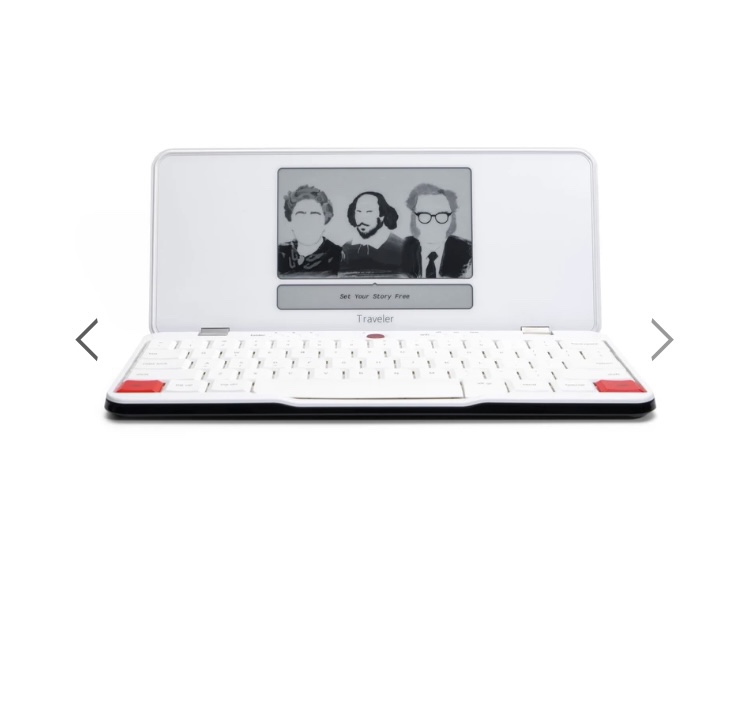
My dream of taking my Freewrite to the beach came true over Labor Day weekend! And let me say, I’m here for it!
It was as wonderful as I thought it would be. I needed to write a seaside scene, so obviously this was the perfect time and place to write one. The weather was just right: sunny, high 70’s. The waves played melodiously in the background. I wrote probably two pages in a daze, smiling, perfectly happy. Then I remembered to turn off the WIFI, because…beach. Except being still somewhat unfamiliar with my gadget, I actually turned the whole Freewrite off. And when I turned it back on, nothing was showing up. NOTHING!
Thankfully I had already backed up everything except the day’s work, but my understanding was that whatever I wrote would be stored locally on the beast and would be uploaded when I got back into WIFI land, even if I did turn it off.
I had “lost” only maybe two pages, but still. I had hopes for it being accessible in the future but just in case there on the beach I opened a new file and wrote a couple of lines reminding myself what the scene had been about. Of course, I wasn’t going to get that particular slant of sun again. I wasn’t going to imagine our lady sighing by the sea in quite the same way. I wouldn’t see the light dancing over the waves just so. But I could recapture something of it. (I try not to be precious about my writing.)
A fun little beachscape I created to keep the beach with me just a little longer.
Instead of rewriting the scene, I continued down a couple of other paths. That was easy enough to do since my book encompasses three distinct time periods. (I’m liking the variety.)
When we had been in the sun long enough (is that possible?) and had returned to where we were staying, I tried to hook my Freewrite up to WIFI. Nope. I checked Google drive. My day’s work wasn’t there either.
I asked the internet what to do. Someone had a LOOONNNGG convoluted idea of what might help. I figured I was only going to do that if I absolutely had to. Someone else said do this and then do that. So, I did, and voila! Not only did I save what I had written later at the beach, but…the scene I thought was totally lost was back! Yay!
I still highly recommend the device if you like to write and want to get free from the internet. It’s nearly perfect for that. I think my “problem” with it wasn’t a real problem at all, just my understanding of how it works. And I’m now at page 102 of my newest novel, something I attribute to that.
In other beachy news, I managed to read not one but TWO books over the holiday weekend. Taylor Jenkins Reid blessed us with another novel, Carrie Soto is Back, that downloaded to my Kindle just before we left for the beach. It is every bit as good as her other books. (Maybe not quite as good as Daisy, but what could be?) By the book’s end, I found myself wishing I play tennis. I don’t.
My biggest “tennis” moment (it was actually badminton, but close enough) was in college when my instructor said I would be a fantastic doubles partner. Translation: I suck at serving. But I do return volleys like no one’s business. That wasn’t enough to make me want to pursue it; I dropped the course out of embarrassment.
Anyway, whatever fairy dust Taylor Jenkins Reid has had sprinkled on her, I want me some! I’m not telling you what her latest book is about just because if you’re a fan, you’re going to read it. If you’re not, I’m not in the business of making book converts today. I’m too tired. It involves tennis, and Carrie Soto is back. See if you can crack that code. LOL.
The second book I read is Crime Junkie podcast co-host Ashley Flowers’s debut novel, All Good People Here. She’s from Indiana (where I live), and when I heard she had a book coming out, I had to buy it. It was a fast read featuring a fictional crime reminiscent of the JonBenét Ramsey case. If you like true crime, you’ll find this book engrossing.
A character in my newest novel is writing poetry. Didn’t ask him to, didn’t expect it. But there it is. I sent Hubby an email the other day telling him that my MC just found a poem that Eric wrote with the line “Mourn no more for the dinosaurs.” (Yup, I think it’s cheesy on its own, too. He’d better explain.)
“Who’s Eric?” Barry asked. LOL. Just a friendly reminder, folks, that our characters aren’t as real to others. At least not initially.
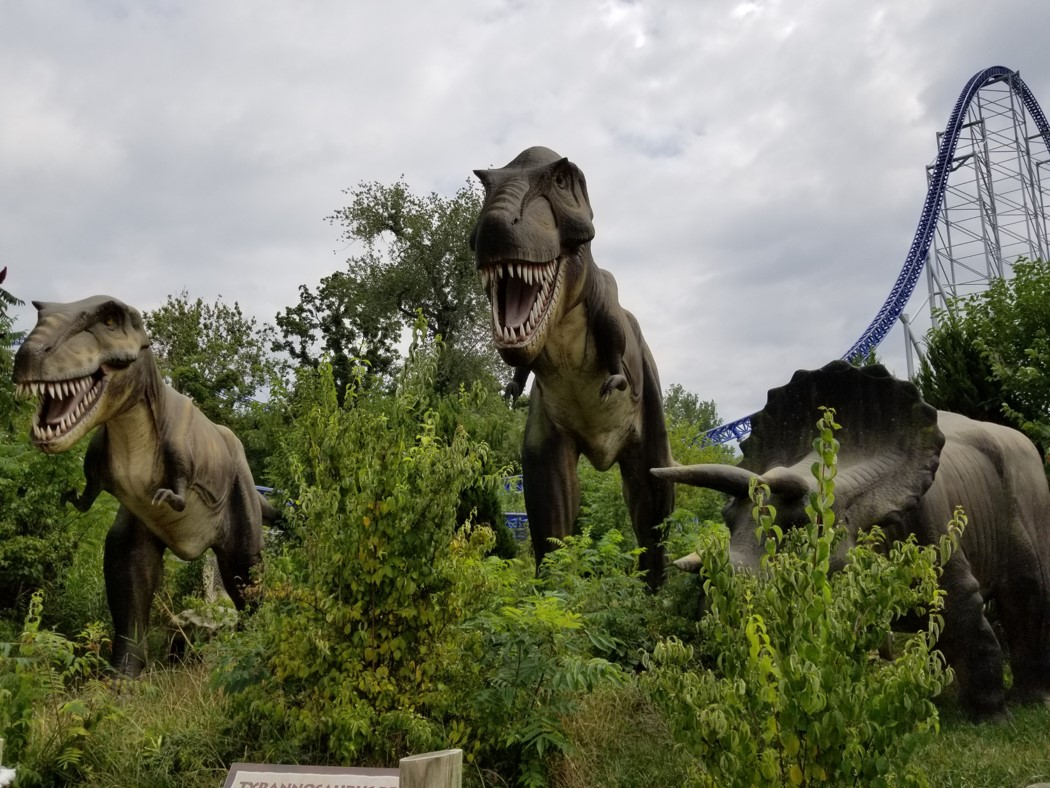
As to what that line of poetry means, I haven’t asked Eric yet, but I suspect I know. Just between us, I have an inexplicable grudge against dinosaurs. A few years ago, Barry and I were traveling to Michigan for a week of classes he was taking. For at least an hour of our travel time, I ranted about dinosaurs. I can’t go into it without sounding completely irrational, but I think it came from a mandatory trip to Kings Island just before then.
I’ll say more. Barry had to either go to Kings Island for a work perk or work the whole weekend. Because rules. Didn’t make any sense to me, either. And while I hadn’t been to Kings Island since sixth grade and we are not in general theme park goers, I didn’t hate going. Just don’t ask me about the Backlot Stunt Coaster we got on. Barry said he wasn’t worried about me while I was screaming, but once I went quiet, he was scared.
You know what, I checked that ride out on YouTube later, and it’s only just over a minute long. Had I known that I wouldn’t have been so scared. Didn’t help that as we were getting into our car, they were hosing one down where someone had…well, you know. After that he took me on some fun cartoon ride and then we did the Dinosaurs Alive! walk. Hence the grudge.
Nope, still can’t explain it, though I think it has something to do with how really alive they looked, and how sad I was for them and how I wonder if we are speeding towards our own extinction. The fragility of life, that kind of thing.
I am engrossed in this novel I am writing. Because I have a deadline for the first fifty pages in the next few days, I am focusing on polishing those at the moment. Naturally I shifted the plot yesterday a teensy bit which requires some transitions and the addition of a scene. Dang it. But I think I can do it in time.
I’m writing a literary mystery, my first attempt at one, and I am jazzed! My “research” for it has included re-reading A.S. Byatt’s Possession and re-watching The Chair on Netflix. I’ll take any excuse to do either of those!
While I know there is only one A.S. Byatt, I’m going to write what I call a light literary mystery based on what I believe to be real missing literary items. Not ready to say more yet, but I’m enjoying the journey!
Speaking of journeys, my mindset coach and I have been working on scheduling my calendar for three weeks now as Barry and I finish up a pet project. Phase one is pretty much done. I’ll share some about that in the coming weeks.
I know the coach will be pleased when I tell her that I feel as if I FINALLY have the scheduling thing down. (Shorthand – if you haven’t used Monday Hour One for scheduling your life, give it a try. Just google it. But also, don’t be me: be sure to add in the things you WANT to do first. Don’t resist that. Just do it. You were not born to be a workhorse. Got it? )
P.S. My second novel, Southern-Fried Woolf, is coming January 2023. Expect more about it, including an excerpt, in early October if not sooner. Salute!
Copyright Drēma Drudge, 2022. All rights reserved.
Update on my Freewrite experience thus far: Oh my gosh! Where has this been all my life? First of all, the keys sound great when I’m typing! It’s like I’m dancing with them. And not being able to go back and edit (unless I want to backspace whole sections; spoiler alert – I don’t!) frees me to keep going. Typos? No biggie. False starts? Make a quick note to yourself.
Here’s the scoop: I am saving my drafts to Google drive.. Dropbox is the other choice, I think, but that’s not an option for me because my Dropbox is stuffed, and I don’t want to upgrade or go through and get rid of multiple drafts of stuff from way back in 2013.
Then I just cut and paste to a Word document.
In a week…are you ready for this…I have written 53 pages!! No lie. Bananas! I have a deadline of 50 REVISED pages coming in hot and fast, so I’m happy to be so far ahead because now comes the finessing. (I love revision; I hate it. You know.)
Since it’s a novel, and these are the opening pages (yes, I really AM writing this novel, no false starts this time), it’s been awesome firing the editor and just writing, writing, writing with my Freewrite!
Some further thoughts on my Freewrite.
A small complaint: the shiny black cover gets smudgy, very much so. A few quick buffs with a microfiber cloth gets rid of the marks, but now I feel self-conscious knowing I’m mucking the poor thing up when I use it. (I guess it only happens when I open and/or close it, so maybe I just need to be more careful about that.)
Also, keep in mind I type way too fast when I’m not pausing to revise, so it might be from that, but I was writing yesterday, and I got this fun little buzz and I thought it was endorphins from being so happy writing (yes, I’m in that phase and not the “Can I do this?” revision stage) until I realized my hands were actually numb and my sight was a little blurry. I decided it might be time to take a break. In a few minutes, I felt fine, but I think it had something to do with blood flow due to my typing speed. So, not entirely unpleasant, but it merits paying attention to in the future, I suppose. (I did voice text Barry yesterday and tell him I would be incommunicado because I couldn’t see my phone or the computer very well. Not surprisingly, I got a phone call shortly thereafter asking me to explain myself.)
This draft of my novel, while still very loose at this point, has been so fun. It’s like a new romance, right? You’re getting to know one another. You’re on your best behavior. Your patience is at a ten. You have that mandatory “let’s talk for hours and tell me everything about yourself” night.
A character walks into a novel, says his name is James. You say, “Nice to meet you; stand over there.” You decide if his name really is James while he looks indignant. Because of course he is James. Did he not tell you so?
You hear him out. You listen to his backstory.
“Really? Then what?” you ask. Because you’re already hooked.
This novel is different for me in that it’s in third person, past. And I am alternating POV’s. And…are you ready? Some of the POV’s are from a male’s perspective. It’s fun, this head hopping.
Dirty Dancing turns 35 this year! I mean…how?! My dear, sweet, thoughtful husband accompanied me to a big screen showing last weekend. It was fun, though he swore he was drowning in the estrogen in the room. “Get a paddle, mister,” I quipped as I sucked on my Crown Royal apple slushy at the theater.
I first saw this about a year after it came out, I believe. Our high school played it during my Senior Week! I hadn’t seen it yet, because being “devout,” it wasn’t something I was supposed to see, though I was pissed not to see it. (Not that I would have said pissed; that was strong language for me, a prissy missy. Sigh.)
There’s a huge difference seeing Dirty Dancing when you’re 18, versus seeing it when you’re…not.
For one thing, this time around I really pitied Patrick Swayze’s character, Johnny. The poor guy seemed like he had the weight of the dance staff on his shoulders. He was more than a little parental, and so serious. Baby gave him the chance to lighten up, to be playful. She challenged him to stand up for himself, to go for what he wanted. They challenged one another: when she tried to keep their relationship from her father, Johnny caused her to question not only her own beliefs about people, but her father’s as well, leading to a sweet breakthrough in her relationship with her father.
While surely we all know that Baby and Johnny do not end up together, we know they are changed for the better for having met.
And then there’s the music and the dancing, which are major reasons I like the movie, too. I knew the music very well before I saw the movie, and if you know me, you know how much I love dancing! (I was so happy when at our town’s holiday gala this year someone donated money on the condition that X amount of people hit the dance floor. I looked at my “date,” a young barista friend, and said, “Shall we?” I had wanted to dance so much, but there was only one guy dancing at the time, and my hubby was playing keyboards so I couldn’t dance with my own husband. Band widowed again!
But my friend and I danced and danced, which made my night, especially when my hubby said something over the mic and I retorted “I know that’s right,” which got me high fives from all the guys on the floor. Someone put a feathered boa around my neck, and I wore it all evening.
Okay, I’m back to finish this post after a few hours spent successfully revising. I’m in the zone, and kind of want to stay in this new novel I’m writing, and yet, alas, other preoccupations call.
I did take time out to make us a late lunch, Creamy Aglio E Olio Chicken Pasta, courtesy of HelloFresh. The meal delivery service is my secret weapon for when I have a deadline. (Not a sponsored post!) Because the meals are preselected, premeasured, and come with colorful meal cards, they’re so handy. We don’t order every week, but when we have, we’ve been pretty happy.
Although for today’s meal, I doubled their laughable six ounces of pasta provided with pasta from the pantry, which meant having to doctor the cream sauce, easily enough done with butter, cheese, and extra pasta water. Hubby said it’s a winner, so I’ve made notes to myself for next time.
Oh, and I refuse to chop garlic when I’m busy, so I cheated and used jarred garlic.
The dish turned out tasty, if I do say so myself.
So yeah, after what started out as an iffy Saturday (we had a way early morning “mission of mercy” call that we heeded), it’s been a good day. Even if that mindset coach of mine has me tracking my time this week, a pesky task. Think I can get by with putting this post under the generic category “Writing? (She’s trying to help me fit in everything I want to do, and I’m struggling to find room. Hence the time tracking. I’m confident that together we’ll figure it out.)
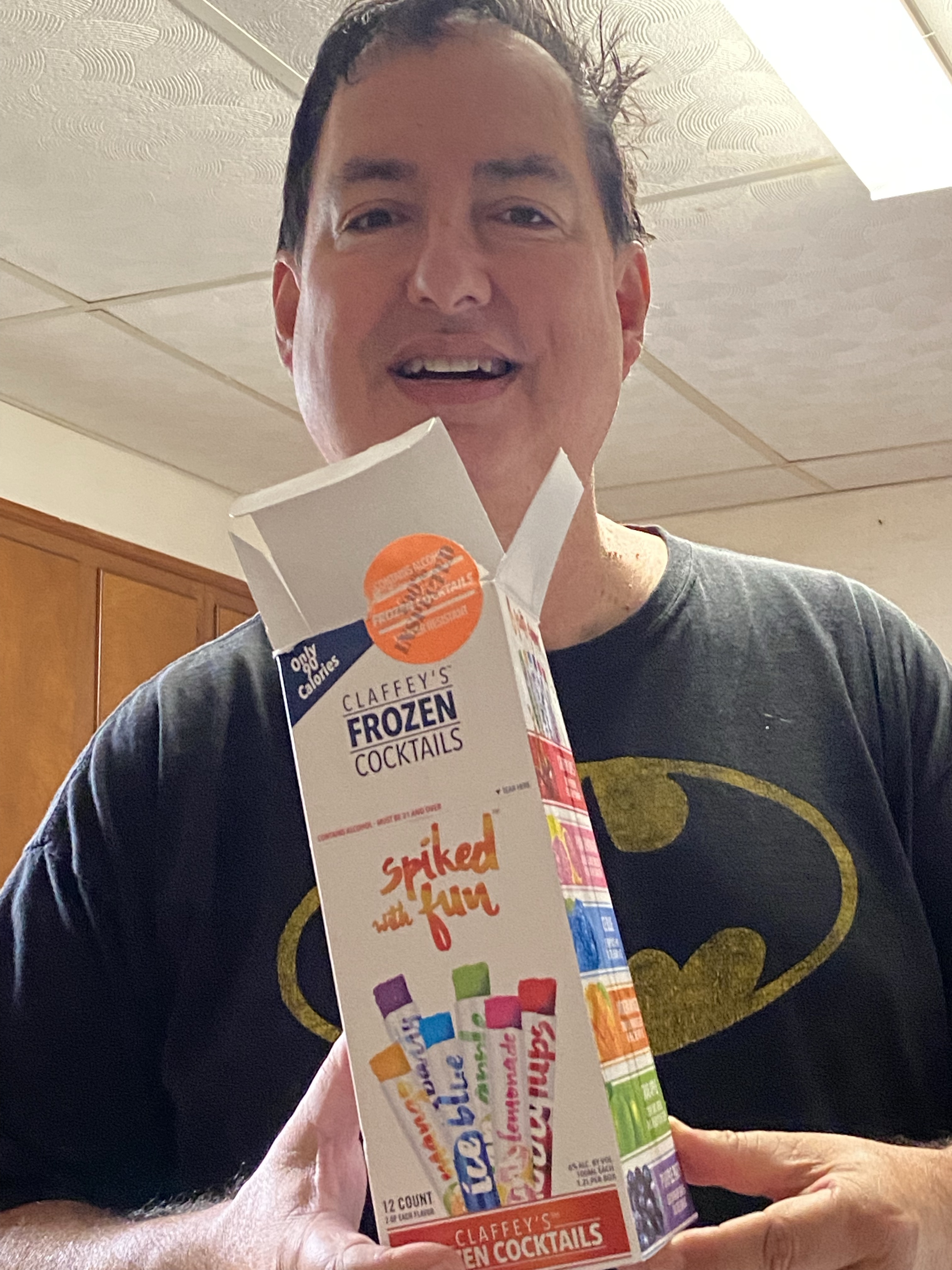
And look what we have waiting for us when we’re done with the day’s work! Barry picked them up for us yesterday and I, for one, am looking forward to giving them a try. “Spiked with fun.” Indeed. You know, that could be a description of my mister, too. 😉
What are YOU trying to find more time for?
Copyright Drēma Drudge, 2022. All rights reserved.








 dremadrudge.com
You must be logged in to post a comment.