Southern-Fried Woolf is HERE!! If you want to buy a print copy, I recommend this bookshop.org link for the best price. (I’m all about that.) Here’s the Kindle version.
Thank you to Mythical Books for sharing the first chapter of my book on this first stop on my tour. I appreciate it so much, and I hope you’ll take a look at their site and grab that sneak peek of my novel.
As I thought over what I posted yesterday, I worried that I had made it seem as if everything about this book was, well, drudgery. (I tend to avoid that word for obvious reasons.) That’s certainly not true.
Once I figured out how to blend the essay with the story, I had tons of fun allowing my characters to misbehave and then pulling them back just a bit. I had a tough time not allowing Briscoe to be more sympathetic. She’s 28, and her everything is being threatened. Considering that, I think she’s plenty sympathetic towards those who have wronged her.
(In the final edit, I got rid of quite a bit of profanity, because I realized it was only there as a placeholder as I helped her gather courage. The more courageous she became, the easier it was for her to say what she felt, to confront those she needed to confront.)
Also, that dear friend that I mentioned in my last post who told me I might have to choose a different topic when I got stuck writing this book really did mean well. He’s a musician, not a writer. I think he just felt for me as he and his beloved heard me try to explain what it was I couldn’t figure out.
And I have a lovely group of people in my life who support my writing, who have read early drafts of this book and who have cheered me on. Any hesitation on the part of mentors was more because of the experimental nature of my book. How can you tell someone how to write something when it’s not your run-of-the-mill novel?
It’s the strangest feeling, knowing that something that I spent so much time and care on is out there now. It’s not a pile of pages I am crouched over at the beach, red pen in hand. It’s not something that causes me to eat half a pack of crackers as I try to imagine how I am going to make this palatable, entertaining, and yet, hopefully, smart.
A kind friend just wrote to tell me he has ordered a copy of my book. I remember Barry and me sitting across from him at a restaurant in Greece near Sounion, just after we had seen Lord Byron’s graffiti at/on the Temple of Poseidon, hearing our new friend’s fascinating tales of his early career. (I’m not sure how much I’m allowed to share, so that’s all I will say, but Barry and I were mesmerized.) We shared a bottle of red while we watched the sun set over the Aegean Sea. It’s good to have interesting friends.
I want to thank all of you who have been on this journey with me, in large ways or small. I am so grateful for all of the wonderful people in my life who have been patient with me as I’ve grown and changed, as I continue to do so, both as a writer and as a person.
To paraphrase Lily Briscoe says in Lighthouse, for better or for worse, with this novel, I have had my vision.
The other day I stared out of the kitchen window and allowed myself to celebrate finishing this novel. I allowed the pride of creation to fill my eyes, acknowledged the bravery of sharing something that is so precious to me.
This novel has been the most difficult thing I have written so far. Those I respect most either thought it a dubious idea in the beginning (because of the essay aspect and/or because it’s not straight literary fiction) or were mum, which was worse. I had one dear soul, when he heard how lost I was in the woods of my idea a few years ago, say, “I think you’re just going to have to choose another idea.”
I’m here to tell you, his kindly meant words made me more determined than ever to birth this stubborn child. I had to find a way to thank Virginia Woolf for all she has done for me. I had to help others see that she’s ours, too. We don’t have to have PhDs to claim her. Our affection is just as valid.
If you’re not familiar with her work, dive on in! This is an invitation to that, too. I’m not a scholar, just a fan.
Tomorrow begins the public life of Southern-Fried Woolf. My first novel, Victorine, was published at the beginning of the pandemic…yikes! At the time, I thought, “Aha, I will schedule only online tours in the future, so nothing can go wrong.” Reader, something (some things) went wrong.
Between bad weather (in California, of all places) causing delays and a nasty case of the flu over here, and the frantic, last-minute revisions to my book that I already told you about, I was really worried about meeting my launch date. (Self-imposed, but still, things were already in motion.)
But here we are, tomorrow is launch day, and you will be hearing from me quite often in the coming month (like, almost daily), so buckle up, as I share links to my book tour.
So many, many thanks to Jaime over at Rockstar Book Tours for setting up this fantastic tour. She is truly a rockstar who took a chance on this humble, country-inspired novel.
By the way, yes, authors still read as they’re writing. After too many fluffy books and movies during my illness, I needed something meatier, so I settled down with my friend Patricia Hudson’s wonderful book, Traces, about Rebecca Boone, Daniel Boone’s wife, and two of his daughters. It’s excellent, very tenderly written, and obviously it highlights those often neglected by history, something I wholeheartedly advocate. Barry and I will be interviewing her next month, so more later on her.
As proof that I am feeling better from this dastardly flu, last night I sang karaoke (at home, alone; I know, I’m a total loser) songs of some of my favorite country singers: Loretta Lynn, Dolly Parton, on and on. I must admit that some of my pop favorites joined the chat, too.
I was trying to find a sweet song to record to send to my daughter, but I couldn’t find one that spoke of love but wasn’t romantic. Am I going to have to write one?
Today’s singing was what I call the “smooth” singers: Carly Simon, Carole King, Karen Carpenter, Ella Fitzgerald. A whisk, by the way, makes an excellent faux mic while you’re cooking/singing. Dear Reader, have I just invented a new Olympic sport? 😉
And remember that crisis with my third novel I mentioned a few days ago? When I cut away the dross this week, yup, that particular relationship is the one that’s currently central. That wasn’t my plan, and no good can come of it, but it has to play itself out. I guess that’s what we call tension, which is crucial to keeping a reader. I mean, I already know the book’s ending, so I suppose I will just have to plot backwards. (No, I’m not telling you the ending, though it’s sweet of you to care. Besides, it might change between now and whenever I finish the first draft.)
By the way, have you seen Kristen Cruz’s coffee singing videos? I’ve been watching her for a while now, but just thought to mention her to the hubby today. She. Is. Amazing!
Here’s the crass part (not really, because I think you will enjoy my book) where I provide you with the link to preorder my second novel, Southern-Fried Woolf, available in both print and ebook formats, tomorrow, January 23, 2023.
Hello, third novel. Writing time is a precious commodity, and I’m not trying to squander it, but what am I supposed to do when my husband is ever lovin’ shredding in the next room, and it’s so absorbing that I’m finding it really difficult to write?!
He’s prepping for a special reunion concert to celebrate the release of Southern-Fried Woolf. That is all I can say for now, and maybe even that is too much. (Details to come!!! I’m SO EXCITED!!!) P.S. The photo of Barry below is from, oh, a few years ago, and when I took it, I told him to “look like a rocker.” So that’s why he looks so angry. He’s holding his Charvel, a guitar I had bought him that Christmas and that was later stolen when we lived in Nashville. 😦
Dear Mothballs and Melancholy (the working title of you, dear WIP), of course I want to spend time with you. I went to bed thinking about you. I woke up thinking about you.
But right now, besides being distracted, I kinda want to turn a firehose on a couple of characters, though, because you know I have been trying to push them further apart, and now what’s happening? WHAT’S HAPPENING? You know, I know you do. Is this your doing?
Go to your corners, I’m saying to them, but these two… I write anti-romances, don’t you know? Not on purpose, but it’s what I seem to do. (You wouldn’t know I’ve been married over 30 years, and yes, I enjoy being married!)
If this MC were my friend, I would give her a stern talking to. I’m worried for her heart. Though I do not enjoy playing the author card, if need be, I will. (Maybe. I’m kinda philosophically opposed to telling my characters who they should be and what they should do.)
Tell me this, book, if I am “creating” you, then how come the more I write the more I “know” about you? It feels more as if I’m excavating something that already exists.
Okay, enough. This rant came from adding one word to my manuscript. When she repeated his name, I knew all was (potentially) lost. She’s hooked, g-d it, and now I have to unhook her. If I can.
Eh, this is a first draft, likely one of many. I suppose I can wait and see what happens. Hitting “delete” doesn’t cost anything.
In the meantime, lunch time has come and gone without any food, and though I should probably make something, if I do, that lovely music from the next room might stop as the musician wanders out to see what’s cooking. Literally.
Only ten days now until my second novel, Southern-Fried Woolf, comes out! I’m so excited, and yet as I said on a book marketing call today, “I’m so f*cking tired.” Though it elicited laughter, I meant it. (P.S. Profanity is part of the company culture and is perfectly acceptable, nearly encouraged.)
A few things to share with you, very exciting things. The first is, I ended up a runner up in the Page 100 Competition! What??? Yippee! Many thanks to the too-kind Louise Walters of Louise Walters Books. I’m so honored and thrilled.
And…more fun! I received a silver award from Literary Titan. I am so pleased. I submitted my book for a review over there, not realizing it was also automatically entered into an awards program. What a lovely surprise!
It occurs to me that you might enjoy my preface to the book that explains why I wrote it and what I hope to have achieved with it. So here it is:
The book by Virginia Woolf that I most want to read is one that, alas, I cannot, because it does not exist in final form. She conceived of a bold experiment, a novel-essay, that she wanted to call The Pargiters. It would have been just what it sounds like: the alternating of fiction and fact in one book concerning women’s rights (or lack thereof) and their intimate lives.
No one knows for certain why she abandoned the attempt, but it couldn’t have come naturally to such an accomplished novelist, switching between the two in the same book. And it’s not as if she didn’t have her say about women’s rights: all of her writing is full of challenges to society’s viewpoint and expectations regarding women. Ultimately, however, she folded the novel portion of her novel-essay efforts into the 1880 chapter of The Years without finishing her initially conceived project.
This novel of mine is intended, first of all, as an homage. This is my love letter to Woolf’s writing. It’s also an invitation to those unfamiliar with Woolf to learn a bit about her. I am no Woolf scholar, though I deeply admire her writing, fiction and otherwise. There is such beauty, such depth of thinking and feeling, to her work. Such precision. I love her daring style, how she attempted so many forms of literature. I learn every time I open one of her novels. I learn about not only writing, but about what it is to be human.
Woolf’s novels are not immediately accessible, at least they weren’t to this reader, who grew up primarily on Reader’s Digest Condensed books and Harlequin Romance novels, on the exciting boxes of eclectic books my father brought home from auctions. I didn’t encounter Woolf until college, and it took discipline to settle down with her essays. Then I read Orlando, that strange and wonderful novel, and I didn’t know what to make of it or Woolf, though I knew the writing was gorgeous and that it spoke beyond the obvious, something I craved.
It wasn’t until I read Lighthouse that I quit being too intimidated of Woolf to read deeply. I re-read the novel numerous times, and even now I return to it for poetic prose and wisdom. It’s as much mine now as anyone’s, something that can (and should) be said of all of the arts. That’s one of the reasons I married Woolf with country music in my novel.
Whether before or after you read Southern-Fried Woolf, I invite, nay, implore you to read Virginia Woolf’s To the Lighthouse. And while you can read my novel and fully understand it without reading Lighthouse, these books speak directly to one another, an open case of intertextuality.
Why the title Southern-Fried Woolf? First of all, yes, I am worried that people might think I can’t spell “wolf” when they see my novel’s title. But I wanted to combine two very unlike things, creating a fusion of literature, if you will. Since my husband is a musician and we lived in Nashville for five years, I thought Woolf and country music would be very different sensibilities to rub together. That excited me. It’s a way of honoring two very different sides of myself, too.
And I really wanted to write about country music. The richness of storytelling in the genre speaks to me, and having been brought up in the South for part of my life, it has been with me since childhood. I’m especially interested in songwriting. Dolly Parton, Loretta Lynn, Johnny Cash, on and on. Classic country forever!
While I don’t pretend that what I have written reaches Woolf’s original intent in writing a novel/essay (mine is very much a novel with a light essay component), it does match mine, and I am thankful to have, as painter Lily Briscoe does in To the Lighthouse, “had my vision.”
Also, my book is officially on preorder, if you’re so inclined.
The happiest of holidays to all of you who celebrate! I hope you’re having/have had the best of times with those you love.
Hubby and I are about to celebrate another anniversary, yay, and I finally made Christmas dinner today (long story). While my cheesy cornbread can’t touch my daughter’s, it was fluffy, sweet, cheesy, and warm; I offset the sweetness with a bit of hot sauce and, of course, the cheese. It really worked. (Though what I wouldn’t have given for Mia to have made her version for us; alas, over the holidays she was traveling home from a business trip.) (I’d offer you the recipe for mine, but I have to admit that it was an upscale box mix I was gifted, and I just added cheddar cheese, corn kernels, and sugar to it.)
I’ve been proofreading and polishing my second novel, Southern-Fried Woolf, coming out January 23, 2023. I am on my fifth read through of it since I received my advance reader copies. It may not end up perfect, but I’m determined to get it in the best shape possible. I will, as Lily Briscoe says, have my vision.
I’m finding plenty of last-minute bits to omit, clarify, and improve. And I’m getting excited to share it with you all!
What became SFW began almost 16 years ago. How is that possible? It has grown up alongside other novels and short stories, a few poems. It started as a bit of prose which wanted to be a poem, became a short story, then a novella, and this final form, which is (mostly) a novel.
While I continue honing this for just a couple more rounds, I also wanted to share this podcast I was on recently, Pages & Platforms, where I talk about my experience in Goal Getter School.
Sorry if there is nothing sparkling to this post, but I spent most of the day proofreading, and as happy as I am to have done so, my eyes are plenty tired.
I really want to share with you the books I received for Christmas, but I want to do it after I take a photo of them. Give me a few days…
Did you receive any special books or gifts over the holidays? Please share your favorites here!
Happy Reading,
Drēma
Copyright 2022, Drema Drudge, all rights reserved.
I shared a sentence of author Rick Neumayer’s review of Southern-Fried Woolf the other day with you. I am incredibly honored that he spent such time with my writing. It’s hard work, reviewing a book (I did it for a publication for a time and discovered I prefer reviewing books on my own time and dime), and I am so pleased to have someone give such careful attention to my novel. Below, I am including excerpts of the rest of his review, but not before we talk about pumpkin cheesecake!
This morning’s project was preparing the aforesaid pumpkin cheesecake, baked for a family gathering tomorrow. I’ve never baked this before, and it looks a bit splotchy to me, so I have my doubts about it… I guess we’ll find out tomorrow. (My photos of it don’t want to load. I’m taking that as a sign not to share an image of my efforts here. I hope it tastes okay.)
A friend of ours in Nashville brought this cheesecake to our house for Friendsgiving dinner one year. The poor guy has since passed on, so I have created only a loose interpretation of what I remember his recipe to be. And I couldn’t for the life of me find one of his “secret” ingredients, despite hunting the internet and sending my dearest on a grocery store scavenger hunt. So here’s hoping.
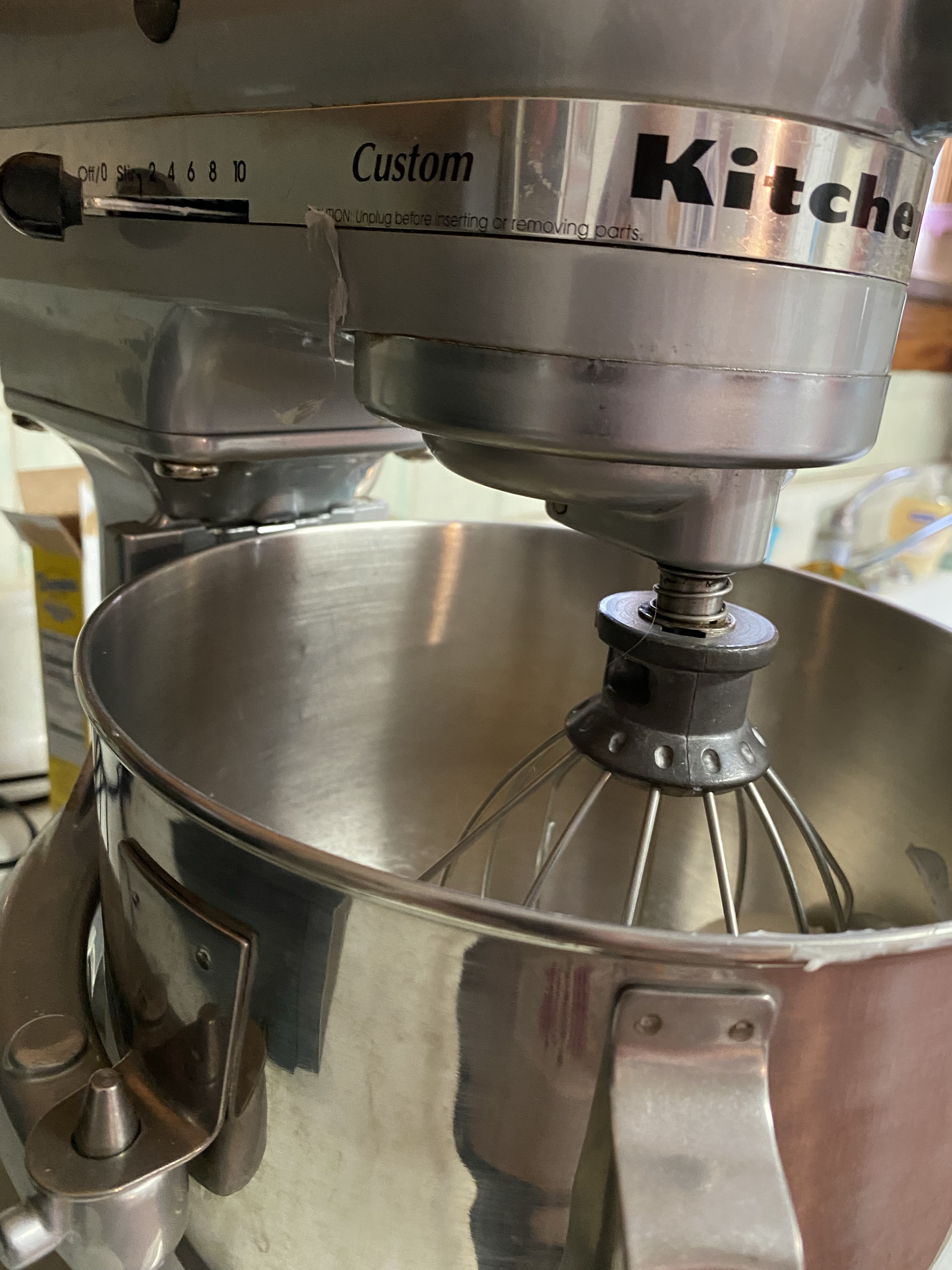
Another holiday staple: my KitchenAid stand mixer, pictured below, that Barry reminded me today I have owned for nearly 25 years! He bought it for me for Christmas one year (I asked for it; we don’t buy one another practical gifts unless requested).
It’s a workhorse and I could not imagine my kitchen without it. This may be strange to say, but I’m fond of it. I’m not saying I do have a pet name for it, but I’m not saying that I don’t.
I used vanilla in the cheesecake today, and I had to dig out a new bottle, tiny in comparison with those Barry used to bring home from his business trips to Mexico. He would bring me what I would swear were quart-sized bottles of the pure stuff that he bought for $2 a bottle! One would literally last me years.
What I did not use in my version of the cheesecake today was cloves, something many things pumpkin boast. While I will eat a dish (or drink tea) that contains cloves if I must, I do not myself cook with them, and I avoid them whenever possible. This stems from happening upon an apple pomander in my parents’ coat closet when I was a child. The smell struck me in the lungs and I thought I’d never shake the pungent scent. I identified it again not too long after when my dad made our Christmas ham, and I wondered how this strange spice had come to take over our house.
Here is an excerpt of Rick’s wonderful review of SFW. I hope it tempts you to take a closer look at my forthcoming book. My biggest ambition with this novel is to acquaint those who might not be familiar with Woolf’s work with it, and to entertain those who already are. You have no idea of the years and iterations involved in the final result.
“Drema Drudge’s Southern-Fried Woolf is an uproariously funny, deeply insightful, and engagingly complex novel on many levels. To use the writer’s own metaphor, the story consists of two tangled, loosely coiled, and knotted threads that defy simple explication. It will be best understood as a yarn of separate skeins whose meaning is not so much clearly defined as left implicit.
Although not strictly a stream of consciousness style, Southern-Fried Woolfreflects to some degree Virginia Woolf’s acclaimed experimental method of narration. Drudge’s novel depends heavily on Briscoe’s interiority, which is wildly emotional and nonlinear…
Many other characters in Southern-Fried Woolf (also the title of Briscoe’s thesis) are nuanced and entertaining, with foibles, eccentricities, and the ability to rationalize the abominable and the unpardonable. In Michael Chambers, for example, we are given a portrait of the worst possible kind of country-rock star, a man whose only redeeming qualities are his musical talent and primitive charisma. Velvet Wickens, on the other hand, the whimsically drawn aging country diva, is so self-involved and predatory she seems unable to see anything not filtered through cornpone sentimentality and her own self-interest. There are many others who enliven the tacky tapestry of the Nashville music scene. The city itself is like a character in the book and we can’t help but recognize its bumpy trajectory from hick town to hick metropolis.
Despite being driven nearly mad by her husband’s peccadilloes and her own self-loathing, Briscoe continues attempting to complete her highly ambitious graduate thesis, which is on Virginia Woolf’s To The Lighthouse. Ironically, Briscoe worries about using the word madness in relation to Woolf because= it can be seen as making light of mental illness. While a single word choice perhaps should be the least of her worries, she does find some solace in reflecting on Woolf’s work, which makes her dislike her own life “a little less and find it deserving of examination.”
Referring to Woolf’s book as a failed attempt at a novel-essay, Briscoe nevertheless admits being thrilled by the complexity of Woolf’s “sentences and point-of-view shifts” that raise the novel’s mundane subject matter to a worthy level of scrutiny. We learn during a flashback that Briscoe’s obsession with Woolf began during childhood, when she discovered she was named after a character in To the Lighthouse. At age 12, Briscoe asked her mother to read the book to her. This was during a visit to a decommissioned forest fire tower in West Virginia, where her mother fled after abandoning the family. Julia Jenkins supposedly went there on a grant to finish her own book on Woolf, but never came back.
After first reading To The Lighthouse, Briscoe claims she read it six more times because a single reading wasn’t enough to appreciate the novel’s “intricacy and cleverness.” Nor to understand it on a basic plot and character level apparently; such is the downside of stream of consciousness. With characteristic humor, Drudge has Briscoe recall that she was in high school before (she) realized Woolf wasn’t her own subject like Science.
Doubtless there is much more to be said of this rich, relevant, and riveting novel, as well as many conclusions to be drawn from all this as to its meaning. But in the spirit of Woolf and Briscoe, I think I would prefer to wait until I have re-read Southern-Fried Woolf the requisite six more times.” — Rick Neumayer, author of Journeyman and Hotwalker
Again, my deepest gratitude to Rick. If you get a chance, check out his books. They are engrossing reads full of atmosphere, place, and heart.
P.S. Hubby’s fill-in gig last weekend went great! I’m hoping to post about it tomorrow, but time…hint: there was dancing (not by him)! Right now Barry’s watching previously unseen footage of The Who at Woodstock, so he’s a pretty happy camper. He’s also telling me he does not play like Pete Townsend. I said he’d better not; I’ve seen how Townshend’s hand bleeds after those windmills.
And yesterday, we watched the documentary If These Walls Could Sing, directed by Mary McCartney, which seems like a documentary that should have already existed. Not many of us have baby pictures of ourselves in Abbey Road. She does. It’s worth a watch if you’re interested in the history of recording and/or Abbey Road.
The happiest of weekends to you!
Drēma
Copyright 2022, Drema Drudge, all rights reserved.
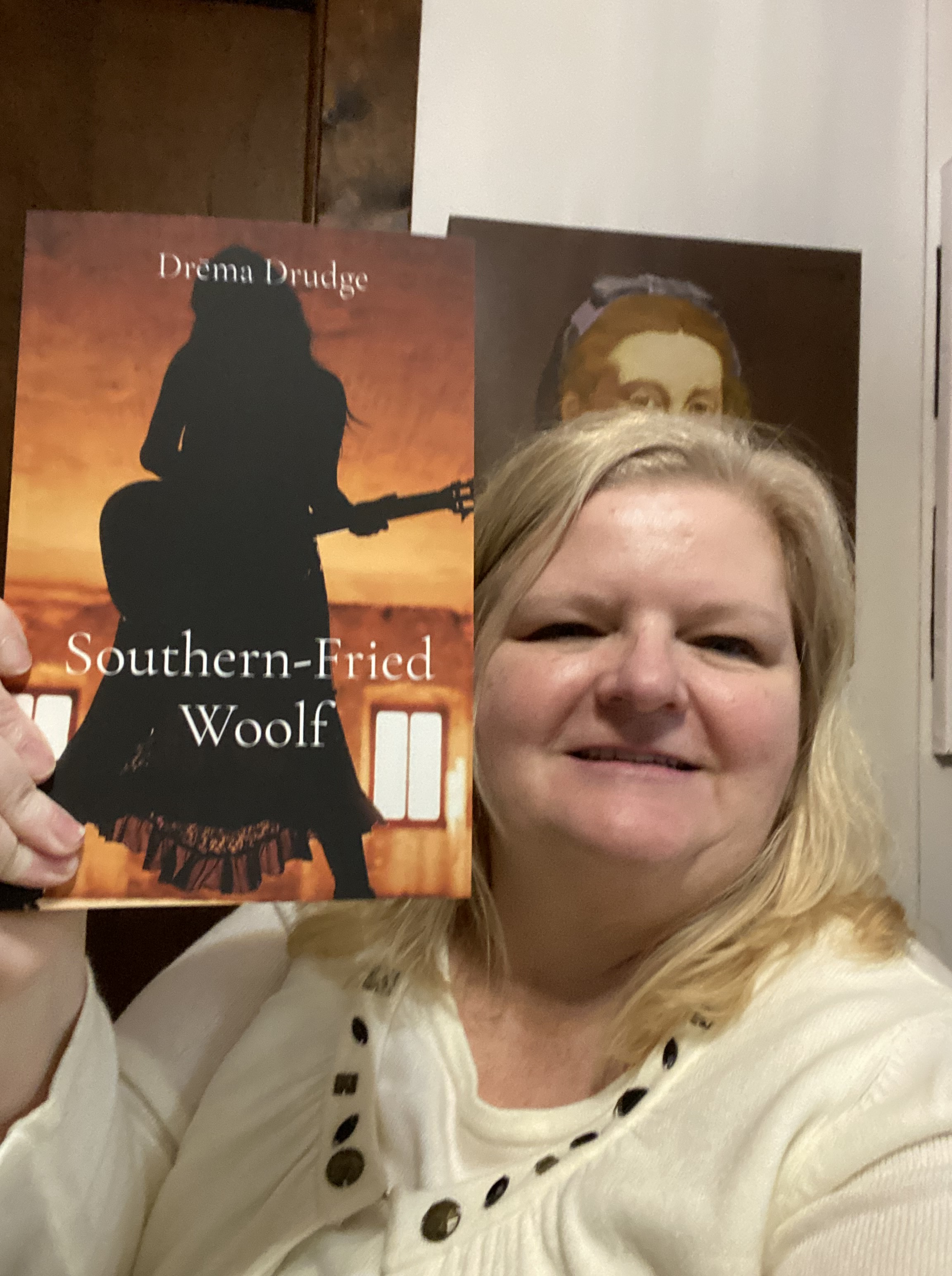
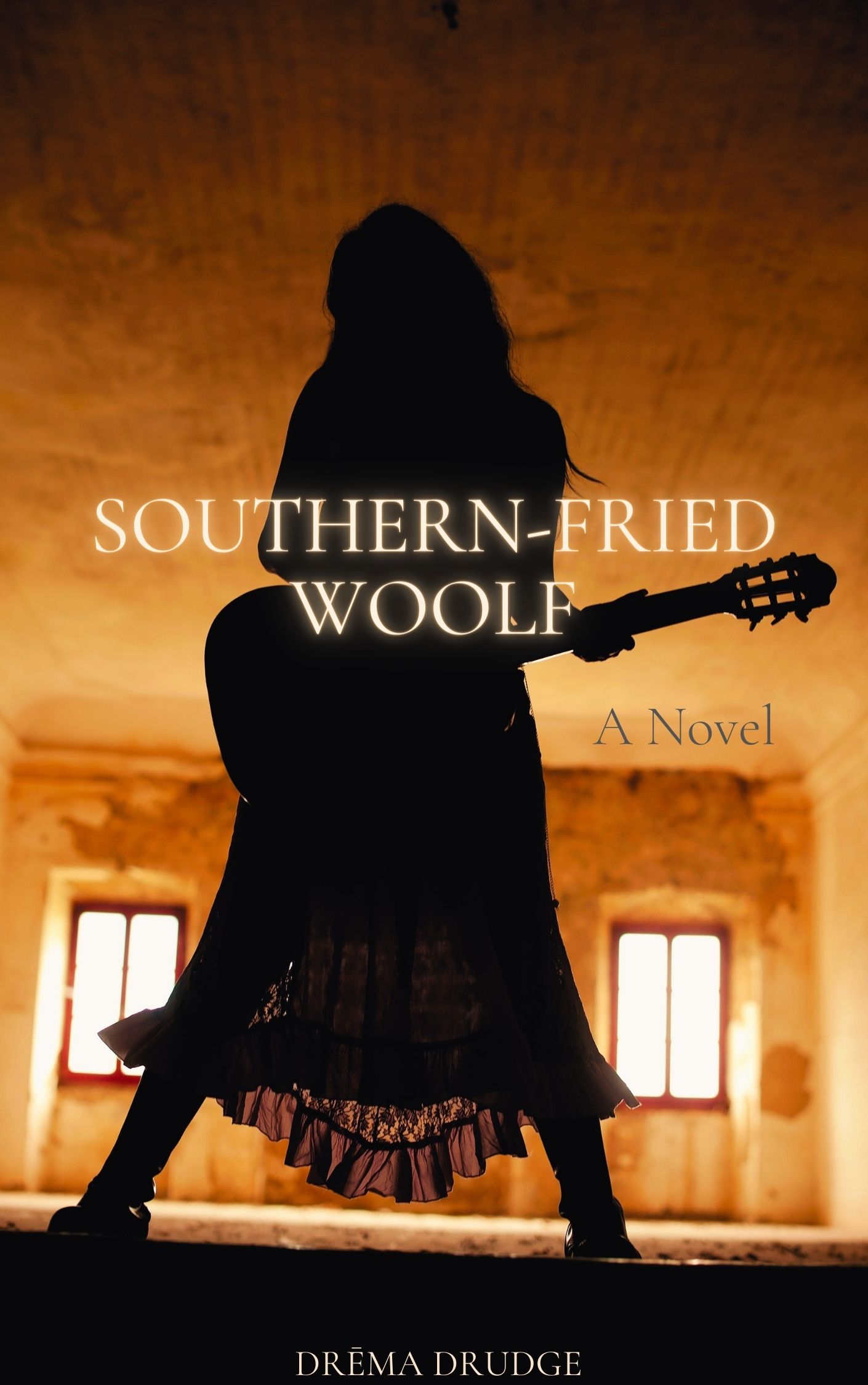
Oh my goodness, oh my goodness! Guess what arrived yesterday? My advance review copies of Southern-Fried Woolf! I don’t mind admitting that I sat holding a copy of the book to my chest for quite some time. It’s the perfect size and weight, and I am smitten with the cover!
While receiving these means a few days of intensely scrutinizing a copy to be sure there are no errors, I am up for it. It will be released January 23, 2023. Things are getting real over here!
The happiest of holidays to you!
Drēma
Copyright 2022, Drēma Drudge. All rights reserved.
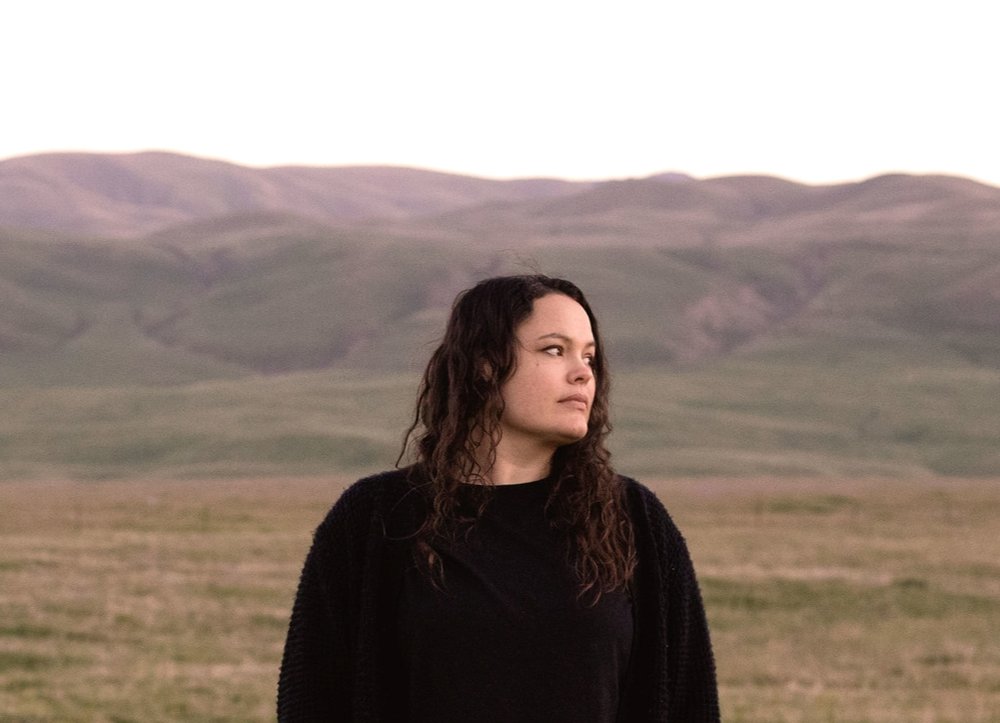
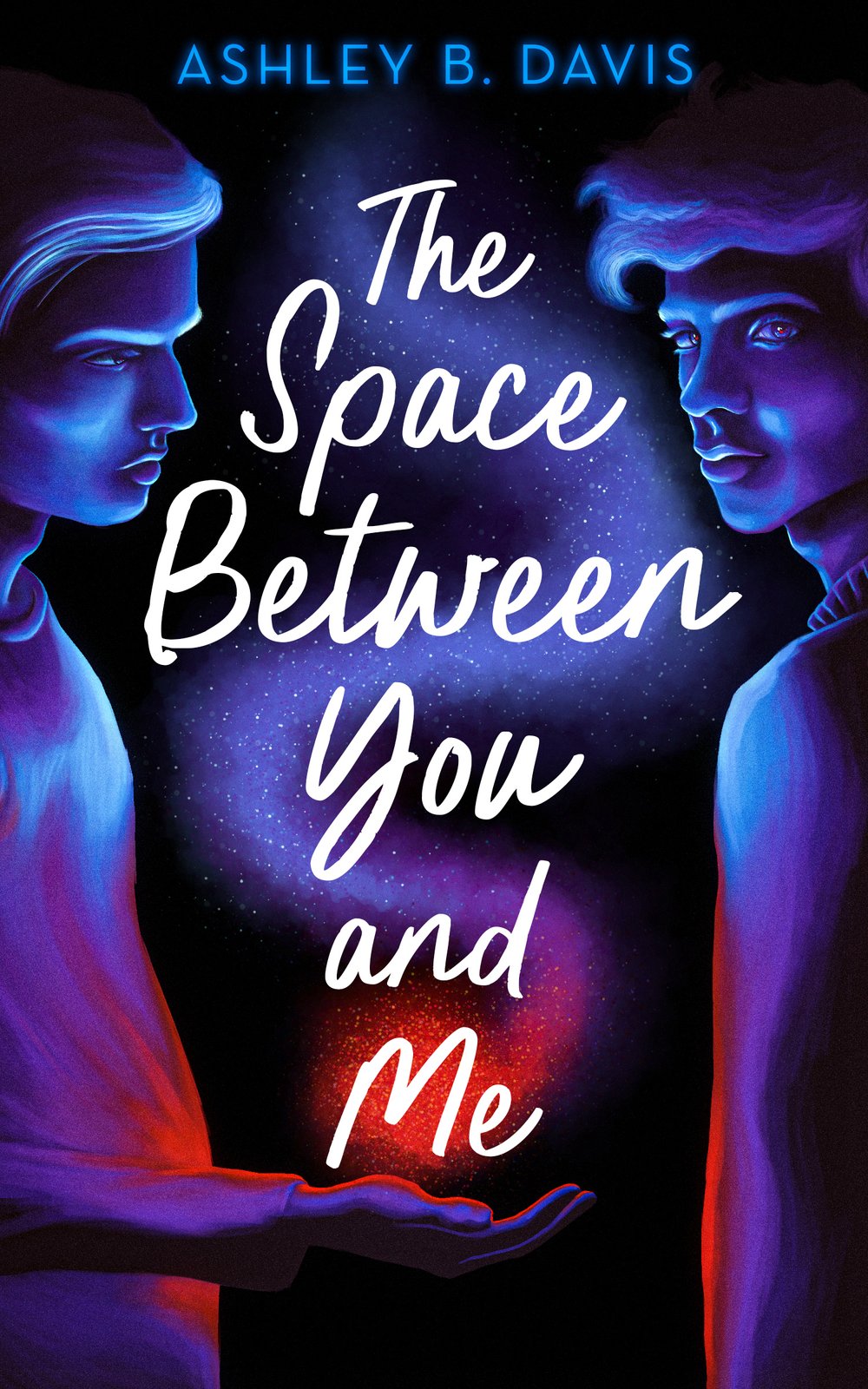
Barry and I were so honored to have Ashley B. Davis on our podcast talking with us about self-publishing and her debut novel, The Space Between You and Me. What a fun, informative interview! I got to know Ashley over on Twitter some years ago, and now count her as a writing bestie. 🙂 You’ve seen her comments over here on many a post, so she’s no stranger to you. I’m so pleased that Barry and I had the opportunity to interview her and get to know her “face to face” via Zoom!
Her book is a must-read! She’s so talented and her work is absolutely engrossing. Please do yourself a huge favor and BUY THIS BOOK!!
Ashley B. Davis writes the ordinary and extraordinary. She has poetry and short work appearing in Trembling With Fear, The Grey Rooms Podcast, Months to Years, Liquid Imagination, Jamais Vu, and Eunoia Review. An avid reader and sometimes artist, she uses her English degree to openly discuss the creative process at www.ashleybdavis.com.
The Space Between You and Me is her debut.
When she is not living in fictional worlds, she lives with her spouse, her seven-year-olds, and her two rescue cats in southern California, where she manages rental property.
BOOK BLURB
For fans of Carry On and Stranger Things this heart-wrenching coming-of-age debut explores magic, family, and best friends finding love in a world that wants to tear them apart.
Apollo is used to not fitting in. His dad isn’t magikalis. His mom believes in Tarot for god’s sake. And since kissing his best friend and setting fire to their friendship, he’s been slumming it with the Wolves, the outliers of his magical community.
Jonah helps his parents out with his siblings, helps his girlfriend with her homework, and maybe squeezes in a good book between baseball and maintaining his grades. He has determinedly not been thinking about his ex-best friend and the kiss they shared.
But it’s impossible to forget said ex-best friend when he is also your Kindred. Though their magic only stirs to life when they touch, Jonah and Apollo would be separated for the safety of the community if anyone found out they were Kindred.
They put the past behind them when Apollo shows up in the middle of the night, asking for Jonah’s help. When they uncover a plot targeting the Wolves for experimentation, they must decide: Keep their secret and stay together or sacrifice their bond to save their clan?
He is the second oldest of five children and best friends with Apollo since they were 11. Jonah is a human garbage disposal with a fear of the dark due to one mismanaged game of hide-and-go-seek (but, hey, he won), and he is tired of being boxed in by labels like ‘jock’ and ‘good boy’
Read The Space Between You and Me to see whether Jonah ever gets a clue.
Meet Apollo Reid Tormey
He is Jonah’s Kindred, giving them both forbidden, underage magic. He is addicted to holding magic, is always cold, and likes to be around people, though he always feels like an outsider.
He is an expert at NOT dealing with the fall out of kissing Jonah six months ago, leading to their bestie breakup.
Meet Madeline (Maddie) Ruth Clarke
She is Jonah’s eldest sister in The Space Between You and Me with big Hermione Granger (leviOsa not levioSA) vibes. She can’t throw magic yet, but she’s got mad intellect. She’s a fan of being cozy and shutting herself in her room for 16 hours of the day, working on her thesis.
Let’s face it, these boys would fall apart without her.
For free bookish swag and to read the first 99 pages of The Space Between You and Me, visit her website at www.ashleybdavis.com/contact, where you can sign up for her newsletter.
The holidays are nearly here, and I don’t know about you, but I have some major gift wrapping to do yet.
Thanks to all of you who reached out to me about my newest book coming soon, Southern-Fried Woolf, (out January 2023), being longlisted for the Page 100 Competition. I’m happy to share that it has now been shortlisted. I’m one of six remaining on the list. Winners will be announced in early January. Fingers crossed!
What I’m Reading:
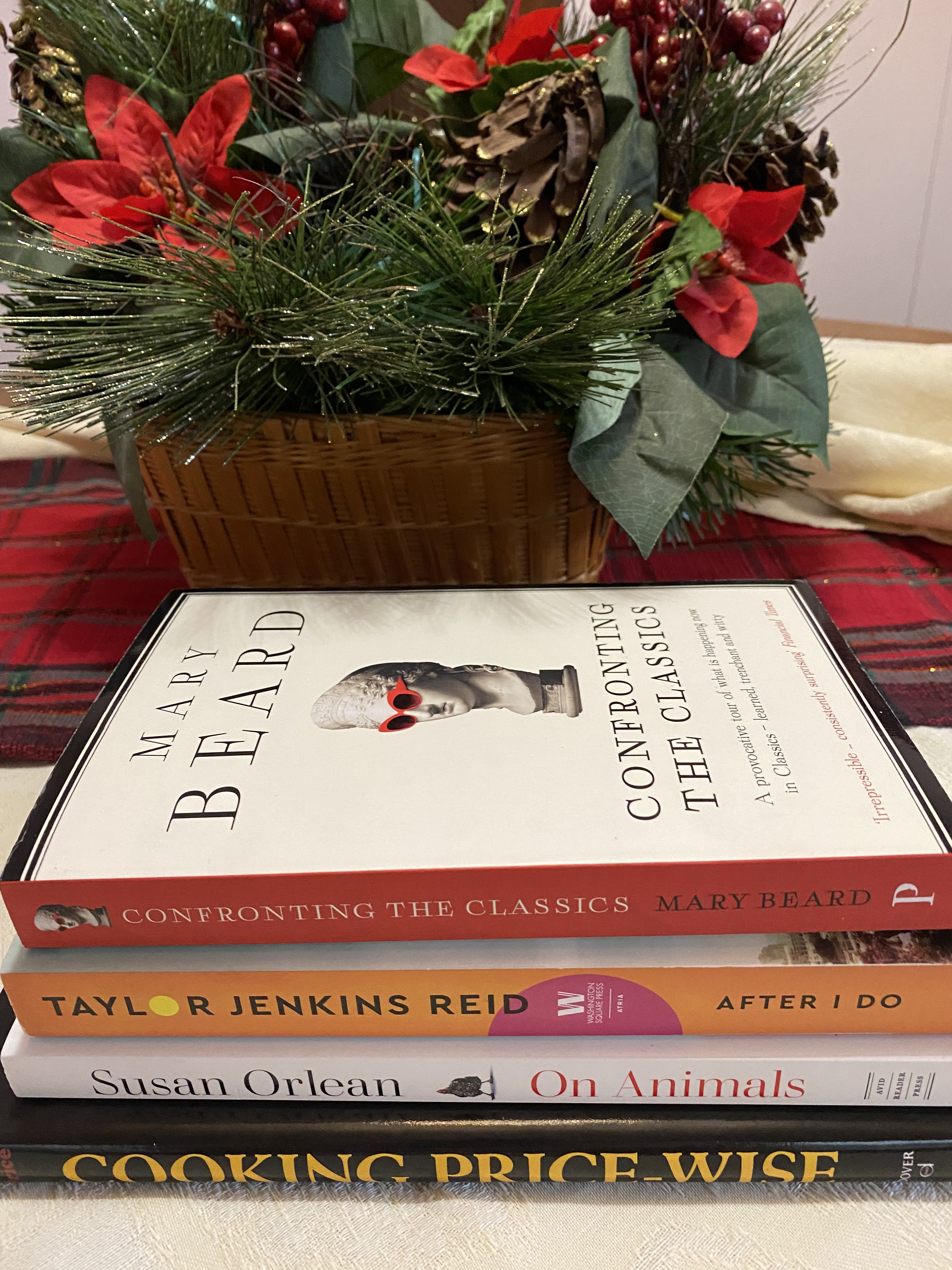
November is my birthday month, so as you can imagine, my birthday brought several fun books into our cozy house, courtesy of my dearest husband, Barry.
Susan Orlean’s On Animals. I read this over Thanksgiving, and I couldn’t help but note that the essays have a very New Yorker feel to them, which makes sense, since she writes (wrote?) for them. She’s an author whose books I nearly always buy, and if you are an animal lover, you’ll be mesmerized by her tales of military mules, chickens she has loved and lost, and much, much more.
Vincent Price’s Cooking Price-Wise. Did you have any idea that Vincent Price was, besides being an actor of all things creepy, also an art lover and gourmet chef? Barry and I spent an enjoyable hour Thanksgiving Day looking over this book first published in 1971. The back section of it contains copies of Price’s 1928 culinary journey through Europe, and it features dated recipes alongside a few I might just try, such as mulligatawny soup. Let me say, Price liked his bacon. Not there’s anything wrong with that.
I wanted the book because I remember Price acting in various Edgar Allen Poe adaptations, and because he was just campy enough to not scare me when I was a child. I’m delighted to have discovered this cooking facet of him.
Taylor Jenkins Reid’s After I Do is about a couple who loses that loving feeling. They spend a year (no spoiler here; it’s said right up front) apart to see if they can remain together forever. I want to tell you one of the most intriguing parts about it, but I can’t without spoiling it. (Yes, I still have a literary crush on Jenkins Reid. I think I’ve about made it through all of her books now, and I want MORE. Think I could get her to agree to write her next book in installments on Patreon for her fans?)
The next two I haven’t had an opportunity to read yet, and one isn’t pictured here because I think it’s still in my suitcase.
The Year of Lear: Shakespeare in 1606, by James Shapiro (not shown) is one that’s been on my list for a few years, since I heard an interview of him by Terri Gross, I believe. I’m eager to read it, but I feel it deserves a snowy day and a mug of tea. So, a January read?
According to the Washington Post, “(In)The Year of Lear, James Shapiro takes a closer look at the political and social turmoil that contributed to the creation of three supreme masterpieces.” Those masterpieces being Lear, Macbeth, and Antony andCleopatra.
Look at that cool cover on Mary Beard’s Confronting the Classics. Those sunglasses! I suspect this one will require a mug of coffee rather than tea – I will need to be alert and take notes. I wanted this one because of its premise: “A provocative tour of what is happening now in Classics – learned, trenchant, and witty,” the cover proclaims. Irresistible. I also suspect that my hubby, who minored in history, will steal this from my bedside table some evening soon. I’m more than willing to share.
That’s not too many books, is it? I’m always hungry for more good books. What are you reading? What do you recommend? What was the best book you read this year?
Even if you’re not into gifts for whatever reason, give yourself the gift of plenty of reading time this year. Perhaps practice Jolabokaflod, the Icelandic tradition that you have no doubt heard about of reading all of Christmas Eve in front of the fire with your family and a mug of hot chocolate. My introvert self couldn’t imagine a better evening.
What I’m Watching:
Another winter, another go-round of Gilmore Girls. They are simultaneously charming and annoying me once again. Then again, all humans are flawed, so why shouldn’t they be? I’m glad they have an edge.
Also, not to brag (okay, to brag) but one of the characters, Andrew, on the show (Mike Gandolfi) is married to writer Stephanie Storey, who interviewed me about my first novel a couple of years ago. She’s a darling.
This next tidbit that I am obsessed with watching is pretty embarrassing, but you might like it, so I’ll take a chance. Have you heard Meghan Trainor’s newest song, “Made You Look?” Did you know she is married to Juni (Daryl Sabara) from Spy Kids? This short video features the couple and their adorable little guy, Riley. There are a few seconds where the couple is dancing and embracing, and I could watch that bit on a loop. It’s one of the most romantic things I’ve ever seen. Just the way his hand lingers on her waist, and how he looks up as if he can’t believe he’s doing this for her, and yet he knows he will because he loves her. They’re so cute together.
I put the song on repeat yesterday while I was cooking lemon spinach ricotta ravioli in my birthday All-Clad skillet. (More on that beauty another time; I told Barry I feel as if it and I were meant to be. It’s perfect.)
Speaking of music, I wish you could hear the classic rock my honey is practicing right now for the weekend. He’s filling in at a Christmas party on keys and vocals, and the house is ringing with the sounds of Barry: Drive by The Cars, Dream Police by Cheap Trick, and one of my favorites ever, You May Be Right by Billy Joel. Ah, Billy Joel!
What I want to watch: Netflix has Lindsay Lohan in a gorgeous red pantsuit and an enviable hat in Falling for Christmas new this year. It’s on my list. Here’s its logline: After losing her memory in a skiing accident, a spoiled heiress lands in the cozy care of a down-on-his-luck widower and his daughter at Christmastime. Christmas is a time for junk food of all kinds, even fluffy movies. Have you seen it yet?
Happy Holidays,
Drēma
Copyright Drēma Drudge, 2022. All rights reserved.
Everything is in prelaunch mode over here at Southern-Fried Woolf central; I’m getting really excited to share her with the world in January 2023. I’ve just booked a blog tour which will run for an entire month from the week before she launches to, auspiciously, my departed father’s birthday. (I didn’t set the exact tour dates, that was the promoter, so I’m taking that as a good omen.) This will include a Bookstagram and Booktok blitz among other literary stops. Fun!
I’m also gearing up to order my ARC’s. I’m stressing over the little things left to do and yet it’s more like lovingly obsessing versus stressing. Pity my husband; I’m talking as fast as Lorelai on Gilmore Girls these days as I try to remember all that I want and need to do while prepping for the holidays, on and on. But then I’m someone who’s happiest when she’s busy.
Also, I’m doing a newsletter swap with a talented historical fiction writer who ALSO writes about art. Sound familiar? I’ll be sharing about her latest novel, set in Paris, in my newsletter right after Thanksgiving, so if you haven’t subscribed, here’s a nudge. I love getting notes and book suggestions from my subscribers! (I’d tell you who the guest author is, but then what incentive would you have to subscribe? Besides writing news from little ol’ me. LOL.)
In the meantime, here’s a link to our latest MFA Paydayepisode with Round Table Literary Journal Editor Elizabeth Burton. You might hear birds and such in the background; she’s an animal lover extraordinaire. What a delight it was to speak with her. And if you’re a writer, Round Table is open to submissions right now. Go submit. I’ll wait. 😉
Fondly,
Drēma
Copyright 2022, Drēma Drudge. All rights reserved.






 dremadrudge.com
You must be logged in to post a comment.