Why I “Dirty Bulked” My WIP

001


Yesterday at the gym I was talking with a trainer who said he’d gained 30 pounds by “dirty bulking.” My face must have told him I had no idea what he meant. In case you’re in the same boat, evidently it’s a method where hard gainers put on weight by eating junk food, massive amounts of it. “Oh, you mean what I do every day,” I said. Which isn’t entirely true, but it isn’t entirely false either. Depends on the day.

I recently dirty bulked my WIP. Yup. I’ve been changing directions/characters/locations in my novel, and I needed to print a copy because I revise best when I can see it in front of me and can mark it up, circle things, underline.

Because my MS was only at 185 pages or so and I wanted it to be a nice round 200 pages before I printed it, I dirty bulked. My writing version of eating donuts and ice cream, though, is “navel gazing” and philosophizing. (Navel gazing is just what it sounds like — you’re writing stuff that probably does not at all advance the plot. Likely no one else cares about it. Not an iota.) I was actually proud of some of it when I first wrote it. It flowed. It was “thinky.” I explored the meanings of words that are important to me such as loyalty and feminism.

So, junk writing done, I hit print and out of the printer flowed warm pages covered in ink. Happily I sat down, pen in hand, a chunk of the MS on my handy dandy book stand that my dear Barry bought me for Christmas last year. How excited I was to move things around, make big changes. Discover just how genius my new path was. That’s when the dirty bulk showed itself to be made of junk food. (Cue the “wunh wunh” music.)

Suffice it to say I have only put in the changes for 150 of those pages into my MS and I have already had to lose 15 pages. Fifteen bloated, useless (to the novel) pages marked out. Gone. Junk.

Do I regret my self-indulgent dirty bulk? Not entirely; I saved some of it. Some of it was just for me in real life. Some of it was to know more about my characters and their struggles and their beliefs, which are sometimes in conflict with mine. I make them argue their side so I can understand them, even if I don’t agree. Sometimes I have to write characters I don’t like or identify with. (Mini-lecture: I refuse to say “with whom I identify.” Because I’m under 50 and because that flawed “rule” has been shown to be ridiculous and it is one with which I won’t put up — please tell me you get the joke.) I do respect my characters and their right to be who they are.

It will be interesting to see how much of this last 50 pages I lose. I enjoy purging my closets and cabinets, and it’s the same with words so it’s not as if I’ll mourn what I get rid of. I don’t think every sentence I write is priceless. When my agent asked me to prune my last MS, I was happy to do so, and she was pleased with the results so it’s a skill worth having. Still, maybe next time I’ll think twice before imposing an arbitrary page count on myself to spare myself the rapid slash of my inky sword across miles of words. (If you guessed that I would have cut the last half of that sentence if I read it anywhere else, you’re right. But I’m feeling playful so it stands.)

Whether you dirty bulk with words or junk food, there’s no judgment here. Let me know how it goes. On second thought, since I’m trying to stay away from donuts, maybe save the food porn and just let me know if you dirty bulk your story.

Write on, my friends, write on.


Featured on Chicken Soup for the Soul’s Podcast!

I’m so excited! First of all, I adore podcasts and Chicken Soup for the Soul is now podcasting. Did you know that? I’ve been enjoying them from day one.

Imagine my delight, then, when I recently received word that one of my stories will be featured on Chicken Soup for the Soul’s podcast tomorrow, March 10, 2016. They had a teaser for it on today’s podcast, and I found myself dancing around the house in happiness already.

It’s my story from “Chicken Soup for the Soul: Dreams and Premonitions” that I’ve blogged about before, based on a wake up call I had in the form of a dream a few years ago that transformed my marriage.

If you’re a podcast listener, please head over to ITunes tomorrow and take a listen to not just the broadcast featuring my story, but all of the other fabulous Chicken Soup podcasts for an uplifting moment in your day.

And if you happen to miss it tomorrow, don’t worry: it will be available in their archives to hear whenever you’re ready.

I’m taking my mom shopping tomorrow, and I can’t wait to put on this “radio show” when I have her in the car to surprise her. Shhh…don’t tell!


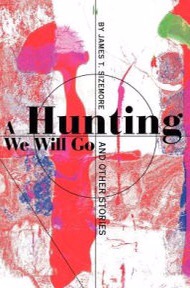
A Hunting We Will Go


Recently I did something long overdue: I read my Uncle Jim’s self published book of short stories,  A Hunting We Will Go.

First let me say that his name was James Tennyson Sizemore. With a middle name like that, he was as destined to write as I am to dream.

Though I would love to discuss his book with him, I’m also glad I waited. It was like having a visit with him, hearing him use his favorite pet names “Pal” and “Buddy” as I read them in his collection.

How many times did he say to me “Sit down, Pal, and tell me what you know. It won’t take you but a minute.” He said that to everyone. It wasn’t an insult — it was an honest invitation to sit and chat, one I took him up on EVERY TIME. I adored the man.

This is what Uncle Jim said about himself on his Amazon page for his books (he also has a novel called Cousin, Dearest that I read and helped edit slightly):

About the Author

I was born on 700 hill (the number of a coalmine), near Omar, West Virginia. I quit school in the tenth grade, joined the army, and passed the GED test there. I earned a master’s in philosophy, but had a stroke before I could apply myself in my field. I’ve had six strokes, a heart attack, and near heart failure. I will be sixty-four my birthday, have been married for 43 years, and have three grown daughters.

He must have written that in 2003, because we lost him in 2007, and when I say lost, I mean it in the sense that bright corner of my life went suddenly dark.

Where do I start to talk about his work?  I’m too close to the situation to even begin to hope I could be a good judge of the literary merits of the book, but I enjoyed it immensely. Every story yielded clues: what I already knew of his life combined with what I gleaned from his fiction.

He described a sweaty West Virginia view of Morning Glories and I knew just where his character was sitting. I felt the mosquitoes because I’ve been there.

I learned things, too. Like that The Appalachians are called “The Appies.” Who knew?

Every story reminded me of what a good man he was. When his characters misbehave it’s so mild, so self consciously, that you know the author is deeply moral.

There are stories that sound autobiographical, even though I know how erroneous it can be to assume that. When a character gives up his dream of teaching at the college level to become a metal spinner to support his family, it’s hard not to recall that Uncle Jim did just that. I cried when I read the story where a character loses his job due to his escalating illness because I suspect it’s true.

Even though I know I wouldn’t really ask him such personal questions, I wish I could. I guess I feel as if I can assume that what he wrote tells me the emotional truth of his life. It’s important to me to believe that I truly “got” him. I think I did. Do.

Notice: Self indulgent uncle heroism ahead.

When I was a kid, Uncle Jim and his family would swoop into the hollow where we lived in West Virginia every few years. Grandma (just down the road from my childhood home) would start stirring up her famous fudge while singing, whistling, and cleaning as only she could.

Then the awaited carload of my beloved cousins, my Aunt Naomi, her mother, Aunt Pearl, and of course, Uncle Jim. No matter how tired the man was from driving all the way from Chicago, he always flung his wiry arms wide for me. I, the most backward child ever, ran into them.

He wore cuffed jeans, cuffed armed t-shirts and thick, intellectual looking glasses. They seemed just right on him. His skin was faintly olive and he wore his hair slicked back. He was a good looking man with a professorial voice and a confident smile. When he was making a point he’d extend his palm and let out a staccato laugh.

He’d take a huddle of kids hiking to his old WV haunts: up “Sizemore Holler” (which was a quarter of a mile above the mouth of Sizemore Hollow, where my family lived). He carried me on his shoulders, picking apples, handing one up to me.

I would sit and listen to him talk to everyone, his brothers, everyone else in the family. I was content to just listen but inevitably he would ask me my thoughts and treat them with great respect.

When my family visited his, he eagerly took us about Chicago. He bought me my first mint chocolate chip ice cream cone. The flavor remains one of my favorites. He took me on a carousel and bought me a paddle ball and a treasured box of crayons. He let me play outdoors until way too late, catching lightning bugs and singing with my cousins on the stoop.

Knowing he was a writer, I shyly showed him bits of my writing over the years. He was always beyond encouraging. I only wish I could have told him that I now have an agent. I know how much it would have meant to him.

While I was studying our family’s genealogy, at the end of one of our long phone calls Uncle Jim gently said, “Okay, enough with the genealogy. Back to writing.” And I listened.

In his collection, he worries whether or not his work will be read after he is gone. He need not have wondered. First of all, there’s no doubt that his beloved daughters and grandchildren will never forget his stories.

But I also know one proud niece who misses her dear uncle who will surely read his fiction, especially when she misses him. My daughter also had a sweet bond with him. Guess who’s getting a copy of his book next? 😉


Smitten in Indiana: “Something Rotten”

I am a huge fan of The Bard! This is also in 2008.
Shakespeare’s birthplace

A couple of weeks ago my dearest came home talking about a woman he works with who was going to be traveling to NYC this past weekend to see a musical.

Here’s where I reveal that clearly my head and entire body have been firmly wedged beneath a rock because I hadn’t heard of “Something Rotten.” Okay, I think I may have seen an ad for it in a magazine, but for some reason it didn’t register.

Enter Youtube. Ah, Youtube.

In case you are as clueless as I was: two writer brothers, Nick and Nigel Bottom, are struggling to write a hit play in the 1590’s, only to be constantly overshadowed by the egomaniacal “rockstar” William Shakespeare.

Desperate, a brother consults a soothsayer who advises them to write a musical. Except no one has ever written a musical before and the idea sounds barmy to them.

Alas, now all I can think of is that I want to see the musical!

Apologies to Christian Borle for the objectification he’s been getting (re: arms) that I won’t be rehashing here. (Dignity, people, dignity! Except when it comes to parodies of parodies.) While I am a fan of buff arms (if you saw the shirts I buy Barry you’d understand that, but then he’s a musician so, musician’s arms!!), I don’t abide with reducing a man of talent to his limbs.

On the other hand, when Barry recently said he wanted to comment positively about my body but didn’t want to objectify me (well-trained feminist’s husband, he!), I told him we’re married, been married for almost 25 years, so he’s allowed, nay, obligated to objectify me privately to a certain extent. But I digress.

I so badly want to buy the soundtrack to the musical but it’s nearly my birthday and we have a mutually agreed upon moratorium on buying ourselves anything until after said day in our household, so I have been making do with playlists on Youtube. Wearing them out, you might say.

(My sweetie actually told me yesterday that I should buy the album, but I will not! Everything is better when someone else buys it for you, yes?)

I love wit, and that’s what drew me to Shakespeare in the first place. “Something Rotten” has wit in spades. And though some might complain about the low humor, if you are at all familiar with Shakespeare’s plays they are replete with bawdiness. That’s one of the things to love – this (to us) old-fashioned sounding language laced with rap-lyric worthy raunch.

(And Shakespeare, like rap, could use some de-misogynizing. Just sayin’. I’ll (partially) forgive him because he was of his time and because he wrote some really great parts for females as well.)

Then there’s the play-within-the-play, Omelette. (Sound like Hamlet to anyone else? Clever!) Hamlet, of course, has a play within a play to “catch the conscience of a king.”

Hey, I’m not a geek just because I have bits of Hamlet memorized, am I?

My favorite song so far of “Rotten?” Well of course “Hard to Be the Bard.” I suggest you watch the video version because it’s so incredibly well done and because you see a close up of Christian’s face so you get all of his inflections (perfectly acted). Though I am not recommending it for the view of his arms that other Youtube commenters seemed to enjoy so thoroughly, there’s that, too, if you have fewer qualms about that sort of thing.

The song is catchy and so apt for writers. It captures that blend of loving your work and yet having to be alone, so alone, to do it properly and yet when you are alone self doubt creeps in and threatens that very work. But you can’t do it unless you are alone sometimes


“God I Hate Shakespeare” is another catchy track where the singer is, of course, jealous of Will. All humans have to endure having others envy them sometimes, but it seems counterproductive and reductive as well: it wouldn’t occur to me to be jealous of someone else because that would imply that I don’t believe there’s enough out there for me too and there is, sure there is, in every area. But it makes for a funny song.

As to the cast, I am one of those people who secretly enjoyed the TV series “Smash.” Sue me. I know plenty of people didn’t, but I did in part because it was fascinating to see what it takes to put a musical together, the highs and lows. It was a craft lesson.

To learn that the aforesaid Christian Borle and Brian D’arcy James (as writer brother Nick Bottom) team up again in “Rotten” was phenomenal.

Just before Barry and I married he bought me the gift of gifts: the complete works of Shakespeare! The tome was HUGE (redundancy alert)! I had to lie on my stomach to read it in bed.

I read every play. Avidly. (I have a pet project I intend to embark upon next year involving our friend the Bard. Stay tuned for details.)

I’ve just got to see this musical! Watch for an upcoming plea to get me to NYC on gofundme.org soon. (Not really.) But if you want to send my husband a Facebook message encouraging him to take me there for our 25th anniversary, I won’t tell him that I put you up to it.

Honorable Mention in the WritersWeekly Fall, 2015, 24-Hour Contest!

I was so pleased to learn a few days ago that my story, “Quenched,” has been awarded Honorable Mention in the WritersWeekly Fall, 2015, 24-Hour Contest.

Contestants were given a paragraph that we only needed to “touch upon” in some way for our story to qualify, a maximum length, and yes, only 24 hours to craft the tale. I decided to take the challenge. I’m so glad I did.

Let me say, it did not start out a fortuitous 24 hours: I had just had a huge caramel macchiato at our favorite cafĂ© (those of you who know me well know that much caffeine is so not gonna do me well) when I received a text: our son was in the hospital. The poor guy started texting me that he was thirsty but they wouldn’t give him anything to drink, etc. That would wreck any mother’s concentration.

I had to stop myself from packing up the car and heading to his bedside. We had just been to see him days before, one of our cars was in need of repair, and Barry had no more vacation time to spare. All is well with our son now, thankfully, but that day I was a mess and he, of course, much more so.

And oh yeah — when I get stressed my blood sugar falls. Fast. So even before I started writing my long-suffering husband had to put up with me having a tearfest. He fed me (not literally!)and told me all would be well; that no, our son did not require my immediate presence. (I suspect Barry felt just as torn up to not be there.)

Then I settled in to write, because what else does a worrying writer do? Between my still-swirling feelings and the  (you know you read it too in the aisle at B & N!) dystopic YA I’ve been reading, it’s no wonder I came up with what I did.

Want to read my entry? I just re-read it and asked myself what I was trying to say. I think I’ll leave the interpretation up to you. Comments welcome.

Again, I’m chuffed to have won! Thank you, Angela Hoy and the crew over at WritersWeekly. What fun.

Now for my story…forgive the formatting…it shows up right on my screen but when I preview it, the words clump. Hmm…

Quenched  

“Catch her – she’s the last one,” the Convincer yells.
The cornfields have housed me for days now. I run for the sanctuary of a lone tree in the distance, stopping up short when I spy a door in the trunk surrounded by odd etchings.
The rough-hewn entry opens as if expecting me. I scrape my fingers against the rough bark of its interior as I duck in. I sense the tree’s benevolent intent.
I place my fingers, my cheek, against the inside of the tree. For a moment I rest, breathing deeply.
The last of the ten, I won’t give in.
“It’s painless,” the Convincers cried at the beginning. “All you need to do is drink this; nanobots will take it from there.”
That was their mistake, they’d say later, telling us, giving us a choice, because none of us who were still us trusted them after they said that. Those who gave in did so for every reason except belief and trust.
Those of us who resisted began avoiding tap water, hoarding the sealed bottles, those dated before the request for compliance.
Eventually we took to drinking in the forest, from cupped leaves after storms, by squeezing moss. We attempted to filter the water, but suddenly all of the supplies were restricted. You had to have a license.
“It’s to benefit us, all of us, not just you. You’re being selfish,” they said.
Again and again we refused.  
We’d dream and wake to someone standing over us. They wouldn’t make us, they swore, but if we wanted to buy, sell out. If we wanted to eat, drink up.
“It won’t hurt,” they promised. “It will equalize us.”
So apps full of games, rewards, reminders appeared on our phones warning, threatening. “Apt” analogies were drawn; peer pressure was applied like a tourniquet.
First to cave in were the young, because they were offered comfy jobs and double portions. They were so young they trusted, eventually.
Then the elderly, because they were too frail to withstand, complied.
The Midwestern corn buckled just as my uncle, too weary to go on, did. He drank from the conveniently cold bottle that the Convincers carried right to his side.
“Oh, try it!” he urged us. His change was abrupt.
The nine of us hurried on, including my two sisters, my brother, who fell early. Various neighbors were picked off by thirst. As soon as they gave in they smiled at us but their change set us fleeing.
One by one they left my side and I understood the plea for forgiveness in their eyes as they raised the longed for liquid to their lips. I’d watch and imagine the fluid flowed into my own mouth and for a moment, I was saved.
My best friend caved on Day 38 when the hunger got to him and he was promised an Elephant Ear, an Indiana delicacy made with fried dough and sprinkled with cinnamon sugar, and his favorite, if only he would drink, just drink.
He was the last besides me. This time, I didn’t let go gracefully: “I hope you choke,” I cried as I watched the inside of him die as he became not-him.
“You’ll remain essentially yourself,” they claimed.
I was already me, so why should I want to change? I challenged.
They sighed. I wanted to cry but I couldn’t afford the expenditure of water.
The cornfield, our pretend sanctuary for the last week, was filled with the rustle of Convincers in thick shoes bearing backpacks full of food and, more importantly, water. Tainted water.
I ate the last of my jerky, and then the end of my mixed nuts.
Red leaves swirled, and they knew by the weather, soon they’d have me. Though why I alone filled them with fear, I can’t say. One cannot propagate alone.
The temperature dropped at night, and near my ear while I huddled beneath a sheaf of corn and shivered in my sleep I’d hear offers of a warm bed, thick quilts, if only I’d give in.
Sometimes it rained and I cried with my mouth open, cupping my hands, wondering how water, something I had taken so for granted was now the only thing I wanted. Clean water, that is. Uncontaminated by compromise, however good they promised it would be.
Fear of change? That wasn’t it. Rebellion? No. The spirit of the poet lives by its individuality, I argued behind tree stumps and over fences. Words were my bombs. Always they returned the volley. Always they had an explanation, an excuse.
Now I wander gratefully through this tree’s interior, past the toadstools (I didn’t know they could grow down here), past the holes plugged with nuts (do squirrels burrow so far in?).
Words are no longer mine, unable to be formed by my parched lips.
I am not a cheese but I stand very much alone.
Ahead, a pool of water reflects like a lake in a cave. Funny, I didn’t know trees could hold water. Don’t the roots take – I cease thinking and bend and drink. My mouth blesses me from the inside out until just like that, I’m one of them.
The tree halves and my fellow humans surround me. The water beneath my feet reflects my new features, indistinct now from any of them. We are all the same color. We are all the same sex. No wrinkles betray any differences in age.
Suddenly, I do understand. We are one, and finally, for the first time in my life, all of me is quenched.

misc summer 2012 060

That Would Make an Interesting Paper

Drema and Rowan

If you’re not laughing at this post’s title, you have never had the privilege of having the luminous, engaging, and caring Rowan Keim Daggett for a professor.

When I transferred to Manchester University (at the time Manchester College), I was a shy first year student. Rowan’s small literature classes and exuberant take on books meant I quickly found myself speaking up without meaning to.

She made even the most obscure work easier and worthwhile to tackle. She introduced me to Atwood and Morrison. I later won an award from the Indiana Collegiate Press Association for a book review on Atwood’s Cat’s Eye which we read in Rowan’s Contemporary Literature class. And I have fallen in love with Beloved multiple times since first reading it with her. I once desired to emulate Morrison’s writing because of that blessed book. Turns out my writing is nothing like hers in form, voice, or content, but it gives me much pleasure to read her novels.

Okay, so I never took to Updike, but Rowan tried.

If you made a particularly salient point she’d say “that would make an interesting paper.” Nothing you said was ever stupid or off topic. You could make the most fragile connection and she’d support it.

Teachers and their ilk have often been a safe and happy place for me, and I must confess that I spent quite a lot of time in Rowan’s corner office just talking. She was knowledgeable and fun.

Her class was the first place I ever found myself uttering the “f bomb.” She was teaching us about voiced fricatives (I think) and she used the word to get us to feel it, telling us to put our hands to our throats. “Say —-,” she said and I did along with everyone else, though so quietly I doubt I could be heard. I was simultaneously horrified and delighted to utter the word.

I wish I could say that was the last time I ever said it.

She once had one of her classes (Women in Lit?) over to her lakefront house. There was great food, conversation, and I seem to remember a brilliant songwriter bringing out his guitar and later jumping off the pier — sans guitar, of course.

I unexpectedly returned to college from Christmas break a married woman (crazy kids that Barry and I were). He and I had a couple of Rowan’s classes together, and he soon loved her as much as I did, though I was scandalized when my naughty new husband passed me notes and whispered to me during her class.

When I decided to leave college with an AA rather than finish my bachelor’s (though I was pretty close to finishing my bachelor’s — someone time travel backwards and tell me not to leave!), I didn’t tell Rowan. I feared she would be disappointed, and I thought she’d try to help me fight the battle that may have allowed me to stay, and I just couldn’t handle it anymore and I didn’t think it was anyone else’s responsibility. I’d done all I could do. I’ve always regretted not telling her that I was leaving.

In 2007 I returned to (then) MC, determined to earn my bachelor’s. With age and experience under my belt, I figured I’d slay any dragon I must to accomplish my goal. How touched I was to receive the Rowan Keim Daggett scholarship. They had a dinner for scholarship recipients and I was able to sit with her for the first time in years and tell her how much she meant to me.

I found myself talking with her about my latest paper on Woolf’s Lighthouse which she found, of course, “Interesting.” She had introduced me to Woolf’s “Three Guineas” and “A Room of One’s Own” in her classes years before, but she said it had been a long time since she’d read Lighthouse.  I refreshed her memory and then told her the connections I was making and she had, of course, wonderful suggestions. I felt as if I were back in her unadorned office surrounded by her piles of books.  What a memorable place that was.

Thankfully, I asked someone to take a picture of us at the dinner. The photo was taken during my pre-running days and clearly I thought Nashville sparkle was slimming, so please be kind.

Sometimes when I criticize an idea I have, I stop and just hear her words: “That would make an interesting paper.” And you know what? Usually that’s true. But nowadays I turn that paper into a story or a book. How sad that I wasn’t sharing my fiction in those days with much of anyone. How supportive she would have been. Maybe she would have said “That would make an interesting novel.” Chances are, I would have listened, and I would have gone for it much earlier.

Still, that I have gone for it at all is due in part to her gracious support. We love you, Rowan, wherever you are, and we hope you will be reading interesting papers and books forever.

Take it on the Chin? Only if Warranted…What to Do with Criticism

It’s going to happen. If you are a writer who ever shares your writing, it will happen. You will receive either solicited or unsolicited criticism. What you do with that can either improve your writing or make it worse. What to do?

Consider the source. Did you solicit this critique? If so, ask yourself why you asked this particular person and consider the remarks strictly within that context. For example, I have lit head friends I ask to read my work and I want them to Rip. It. Up. Sometimes they are too kind, but oh sometimes they bleed all over it, and I can’t tell you how grateful I am when they do.

I may not agree with their suggestions and conclusions and I revise with that in mind, but sometimes they are dead on and I want to worship at their feet for their keen observations.

Then there are those I ask to read who I just need to run the plot by for “uggy” points or inconsistencies. And to see if it’s a fun/emotional read. I listen just as carefully to those readers.

The worst person to ask to read your work? Someone whose approval you seek who maybe doesn’t have the chops to edit your work. Don’t do. Just don’t. Because A. It’s pathetic. And B. If they do love your work (and you’re brilliant so of course they will, right?) they may steer you in the wrong direction if they don’t have the skill level to truly help you.

You may well find your vision being subverted. Not. Good. The world needs YOUR voice, YOUR vision. (Skillfully edited by qualified, loving hands.)This nearly always means do not let anyone related to you critique your work. Unless you’re related to me; (delusion warning ahead) I attempt to be a competent, impartial reader. 😉

Consider carefully the suggestion itself. Some things are truly a matter of style and it doesn’t matter a tinker’s dam(n) (it is spelled both ways in multiple places) which way you write it. But if it’s a matter of using nonstandard English and you’ve done it for effect, keep it in unless your critic makes a great argument against.

I was truly pleased with one of my early published stories, and I still re-read it in its published form occasionally for inspiration. Every beat feels right – almost. Those few lines that were edited that I didn’t quibble over, though, stop me every time. Don’t get me wrong – I’m not against editing, but those areas were not, in my opinion, improved by this person who doesn’t quite have my esthetic. In this case I should have fought for my words.

This surely doesn’t need saying, but if you receive unsolicited criticism, feel free to ignore it. But if you’re a good writer who wants to get better, still study it. It may be a gift from the Universe.

If you make a mistake and it’s pointed out (either publicly or privately), take it on the chin. You screwed up. Deal with it. I’ve learned from my mistakes. Often that sort of feedback comes too late to spare us present embarrassment, but thank goodness for short memories, yes? And for future opportunities to get it right.

Most importantly, know what you are trying to accomplish, know your style, and never stray from those two things and you will always be able to disentangle yourself from the chains of depression criticism can wind about you if you allow it. (And I do not!)

You are the only one who knows what you are trying to say. You are the only one who knows if writing ten miles out of the way and then coming back in and loping that off is the way to go. If it’s not a finished product (and is it ever, really?), feel free to accept or reject anything. Even if a salient point is made, what’s most important is your artistic goal. Don’t allow someone else to guide you off course. YOU are the final authority.

For your amusement: me as a little chunk muffin. Probably age 5.
For your amusement: me as a little chunk muffin. Probably age 5. Who put that outfit together? Looking at the colors, I’m guessing me.

Thoughts?


A Virtual Book Launch Party/Live Twitter Chat Today for Chicken Soup for the Soul: Dreams and Premonitions

Dreams Twitter Chat Twitter

Join us this afternoon over on Twitter at 3 pm for a virtual book launch party. If I understand correctly, this is a Chicken Soup first. Be a part of history in the making (and ask some questions as well) as we discuss our stories and dreams and premonitions in general.

As you know, I’m a proud contributor to the latest Chicken Soup anthology, Dreams and Premonitions. One of my proudest moments so far concerning this collection was receiving a text from my son saying he loves my essay. (My dear son is in the hospital with a nasty infection. If you are someone who prays, please lift Zack up.)

Another proud moment was when my husband Barry (the subject of my essay) read the piece in its printed form just after I opened the box of books. (He’d already approved the essay of course.) We won’t talk about the tears on both sides. 😉

This collection as whole will inspire, heal, and if you’ve ever succumbed to cynicism, may even transform your thinking. That sounds like something we could all use.

Here’s hoping to “see” you over on Twitter this afternoon. Heads up — I’m taking my mother shopping today, so I may be popping in and out if I don’t make it home before then. Still, early or late, I’ll be sure to reply if you’re one of “mine” who stops by.

The book is available today in stores and online at Amazon,  Barnes and Noble, and elsewhere. A quick Internet search will point you in the right direction.

Drema’s Terrible, Horrible, No Good Writing Day

Okay, so maybe yesterday’s writing day wasn’t quite that bad, but it felt as if it were. Mondays are always bad writing days because I’ve had a weekend away from it. Once I’ve started writing, it’s hard to stop. But get me away from it and every doubt and fear comes flooding in.

Yesterday wasn’t Monday, of course, but it was the first day of the work week after a holiday. Same difference. We are just back from a fast yet heartwarming trip to Nashville to see our kinder, which was awesome.

20150906_173919560_iOS

So yesterday was a “Monday” after a trip. But wait, there’s more: my Dear Husband has been fighting a nasty cold/sore throat for a couple of weeks now. My body is flirting with that as well
it hasn’t decided yet whether it wants it or not. I say not.
I never sleep well when we travel, so there’s that, too.

20150907_131955500_iOS

20150906_180522523_iOS
Anyway, after this much anticipated trip I was expecting to sit down with my WIP and just blaze along as I had been doing before I left it.
Do you suppose novels pout when you take time off? Because I’m thinking that’s a real possibility. I have a writing quota I insist on meeting at each writing session, so I plugged along, but it was work. And it’s no good at all. As in, I can’t imagine more than a few paragraphs will make it into the final book.
The point is, though, I kept to my quota. I’m proud of that even though I’ve not written so poorly since I wrote those ridiculous article summaries for Mr. Chafin in 8th grade science. He’d assign us ten a month, more if we were loud. I counted the students in class, multiplied that by the number of classes he had, and quickly decided that there was no way he was going to read everyone’s summaries. So I began with a decent paragraph or two on topic and then I started writing about whatever I wanted to or, more frequently, I wrote nonsense: repeated lines reading “My dog has fleas,” (IDK why), the injustice of teachers who make you do assignments that you know they’ll never read, how my hand was cramping after writing a whole page of nothing.

I may even have inserted paragraphs about the story I was enthralling my classmates with at the time, a tale called “Armithea the Wild” about an ancestor of mine. I got her name off a faintly etched tombstone in the family cemetery. Someone in the family thought she might have been half Cherokee. Note: this was never confirmed and later I learned I misspelled her name terribly. Those seated closest to me in lit class always asked to see the latest pages about her and I furtively handed them copies of my romantic tale of the young woman with the long dark hair. I seem to recall she rode a horse and she was pursued by someone tall and dark and yes, handsome. That’s about it.
Back to my science tale: The first time I turned a bundle in that way to him, I was terrified. After that, not so much. I had the urge to let him in on the secret after the school year, because I knew he had a sense of humor. But I also had seen his ire, so I decided to keep it to myself and a few well chosen classmates who crowed along.
The sad thing was, I really liked science, but not as punishment. Had he given us the fascinating science mags and not made us write summaries of articles, I would have read them anyway. Had he discussed the material with us I would have possibly considered a career in science. So maybe it’s a good thing he didn’t.

One quick Mr. Chafin story: He was teaching us about measuring and he had me pour water into a beaker at the front of the class. Somehow I over poured and the water ended up all over the floor. Of course I apologized profusely as he and I cleaned it up. “Yes, yes, dear,” he said, wiping at the desk with a piece of brown paper towel, totally unphased. I’ve never forgotten his kindness.

Hey, I just sneaked a peek at this terrible, horrible, no good (okay, I’m truncating the title of the book I’m ripping off, I know) writing from yesterday. Get this: “Nature gives without asking for anything. I trust it so much more than other things. Nature doesn’t dissemble.” I’m not saying that’s good writing. Ugh on so many levels. I’ll be ripping that out for sure. I’m just pointing out that my writing yesterday could be said to have some science in it.
Maybe Mr. Chafin got through without even trying.
And maybe today’s writing will be better.

P.S. I realize that there aren’t spaces between some of these paragraphs, but after trying and failing to make that happen, I’m actually eager to get back to my real writing, so I’ll have to try to cure this later. And I want to go ahead and post it because I think it may help me with today’s writing. So sorry in advance…

In the meantime, enjoy some more photos of my beloved family. I miss my children already. 20150905_223713733_iOS 20150905_231613872_iOS

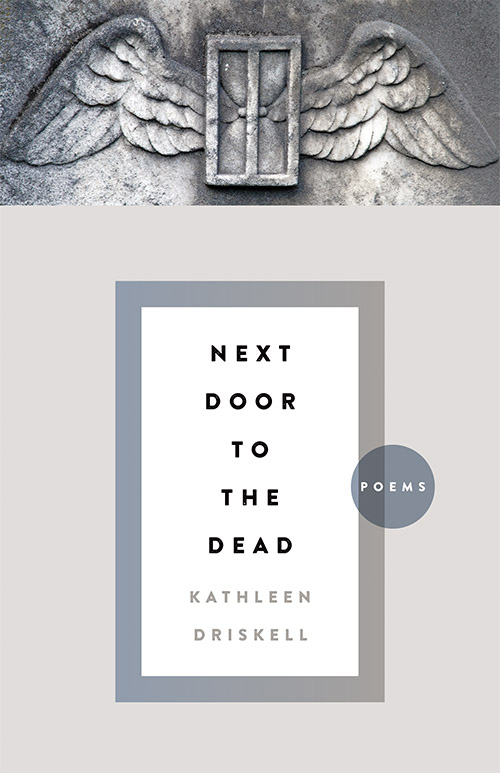
Next Door to the Dead, A Poetry Collection by Kathleen Driskell

NDTTD_cover                         NDTTD_cover

Perhaps not many of us would choose to live next door to a graveyard. Fewer of us would spend our time walking among the graves, imagining what the lives of the departed had been like. Poet Kathleen Driskell did just that when her family moved into an old country church outside of Louisville, Kentucky, twenty years ago and from that event gradually emerged a poignant collection of poems. (For the record, I enjoy cemeteries and grew up next to one.)

Her aptly titled book, Next Door to the Dead, published by the University Press of Kentucky, shares haunting, fitting, and relatable observations from mortality to feminism (see the hilarious but pointed At Harlan Sanders’s Grave). From the oldest marked stone (1848) to present-day burials Driskell herself witnesses, in her capable hands death is merely another field of life on which to display what it means to attempt (and often fail on all fronts) to live.  Not many poets can achieve this without being maudlin, but Driskell does so adroitly.

With a soaringly omniscient POV, Driskell explores deeply and widely what it means to be human and she does so armed, one assumes, with only a literal, gray palette of stones next door, etched with words meant to convey more than they ever can. And yet, in her hands, we see the cemetery, we see those who are buried there perhaps more clearly than even their kin did. Perhaps more importantly, we see both the worst and the best in ourselves.

Full disclosure: I have admired Kathleen Driskell from the moment I became a student in Spalding University’s MFA in Creative Writing program. She’s a dynamo, and I more than a little heroine worship her. Her poems (this collection included) have a way of burrowing into your mind and soul. I have been privileged to travel with her on the program’s overseas trips and have often wondered how she and I could have seen the same mountain and yet, somehow she has this gorgeous poem to show for it and I have only another photo of, yes, a mountain.

????????????????????????????????????
Kathleen Driskell

I, too, used to live next door to a cemetery. It was on the hill just above the house where I was brought up, and I could look out my bedroom window and say hello every morning to the distant family members (and others) who resided there. So I have a real affinity for cemeteries. But that’s a post for another time.

About Driskell:

Award-winning poet and teacher Kathleen Driskell is Professor of Creative Writing and serves as the Associate Program Director of Spalding University’s low-residency Master of Fine Arts in Writing Program in Louisville, Kentucky. In 2013, she was awarded the honor of Outstanding Faculty Member by the trustees of Spalding University.

Her newest collection of poetry, Next Door to the Dead, was published as a Kentucky Voices Selection, by the University Press of Kentucky (2015). In addition to the nationally best-selling Seed Across Snow (Red Hen 2009), she is the author of one previous book of poetry, Laughing Sickness (Fleur-de-Lis Press 1999, 2005 second printing), and Peck and Pock: A Graphic Poem (Fleur-de-Lis Explorations 2012), as well as the editor of two anthologies of creative writing. Her book of poems Blue Etiquette will be published in 2016 by Red Hen Press.

Kathleen’s poems have appeared in many nationally known literary magazines including North American Review, The Southern Review, Shenandoah, Cortland Review, and Rattle, and in The Kentucky Anthology, What Comes Down to Us: 25 Contemporary Kentucky Poets, as well as online on Poetry Daily, Verse Daily, and American Life in Poetry.

Grab a copy of her newest at Amazon.