A Writing Checklist

744298ac-ef6f-4295-8bd3-9cda5f46b764

I wrote this recently and shared it with my husband. He asked if he could have a copy, which surprised me, because I didn’t know anyone else would be interested in it. But if any of you find it useful, feel free to make this yours as well. Just if you share it, give me credit. 🙂

For me this is more my philosophy of writing than a nuts and bolts list, although there are a few of those on there.

A Writing Checklist

By Drema Drudge
1. Have I engaged all of the senses?
2. Have I built anticipation and tension?
3. Have I created a plot that leads to the answer of a question?
4. Have I resisted the urge to describe too much?
5. Does every word belong?
6. Have I considered the sound and cadence of my words?
7. Do my characters live?
8. Are my characters complicated?
9. Do they make us see the world in a new way or in a new light? Do they confirm something?
10. Have I created a world?
11. Have I done adequate research, if applicable?
12. Have I taught and/or entertained my readers?
13. Does this work of mine make the world a more complete place?
14. Have I portrayed a facet of truth?
15. Is this my best effort?
16. Have I been fearless?
17. Have I attempted to address any weaknesses in grammar, style, etc.?
18. Have I been open to criticism and feedback from my beta readers without compromising?
19. Is my work original in every way?
20. Am I writing work that engrosses me?

What is on your checklist, mental or written?

My Top Ten Tips for Organizing and Writing About Art: A Sneak Peek at my Ebook.

I’d already read Susan Vreeland’s books, and Tracy Chevalier’s wonderful Girl with a Pearl Earring. I fell for Of Human Bondage as well — it remains my favorite novel, even though I did throw it against the wall when I finished it because I was so distressed at Philip’s decision. But it wasn’t until I took a college class called “The Painted Word” that I considered mingling my twin loves of writing and art.

When we students were asked to write about art, I wrote a short story based on a painting that turned out to be my first work of fiction ever published. The person who published the piece said I should write more about art. An agent who read the story agreed. So I’m fond of writing about art.

Writing about art shares skill sets with all writing, of course, but I do have some tips that can help you make the journey from yearning to write about art to actually doing it. In fact, I’m so convinced that there are hints and tips that can help that I’m writing an Ebook about it. Until it’s out, here are my top tips. While they can be used for writing in general, they are more art writing centered and because I write about historical art, can be applied to historical writing as well.

1. Print eight by ten photos of the main paintings you are writing about and put them in a binder. Print them on photo paper, not on regular paper. It will be so much more inspirational. Trust me.

2. Break out the old school notecards and rubber bands. There’s nothing wrong with using typical research recording methods for fiction. It just likely will not be enough.

3. Have a binder for essays as well. While you’ll make your notes on notecards, sometimes just revisiting old territory will yield a little gem you missed the first time around. Or perhaps you just want to capture the tone of the essay.

4. Keep a record of all of the books and websites you consult. You may not end up citing them all at the back of your book, but then again…in any event, you can always include them on your website. (You do have a website for your book, don’t you?)

5. Draw your notes, to make sure you keep your novel image driven — you’re going to want to do this with art, right? Seriously. Even if you’re not a great artist, try it. Bonus tip: as you read, pick out startling or vivid images to open and close your book with.

6. Google “art terms.” Learn them. Use them liberally in your works. Those who know them will respect you, and those who don’t know them will learn and be in awe of you. 🙂

7. Make timelines of art and artists during the time period you are writing about. Because no one (or at least I can’t) can keep all of those dates straight without a little help. This is also a bit of an outline, brought to you courtesy of history.

8. Dig into all the key players and some who aren’t. While I’m certain that your main character is fascinating or you wouldn’t be writing about her, be sure to delve into the background of secondary characters to complicate your plotlines.

9. Consult any surviving family. It’s a longshot, but maybe…while the last two artists I’ve written about sadly did not marry or have children, you may have better luck. Even a cousin could be a great resource for family lore.

10. Make things up if you don’t contradict facts. I was actually told this in a workshop where I was gently chided for writing too timidly in spots where I had no information. I quickly realized my workshop leader was absolutely right, and I now make up anything and everything with abandon if there isn’t contradictory evidence. It’s quite freeing.

These are only ten of the top tips I have to share about art writing. While I don’t have a definite release date for my Ebook, I’m guessing it will be within the next three to six months. Look for The Grammar of Painting coming your way in, say, September. Or sooner! If you’re an art writer (or just a wannabe!), what do you need help with? I’d be glad to take a try at addressing your need in my Ebook.

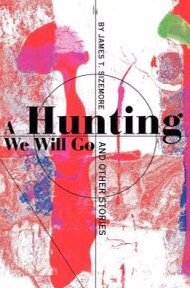
P.S. Clearly the photo on this post is not of my forthcoming book. But it’s cool, because it’s a book from 1891 that shares the proposed name for my book.

A Backrub Book Review: Amy Tan’s The Valley of Amazement

Valley of Amazement

I adore Amy Tan. There. I said it. Call me biased, but there isn’t a word she has written that I don’t just love. And in case you doubted her coolness ratio, she’s also in a rock band!

Her latest novel, The Valley of Amazement was a Christmas gift from my husband, Barry. We were lounging in bed when I finished reading it, so I rubbed his back and talked about the book. I giggled and said I had just given a “backrub book review.” Alas, Dear Reader, I have no backrubs to offer just now, but I will gladly tell you what I told him.

As always, Tan wraps her readers immediately in a nimbly crafted world. She is a story teller bar none. Her prose is dainty and well conceived, but also rather invisible, as it should be. Her threads are silken, fine. While a large part of Tan’s appeal is the exotic nature of her tales, happily she addresses the universal.

Set partially in Shanghai in the early 1900’s, the book was particularly charming to read because I will be visiting Shanghai (accompanying my business-traveling husband) this year.

The main character, Violet Minturn, is brought up in her mother’s high class courtesan house, until circumstances cause Violet to be separated from her mother and forced to become a courtesan herself. (I can’t say too much more about how they become separated.) Violet, half Chinese, learns to embrace that newly discovered side of herself in order to survive the horrors of her life.

In this story of tragedy, misplaced trust, and, finally, quiet hope, Tan gives Violet a substitute mother, Magic Gourd, a woman Violet’s mother kicked out. Violet ends up at the house where Magic Gourd has gone, and the woman takes her under her wing, making her a well-sought after courtesan.

The story is nicely paced, beginning with a first person section in which we hear from a young Violet. This shifts to a clever second-person POV chapter titled “Etiquette for Beauties of the Boudoir.” It gives us all of the background information we would like about courtesans and their ilk without info dumping or trying to artificially fit it into dialog.

I must admit there was one spot where I stopped and shook my head a few times and asked Barry if he thought it was fair of Tan to reintroduce Violet’s mother after page 400 and tell us her backstory. For a few pages I fought it, but soon I was immersed in her story, and was rather sad to leave it to return to Violet.

I was also concerned that with only about two hundred pages left, Tan wouldn’t be able to satisfy her reader if she wandered away from Violet, but she did. I should never have doubted her.

Although he appears to be a shadow of a character in this book, I am more than a little interested in the artist Lu Shing. So forgive me if I shift now from a traditional review that you could get anywhere into a meditation on Lu Shing.

Violet’s father (a man Violet knows virtually nothing of), Lu Shing, is a second-rate artist who basically copies the work of masters and adds a detail or two, often at his customer’s request. Violet, having come into possession of two of his paintings, doesn’t like his work, but Magic Gourd keeps rescuing the paintings.

He figures into the story when Violet’s mother, Lucia, at the age of 16, falls in love with him in the United States, seduces him, and follows him back to China, while he protests continually that though he loves her, he will never be able to marry her or be with her.

Here’s the thing: Tan’s women are strong. They survive the grossest indignities, but they are their own worst enemies when it comes to loving men. They love unreservedly and ill-advisedly. In fact, their greatest passion in life seems centered around men, and it always causes them and those they love immeasurable pain.

In fact, these women often fall in love much more so of the idea of these men than the men themselves. That’s the case with Lucia and Lu Shing. We know before Lu Shing ever tells Lucia that his passion is for art, and that his passion even for that is pale.

The book’s title comes from one of Lu Shing’s paintings. The painting makes Violet feel uneasy when she finds it: “I felt certain now that the painting meant you were walking into the valley, not leaving it.” What she doesn’t know is that Lu Shing paints this same scene again and again, altering it at the whim of customers. She also doesn’t know that while the painting is a copy of an old master, the place is real, and it is a place she will visit and will have to escape.

Lu Shing seems muted, even when he paints. The women in the book ultimately take on this same muted quality when they are older. True, they survive. But they do so at the cost of vibrant feeling.

When Lu Shing is still in the United States he is asked “How do we capture the emotion in art?” His answer is telling: “The moment is altered as soon as I try to capture it, so for me, it’s impossible.” It’s also telling that he comes to the States as a young man to study with a landscape artist. There’s a stark, uninvolved, observer quality at work here that is, nevertheless, not without its own beauty.

There is no easy, happy ending to this book. Reunions happen, but not rosy, tearful ones. The strong women remain adamantine, and because of that, emotion is not something that they can afford to spare.

Just as Lu Shing has only walks through a life of shame at his weakness, so the women survive, but their connections seem both strong and tenuous. They are fiercely independent and yet devoted to the idea of one another. While we believe they stay in touch, the infrequent nature of their contact makes us believe they would survive just as well without one another. And yet this is a novel well worthy of a second read. What better message than that while we are connected, we are also strong enough to survive on our own?

Did you happen to catch the short story “The Frog Prince” by Robert Coover in last week’s New Yorker? What he writes toward the end of the story is true of this novel: “…and they found a certain contentment, living more or less happily ever after, which is what ‘now’ is while one’s in it.” I couldn’t sum it — or life — up better myself.

There is so much more to this book. I wholeheartedly recommend it. In fact, perhaps it’s time I read it again. Have you read it yet? Do you intend to read it? What else of Tan’s have you read?

P.S. I anticipate revisiting this book once I am back from China, so look for an update then.

Published, but not in a “flash”!

When I first became a student with the Spalding MFA in Creative Writing program, I quickly became enamored of flash fiction. It seemed to fit my terse, plain style, and I liked that there was no room in it for over explaining.

About my writing: I had never really written a short story until I took a creative writing course during my second round of college. Before then I had plunged right in and written two pretty bad novels. What made me think I could write a novel, I don’t know. I like to call those early efforts starter novels.

Once I discovered flash fiction I wrote maybe three stories. One of them turned into a novel which shrank to a novella. One of them was accused of being poetry(!) during a Spalding workshop. The third is a piece called “Drinking Ghosts.” I read it at our local university’s poetry reading a few years ago. (It’s not poetry. It’s not! It was just the shortest piece I had available.)

I have spent maybe three years sending “Drinking Ghosts” out to various publications. I have, alas, expanded it at the request of readers who thought I didn’t say enough. I have mentioned that darn fork three times, and yes, specified that it was plastic, lol. (I personally liked the ambiguity of the piece as it was, but maybe that’s just me.) One editor asked me just what that woman was doing alone in the office. Uh, has she never been asked to “hold down the fort”?

While in Italy with Spalding’s program I spent some early morning hours before a computer in a darkened room sending that blessed story out, sure at core there was something in it to be heard.

So when I was notified today that Yahoo accepted this story for publication, I was elated. It’s not a perfect flash fiction piece (re-reading it makes me wish I had tightened it back up), but it’s mine, and, thanks be, it has finally been published. Check one more thing off my writing goals list.

What’s that, you’d like to read it? Please do, here: http://voices.yahoo.com/drinking-ghosts-flash-fiction-12490386.html

Feel free to comment, either here or at Yahoo. Or both!:-) halloween2011_crop

Unmasking the Sprezzatura of Writing: What’s Under My Bed?

Ireland 2013 220

If sprezzatura means to express art in such a manner as to convey a supposed effortlessness, then let’s unmask that, at least in regards to my writing. (I say this with much tongue-in-cheekedness; I am not saying my writing is that good, but hey, how else am I gonna work up to what I really want to talk about: what I found under my bed this morning?)

(Note of interest: I took the above photo of Vermeer’s “Lady Writing Letter With Her Maid” in Dublin this past summer.)

While my goal is to one day get writer friends of mine to share honestly with us what’s under their beds, I guess I will have to show you mine first, so here goes:

This morning while cleaning the bedroom (it started with cleaning my writing room and spread from there), I decided to duck under the bed and pull out everything on my side. I am not going to share what I found under my husband’s side. Not because it’s so bad, but because I am respecting his privacy. NB: My dear husband said this could make one think many things if one reads it. All I mean is that while his side looked much like mine, I will let him choose to reveal or not any clutter there may or may not have been under his bed. 🙂

What was lurking under my side? Plenty of Kleenex that had missed its mark, I am sorry to say. Two issues of Poets and Writers. Two art books. Three library books, two of them wholly untouched and likely to remain so — they grow stale, don’t you find? Several paperbacks. A Woman’s Health. A pair of headphones. Three pair of socks. A marked-up manuscript of my novella. A printed copy of a topic that once interested me but now does not. Toss! A filled journal.

A sprezzatura is, again, supposed to hide, not reveal, the sludge of creativity such as what I found under my bed. In the painting above, we see a carefully staged scene. We don’t see the lady worrying because she can’t find the “mot juste” for her letter. Do we want to see our writers struggling for just the right word?

If you happened to have read and enjoyed any of my stories, know that all of those things (and more!) hiding under my bed go into making up one of my stories. The books are self explanatory. The socks merely keep my feet warm — I can’t stand being cold, and I often am. 😦 The filled journal is deceptive — I am probably the worst journal entry writer ever. I record petty, mundane activities or I rant. I unload the mind. I am not trying to impress. I read the journals of famous people, of those with great minds, and I flinch. Still, my journal entries work for me — if I didn’t empty my mind, there would be no room for anything else.

There might have been a few other odds and ends under the bed that I’ve forgotten: I think there was a hanger, and maybe a neck pillow. Oh and a plastic bag. Neither the hanger nor the plastic bag aided my writing, though: they were just part of the flotsam and jetsam that whatever creative creature lives under my bed pulls in. (Maybe you’re getting the impression that I’m not tidy. Well I’m not. I’m not a slob, but faced with the choice between writing or cleaning, guess which I’ll choose, every time? Ok, almost every time.)

So, who’s first? What’s lurking under your bed? And if you’re a creative type, how does it contribute to your art? Go!

The Golden Notebook: Organize Your Writing in 2014

If you want more “gold” from your writing in 2014 (be it money or just the satisfaction of seeing more of your ideas captured instead of left to wander off), try using your “golden notebook.”

(Disclaimer: I once owned Lessing’s “The Golden Notebook but got rid of it without having read it because it was copy I bought at the library’s book sale that was too musty and yellowed to keep. So if I totally misused the title, Lessing fans please forgive me. I really do want to read it.)

I have a writing organization system that works great for me – if I use it! So read the above title as a command to myself. Let me explain my system, in case you need one that you, too, can put into place and promptly ignore.

Because I have ideas for every category of writing you can think of (articles, essays, poems, novels, short stories, plays, movies, hints, blog posts and more!), I recently decided to go back to a system I used years ago. I bought two boxes (I am not kidding) of cheap spiral bound notebooks. My goal (seldom achieved) is to carry one with me AT ALL TIMES. No joke. Beside my side of the sofa (what, you don’t have a side?), in the kitchen, on my bedside table, everywhere.

Here’s where guilt has kept me from pursuing this method in the past: I write JUST ONE IDEA PER PAGE! Yup. Why? Because I have binders for these categories and I put the ideas in each binder. Well, that’s what’s supposed to happen so that when the well runs dry on story ideas (Okay, I actually pin that list to my office wall!)I know just where to go to find one. But I feel so guilty wasting paper. Yeah, there’s the tree killing aspect, for sure, but when I was young a notebook was such a precious thing that I have a hard time not filling every line. After reading Nora Ephron’s essay on revision in which she said she would often go through three to four HUNDRED sheets of paper in the course of writing one article, I don’t feel nearly so guilty.

The most important part of the system is writing the idea down. I have persuaded myself that as long as I write the idea down, I can always get my assistant (I’m getting one in 2014, right? Ha!) to file them as long as I include at the top what category the idea falls into. Just in case I have to be the one to wrangle these ideas, I do it anyway.

Except sometimes an idea really fits into multiple categories. Recently I ran across an idea that I classified as a blog post idea, children’s story, and blues song idea. I don’t generally write blues songs, but if someone needs some lyrics, evidently I have some just itching to be birthed. Sometime. The point is that when this happens, I really should write the idea multiple times and label it for each separate category.

You’re going to ask why I don’t just write these ideas and save them as separate computer files. I’ve tried. I don’t know why, but it doesn’t work for me. In this day of Dropbox (which I use all the time to back up my files), you’d think I’d have adequate access to my ideas no matter where I am.

Ah, but my ideas seldom come to me when I’m in front of a computer. They usually come to me when I’m reading, or driving, or running. Or watching TV or… If I waited to turn on the computer and write a new idea down, it could well be gone by the time I entered my password.

Also, looking at a list of ideas just overwhelms me. I prefer to flip through my ideas and see them one at a time. For one thing, it allows me to remember the circumstances in which I first wrote them, which usually makes me smile, and who doesn’t want a reason to smile?

I look at my list with a pen in hand. Here’s where having just one idea per page is very useful: I write down any ideas I have for that idea, maybe a rough outline, sources to contact, and markets for it, if any. That wouldn’t be possible if I had ten ideas per page. This way my ideas are more likely to be used.

About the paper: I use good ol’ spiral bound (Ugh, with those horrible leftover hangy things. Inelegant, I know.) notebooks. I have toyed with using a binder with paper in it, but it’s not as friendly — I like to fold the cover over and really get into contact with the paper as I write…it helps me empty the idea from my mind better. A binder creates a more formal distance and is not as tactile. Maybe it’s just me.

I have tried legal tablets, but alas, no holes, and I get so aggravated when I flip the page and can’t properly write on the top of the opposite side.

I have also tried beautiful journals, but they’re way too pretty to tear pages from, and they aren’t as conducive to writing my ideas as large as I like to. Those spiral bound notebooks really do have it all. 🙂

(By the way: That list of short story ideas on my wall? It works because they are all ideas for a single collection. Otherwise, forget about it!)

My challenge with this system is going back through and marking when I use an idea so that I don’t reuse it. It’s fine to reuse your ideas, but not for the same market. (Confession time: recently I went to submit a story to a publisher, only, thankfully, taking a moment to look at what else I had out on Submittable. Yup, I’d already sent the same story to this market four months before. At least I know I should be hearing back soon.)

Another downside to this method of organization is that you really do need to periodically go through your notebooks and place these papers into the appropriately labeled binders. Hey, here’s the beauty of creativity: just touching these papers and reading them can often jog more ideas. Which must be written down. Which must be filed. Arggh…! Here’s where I reveal the obvious: I despise filing things. I have three or four bags of papers ready to be filed into our household filing cabinet. I’ll get to it. Someday. But at least my ideas are different: none of them seems a burden. Each is like a gift from my mind or spirit to me, even those I think I will never ever use.

Do I think I will ever use all of my ideas? No way. Writing them down and saving them is just a way of honoring them and a way to amuse myself when I later look back and ask myself how I could have possibly thought that was a good idea. Yet maybe there really does need to be a musical written about Van Gogh. Joking…that doesn’t happen to be one of my ideas. Although, where’s my notebook?

The plus side of having so many ideas? If you ever find yourself fresh out of ideas, just give me a shout. I may not have great ideas (although at the time that I write them they are always “the best,”) but I certainly have enough to share.

How do you organize your writing (or other creative pursuits)? I’d love to know! I’m quite sure there are better and more effective systems out there. Wait, let me get my notebook first. There. Now, shoot.

Julie Brickman’s Two Deserts

Julie Brickman’s Two Deserts draws us into exotic worlds — both foreign and domestic —  that slowly reveal to us the unacknowledged and unknown layers of life in and around us all.

Brickman’s well-crafted stories expand exponentially with their deft movement, bittersweet insights, and unexpected humor. The book’s titles are often darkly humorous and always intriguing:”The Cop, the Hooker, and the Ridealong,” “Supermax,” and “The Dying Husbands Dinner Club” all live up to their titles.

One of the bravest stories is “Gear of a Marriage,” which consists of five pages of nothing but lists, starting with “Hiking boots, 2 pair,” and ending with, well, I won’t say what, but illness is involved. It’s the single most devastating story in the collection, its spare prose and unique form perfectly wringing from us an intense emotional reaction using matter-of-fact language.

Brickman explores various points of view as well: first, third, and the underrepresented second.  She’s not afraid to explore those vast deserts.

That Brickman has also been a psychologist benefits the reader as she zooms in and out of minds and psyches, of hearts and emotions. This is a Choose-Your-Own-Adventure collection for adults, although a more apt name might be “What Would You Do?” Constantly putting her characters into impossibly difficult situations, Brickman keeps us curious, longing, wondering. No matter in which desert we find ourselves, we find an oasis in this collection.

Nowhere is this better represented than in “The Cop, the Hooker, and the Ridealong,” where a psychiatrist muses “The end of subjectivity was the end of the only kind of truth that could steer a life, truth rooted in self-discovery, the stark naked truth generated by the guts.” This beautiful, deep sentence sums up this tender collection.

Smart, brave and true collections such as this one don’t come along often enough, and they certainly don’t get the attention they deserve sometimes because they are smart, brave, and true.  These stories certainly are.

Life Hack: Give the Greatest Gift

Greatest Gift You Can Give Someone Is Your Time

I have had some awesome teachers and mentors who have freely given of their time, and I treasure that. We can all make more money, but none of us can buy any extra time. (Although we can manage what we have better, perhaps.) As creative, we need to give back some of that precious time we have been given.

When I think of how I pestered and questioned my mentors, when I pulled every last shred of knowledge and insight from them that they could afford to give, I feel just a bit embarrassed. My enthusiasm can be, ah, a wee much. There. I admitted it. But they were patient, kind, and generous, God love them.  I wouldn’t be who and where I am today without them.

Make a list of two other creatives who could use some of your time. Do they need a card, a hug, a shout-out of their latest work? Today I read a beginner’s poem. It was fun for both of us, I think, although I did suggest he call his poem “The Thread Amendment.” I’m not sure he saw and/or appreciated the pun.

I instantly know when I’ve met a creative: I feel that magnetism. Sometimes it’s stronger than at other times. I can even feel what I call “repressed creatives.” But that’s a different topic for another day.

Give the greatest gift to another creative — give of your time. It doesn’t take very long to comment on a blog post, to share good news on Facebook, or to favorite an item on Twitter. Just do it. Let’s be there for one another!

P.S. The above photo and quote express well what I mean, but the photo isn’t quite my style. But you probably knew that already. 🙂

Life Hack: Power Hour!

Ireland and  Chicago 2013 203

Sometimes we creative types can become easily overwhelmed. It’s not because we are flawed (never that!), but because we have so many great ideas.

I think I already explained that we are a bit, ahem, disorganized, but I am convinced that too much organization is a creativity killer. A little, however, can be helpful.

This leads me to my next life hack: Power Hour! It sounds like the title of a religious TV program, but it’s not.

Here’s how it works:

Are there little niggly tasks that never get finished? Or started? Don’t know where to start? Make a list of creative tasks — reading a blog and commenting, sending out a query, checking out contests, or maybe reading a writing magazine.

Got that? Great. Then all you need to do is schedule a “Power Hour” for the week. This is for tasks that you just aren’t getting to…like blogging, lol. Now use every minute of that hour to go, go, go! Do as many tasks as you can in that amount of time, and when you are finished, quit feeling guilty until next week’s power hour.

How much can you do in an hour? That’s what I thought.

Does an hour sound like too much? Fine, just start with half an hour, or even fifteen minutes!

Here are some things I can do in fifteen minutes:

1. Submit a story (or two, if I cut and paste my query) online.

2. Record all of the writing contests I want to enter for the month on my Yahoo! calendar, complete with reminders.

3. Print a story and stuff it in an envelope if it’s, sigh, for a snail-mail market. (Sorry, not a fan. Love the markets, just not the cumbersome process. I’m a creative, remember, not a clerical type. Some of my best friends are detail people, though.)

4. Research a residency and daydream about getting in.

5. Write on my “go-to” story.

6. Begin an essay.

7. Read an article or a story from one of the magazines that tend to pile up.

And that’s with only fifteen minutes! Now quadruple that for your Power Hour. What can YOU do with fifteen minutes? Or an hour!

What’s the advantage to doing this? It’s been my experience that we have to make time for the big picture things or the day-to-day will swallow the future. These little things should be those that will add to our lives, to our sense of having a future, of achieving our dreams some day.

Okay, that’s it. Creatives have a short attention span. Or maybe that’s just me. Squirrel…

With my “Power Hour” today I wrote and sent a query, called for sources on Facebook, and sent an email with questions to a source.

What will YOU do with a Power Hour? Share your ideas and let me know your progress!

“Swift” Speaking by The President of Ireland

michael d higgins

When our daughter was young, Barry would often read aloud to her. He once read an excerpt from “Gulliver’s Travels” and she giggled incessantly upon realizing what “making water” meant, bright child that she was. The next few hours found her laughing and repeating the phrase. I’m not entirely sure that’s what we wanted her to most remember (Or repeat. In front of her grandparents!), but she has never forgotten it.

While in Ireland recently, we were offered the opportunity to attend the Swift Satire Festival in Trim. It was a pleasure made doubly so by the President of Ireland who is not only a leader, but a scholar, giving the festival’s inaugural address.

The president spoke eloquently and with fervor about Swift, a man who had also been the dean of a local church in Trim, a town more recently distinguished for having the castle used in the movie Braveheart. (Pictures to come.)

Higgins ended his speech with a word to writers, one I shared today with my students, and one I take to heart:

“Without the engagement and passion of people, without the raised voice of the intellectual and the poet, without the willingness to engage in public discourse at the price of personal risk, without the willingness of the powerful and the well connected to feel such a thorn or scruple as will impel them to disturb the composure of their class and peers and go on to champion the cause of the marginalised and the excluded, we will not have a society which is worthy of the support and allegiance of all of the citizens.”

At the conclusion of his speech he shook hands with a few of his listeners. My husband and I were happily among those. Sad to say, our hands were too occupied to use our camera to record the event. But what’s the chance we’ll ever forget it, anyway?