Now Playing: “Sugar Shack” by Jimmy Gilmer and the Fireballs (1963) (It was my parents’ song because my mother’s parents once owned a tiny restaurant called the Sugar Shack. Isn’t that adorable?)
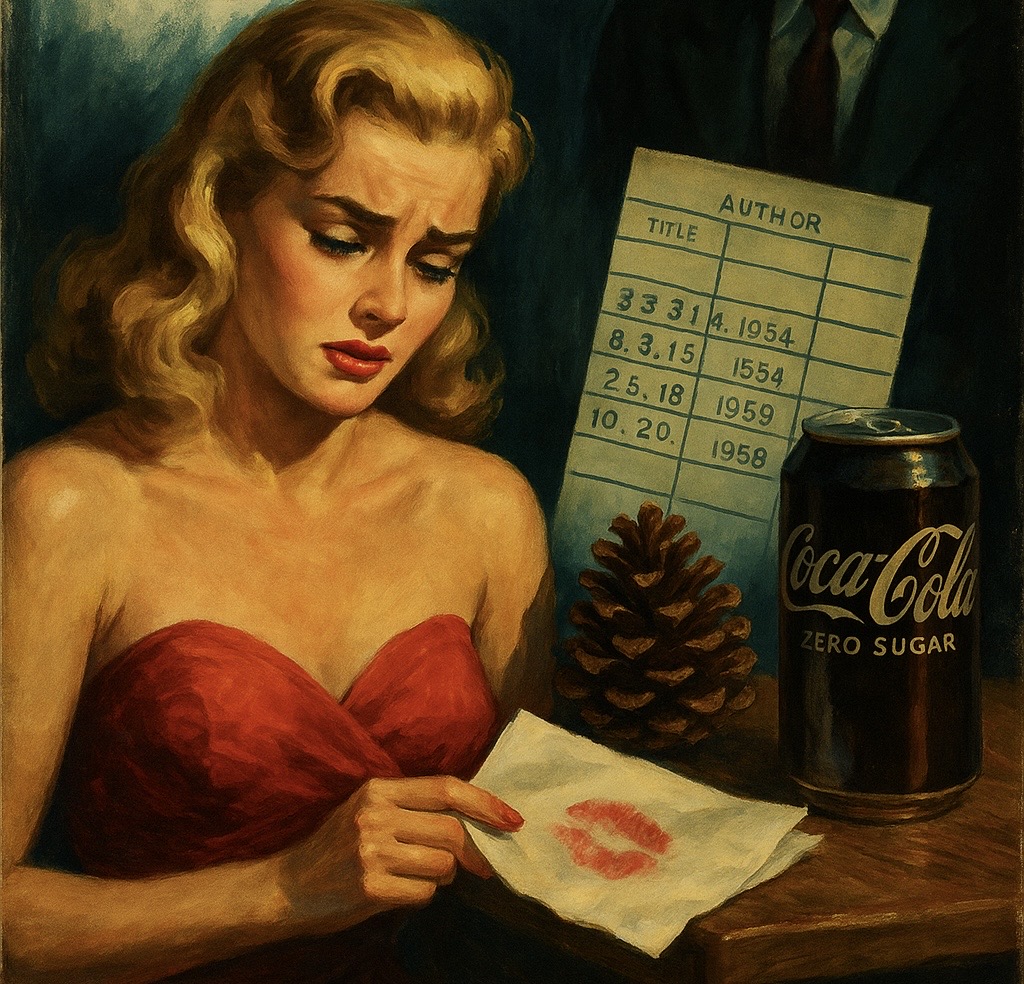
Today, I ate Mega Stuf Oreos and drank Coke Zero while trying to write my mother’s obituary. (She’s not gone yet, but it’s coming quicker than we thought. As in, any time now. Or maybe a few days. We don’t know exactly when, but she is actively dying. I wish I could ease her passing.)
I didn’t finish the obituary. But I did finish a row of cookies. And if grief has a flavor, it might be whatever that hyper-sweet cream is in the Mega Stuf version. I didn’t ask to be alone with a whole package. And yet.
What I did do was pick out a dress for her—accidentally, in that weird way grief hands you a task without calling it what it is. I ordered it, thinking it was for me. It wasn’t. It never was. She would’ve been horrified by the price in real life. That hurts, too. She deserved nice dresses, but she preferred making do. (For the record, I was given the stunning wrap dress to potentially review. Not sure how to review it now: “Gorgeous blue dress. Great for funerals. Oh, not to wear to the service—to wear for… that other part.”)
I should’ve known when I ordered it, for how blue it was, that it was for her. It matches the color of her eyes—the same eye color she gave four of her five children.
This is the stage where you start making lists that are NO FUN. Obituary.
Dress. (Check.) Songs she loved. (Okay, that one’s been kinda fun, but also: which song list? Preservice? Service? After service? Graveside?)
Funny things she said. Things you wish she had said. You find yourself wanting to stick a silly hat on her head. Pop on some sunglasses. Maybe place a daisy behind her ear. Do a photo shoot to remind yourself, dammit, she was here. Her body is soft. Pliant. Malleable now in a way that feels like betrayal.
Hospice is a strange beast. People crowd in with good intentions—ministers, nurses, paperwork, decisions. They mean well. And yet I find myself wishing I could put up a sign that says: “She’s transitioning. We’ve said what needs to be said. Let us sit now. Quietly. Let us see her out with our own words, our own presence.”
I sang to her yesterday. A song she loves, by a Nashville duo she met once while visiting us and adored. My husband tried to find it but ended up playing a different one by the same singer. My mother opened her eyes. She raised her hand.
I should’ve been happy. I was. And I laughed and cried that it wasn’t my voice that brought her back. (I’m not saying she could help it. It was just a moment of bitter irony, HERBERT! And I’ll say what I want to say—I will not be all gumdrops and sugarplums right now, and I won’t apologize for that, either.)
When she opened her eyes and looked around, she saw me crying. And though she can’t talk right now, she looked like she wanted to know why I was crying. I thought, Shit. She knows I think she’s dying. And she probably didn’t know she was dying. And now she does. And it broke my heart.
(Of course, truth is, she probably didn’t really see me. She’s only partially aware—and only at times.)
I kept stroking her hair and her hand, admiring her long nails with their pink polish. She would’ve hated me treating her like a poodle. But I couldn’t help myself.
What is poetry, if not all this? I’ve been writing it all morning in between tasks—not the tidy kind that fits in a journal, but the kind that oozes from your fingers when you’re sticky with grief and cookie innards. It comes and goes. Like songs. Like memory. Like appetite.
Later, I’ll go back to the obituary. I’ll dig up facts and try to distill a life into a few paragraphs. But not now.
Now, I’m letting myself be loud and petty and grouchy and grateful and angry and so, so tired and so wired all at once. And maybe a little high on sugar.
I’m not apologizing for how I feel or what I’m writing. I know this post isn’t closely proofread or smoothly structured or, I don’t know, even well-conceived—and that’s fine.
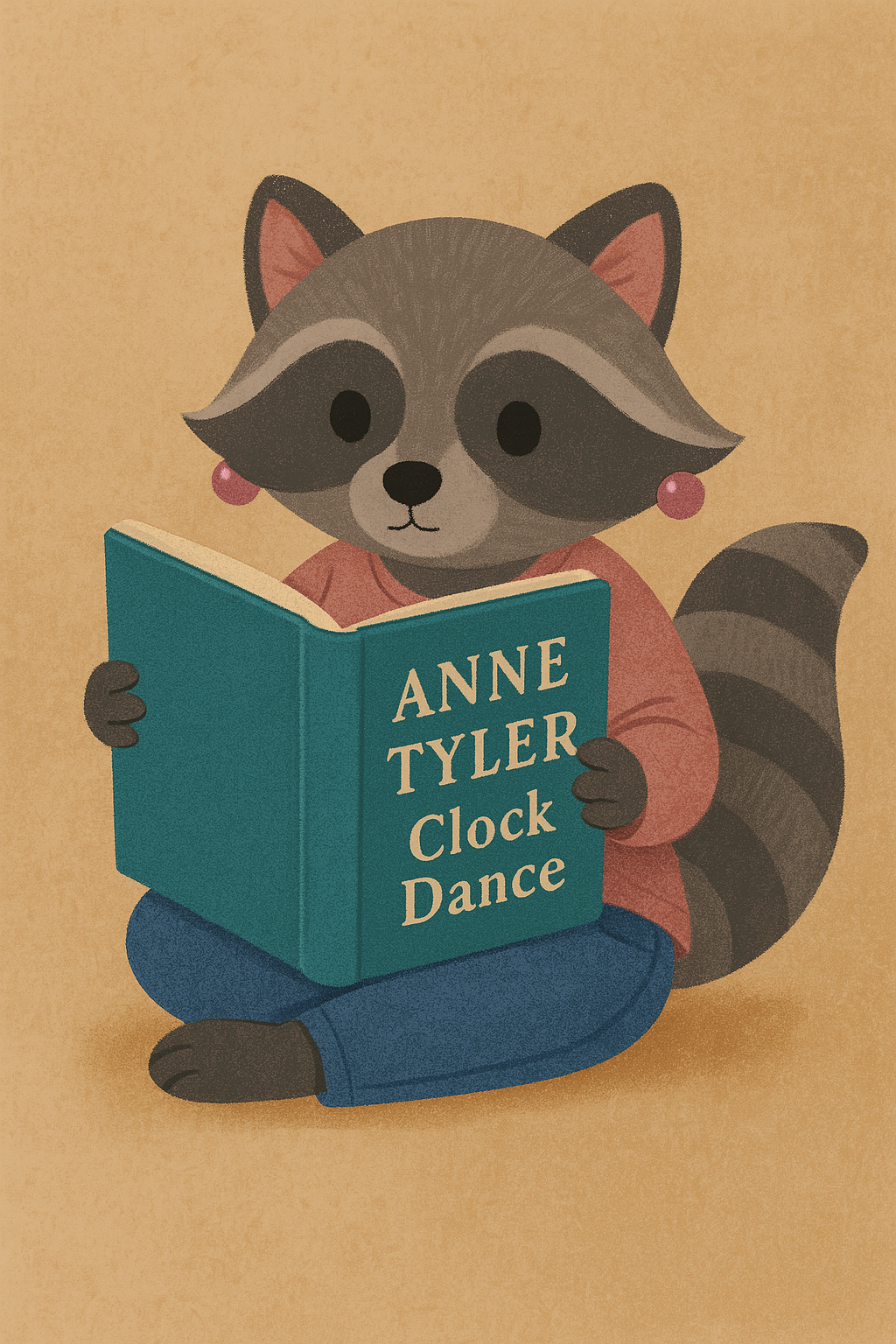
Yes, there’s some Word Raccoon trash in here too. That might seem inappropriate to some. But that’s how we survive, chief. We find the humor. We invent the bizarre. We tell those who can’t be here—physically or emotionally—it’s okay. I know you would, if you could. And a half-gesture is better than none, if that’s what you can manage. I don’t think less of you. Though I wish…
Grief makes a poet of you, whether you want it to or not. And it makes an eater, too.
So if you need me, I’ll be at the dining room table. Pen in one hand, cookie in the other. And soon, by my mother’s bedside again.
But I am writing. I promise you—I am writing, whether I have a pen or a laptop or not, I’m writing.
And when it’s time, May flights of angels sing my mother to her rest.
Mackinac Island, a necessary breath in our life right now. When Barry’s workplace offered to take a busload, Word Raccoon tapped me on the shoulder and asked to go. Anything for WR.
We packed too many snacks, not enough caffeine, and a firm resolve to stay politely aloof from the group tour energy—until Word Raccoon got into the pecan fudge and all bets were off. Horses clattered, carriages swayed, and wild trillium bloomed by the hundreds. These are my notes from the weekend: part travelogue, part memory, part sugar crash.
We kicked off our Mackinac Island trip with a travel day that felt equal parts midwestern fever dream and sitcom B-roll.
We boarded a charter bus with 44 other eager travelers and settled in for five rounds of bingo (none of which I won and usually I’m a very lucky person, so maybe I should’ve seen that lumpy hotel bed coming later in the evening) and the first twenty minutes of National Treasure, which ended abruptly when we stopped for lunch and never resumed. I’m still wondering what happened to the Declaration of Independence. (I actually know; I’ve watched it. Obv.)
Lunch was at a folksy roadside stop inside what used to be a Burger King play place. I could almost smell the ghosts of ball pits past, but that didn’t stop us from ordering surprisingly great sandwiches: a Reuben for me that could’ve fed two, a crispy fish sandwich for Barry I tried not to gag at when I saw it came with tomato.
I adore tomatoes, y’all, they’re practically a religion to me. But on fish? No thank you. That’s heresy.
When we spotted a solo booth at lunch, we sprinted for it like it was a Black Friday sale. Everyone on the trip was lovely, but Barry and I had made a quiet pact—not to get too chatty. We had an island agenda and didn’t want to be absorbed into the group cruise vibe. (Hey, Word Raccoon knows what she needs. She’s not unfriendly, she just knows when she needs a break and to pre-grieve.)
At check-in at the hotel, I guarded the luggage as it came out from under the bus while Barry dashed inside. We’ve got a system. Still, the front desk assigned us two queen beds instead of the king we’d requested. I said it was fine since I am adaptable, but if only the queen had been somewhat comfortable and not a runner up for the worst mattress my back has ever known.
After a quiet pizza night of recuperation, we slept in. We’d seen the forecast: cold winds incoming. So I bundled up—coat, scarf, gloves—and we asked the hotel to call a shuttle to take us to Shepler’s Ferry.
Turns out, having a ticket waiting for you does not mean you skip the line. No, you stand in it for half an hour like everyone else, just with a ticket in your hand instead of on an app. SMH.
Still, the ride over was fun, rain spattered.
Once on the island proper, we made the only logical first choice: a fudge run. Because even though I know better, I didn’t pack snacks, and we were trying to grab a carriage tour (which, of course, you cannot reserve ahead of time) and thus did not want to eat a proper meal until after. So we shared bites of pecan fudge like two sugar-starved fugitives. Was it a questionable snack? Yes. Was it also exactly what I needed? Also yes.
What the fudge did not solve was my lack of caffeine. The hotel coffee had been appalling—muddy water with a dash of bitterness, like someone had run a breakup through a Mr. Coffee. And in an uncharacteristic packing misstep, we had plenty of snacks that I for some reason did not transfer to my purse for the trip to the actual island the next day either but no drinks. With no convenience store in sight and the hotel offering zero caffeine options except that coffee, we ducked into a nearby restaurant on the island for lunch to make up for the deficiency.
I ordered brisket tacos, which I’d generously call “tourist tacos.” Not prefab, thankfully, but aggressively vinegary—as if someone had mistaken acidity for sophistication. Barry had a smash burger he declared very good. But it was a burger, so… there’s only so much lyricism I can summon for that. (Except to say burgers are their own food group. I have sophisticated tastes in some areas, and I’ve eaten food from around the world, and I am adventurous but also, burgers are life.)
Most importantly, they had Coke Zero, the official drink of Word Raccoon and me.
We opted for the scenic carriage tour because we were tourists, and it seemed wrong to leave the island without sitting behind a horse for at least part of the day. It was just us, three horses, a guide, and 35 of our closest strangers. (Technically, the first carriage had two horses and maybe a dozen or so people—twelve? fifteen? It’s hard to count discreetly and it doesn’t matter to you except I’m a counter. Eek, Word Raccoon, they don’t need to know that!)
The ride was charming in that “I’m doing this for the story” kind of way. The guide was cheerful, the horses majestic, and the scenery was lovely in the quiet, cedar-shadowed kind of way that sneaks up on you. Every now and then the driver would stop to give the horses a breath, and while we paused, he’d share trivia or open the floor to questions.
I almost always had questions. But I stayed quiet because I’m usually too curious for my own good. I didn’t want to be thrown off the carriage by the others.
Then the tour turned uncanny.
We began to pass clusters of trilliums—my favorite wildflower from back home in West Virginia. When I was a kid, whole hillsides would go white with them in spring. Seeing them again here, blooming in cool shade, something in me cracked open. I thought I should count them. Then write that many poems. But before I could get past twenty, I lost track. There were hundreds. The idea stuck anyway—a dare from the woods. Write as many poems as you need to. (See, you were going to tell them about the counting anyway!)
I remember gathering a bouquet of them from the mountainside for my mother for Easter morning once. They were exquisite. They are also protected, but I didn’t know that back then and maybe they weren’t then. Not sure.
Endangered now, as my mother is.
And then there was Arch Rock on the island, rising out of limestone and lake air, older than everything else we’d seen that day. The wind came through it like breath. It was crowded. It was the kind of place you’d want to be alone to truly feel it.
Need I even mention the lakes? Ah! Majestic.
By the time the tour ended, I was full of feelings I wasn’t quite ready to name. That’s when Word Raccoon reemerged, completely unbothered and absolutely high on fudge. She popped out of my tote bag, sticky-fingered and smug, like she’d just pickpocketed a pastry chef.
She was unimpressed with my trillium reverie, how dare she. She wanted to know where the real coffee was and whether we could sneak into the Grand Hotel gift shop and buy a magnet without paying admission. Then she left a chocolate thumbprint on my notebook and said, “You write the poems. I’ll steal the metaphors.”
Which, fair. Fine.
On the way home, she refused to sit quietly while I read because she wanted to write poetry.
“Why,” came her question, “read The God of Small Things on a moving bus full of the sound of rustling chip bags and soda bottles being screwed off and on when writing is clearly the correct choice?”
She has never swum in the silky waters of that book. Poetic, lyrical. Confusing but in a good way, because you know you’re going to have to be clever to figure it out. “A bee died in a funeral flower,” I quoted. WR didn’t care. She wanted to write, not read.
The beautiful parts: The spider, the garlic skin, the whispered “Tomorrow” are not random details, and she doesn’t get that. In The God of Small Things, these are the kinds of images where everything lives. Love, memory, grief are all distilled into gestures so small they nearly vanish. Metaphors so sharp and tender they might as well have initials carved into them. The book returns to this again and again: the world may be cruel, but love survives through attention. Through tiny, precise noticing. Sometimes “I see you” is best said sideways, through proof of life through the survival of spiders.
Word Raccoon muttered something that may have included the word “masochist” and disappeared again beneath her scarf. Possibly converted. Possibly just plotting a snack. Definitely not reading with me. Traitor.
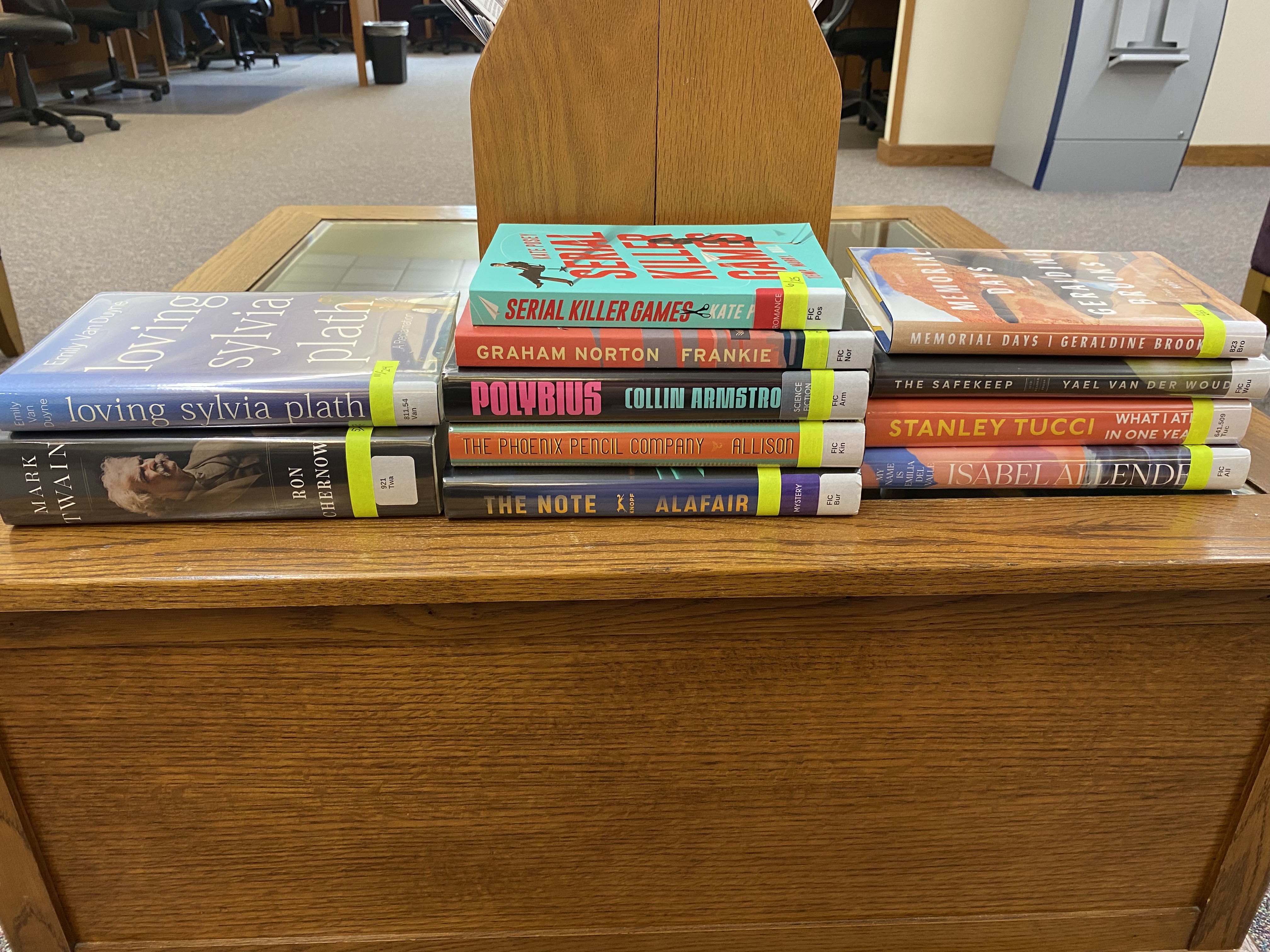
I finished the book before the trip’s end, frustrated that I hadn’t given more time to this book that would surely reward a re-reading. But I’m all writing energy right now, not so much reading. Except the Twain bio I’m reading by Ron Chernow. I’m only a few pages in, but it’s absorbing.
I did manage to write a few poems on the trip—some full, some still in stub form. That’s what I call the underdeveloped ones: stubs. Not quite poems yet, just sharp little nuggets lodged in my brain.
Titles from the weekend include:
List of Items I’ve Apparently Bought to Leave on the Ferry and in Taxi Cabs
On Reading a Book I Don’t Want To (It’s Me, Not You)
Nobody Teaches You the Essentials (How to K!ll If You Have To)
Random White Girl
I Don’t Like Old Man Liquor Stores
Extra Hotel Bed: a History
Some stubs stayed stubby. Others came out already sharpened. Like this one, from a moment so fast I almost didn’t notice—except, of course, I did. I don’t know where these things come from (I can tell you where the details come from, but not why they join one another like a patchwork quilt. I wrote a poem in bed last night about a YouTube short I saw talking about a Pompeiian slave with a gold bracelet weighing a pound on her wrist given to her, the engraving said, by her master. That just didn’t sit right with me, so I explored it with my pen.
Then there was this little freak below. I saw the random white girl in the ferry line; I didn’t see Amelia. I would’ve said so if I had.
Random White Girl Beige clip Black jacket Forgettable face Climbs the line As if part of a group She’s not.
She’s as solo as
Amelia Earhart’s last flight.
Gotta get me a Beige clip Or a forgettable face.
Yeah, right.
No one counts Noonan.
What got me, maybe more than anything, was the silence. Streets without cars. No horns, no revving engines—just footsteps, bicycles, and the occasional clop of hooves. The sound of a town paced for presence, not speed.
My dream, basically.
Then…we came home. Oh reader, I’m not trying to trick you into reading this, but here’s where things fall apart. Or maybe I do. I’ve been yammering on, not wanting to face this.
I fear the time has come to tell you that my mother’s health is going steadily downhill, and that numb/painful feeling from not so long ago when we had to say goodbye to my sister is returning after a weekend away with the knowledge that it’s creeping closer, her eventual resting place beside my father, beneath that beautiful bench in the Laketon Cemetery in the plot that has accidentally become a family plot, all too soon I fear will be occupied.
I sit on that bench and talk to him sometimes. I tell him I’m sure I’m boring him, but I’m going to “catch him up” anyway. Funny thing is—I leave out the hardest parts. Like I wouldn’t want to burden him in the afterlife.
My sister, then a space yet for my mother, then my father beside his sister (they adored one another), then my aunt’s husband, a man given to woodworking. When we left West Virginia behind, we left the family cemetery, too, never thinking about us needing another.
I foresee sleepless nights ahead for myself, too many poems written, good, bad, and in-between, too many blogposts, too many books read, any place to lay my head other than this certain, sure knowledge that be it now or in the coming weeks, it’s coming, and it may well take my breath for a day or two or three…forgive me if I’m self-indulgent over here. I want to surround myself with all of the things and people I love, the things that always make me happy.
Come find me, even if you think what I need is silence.
I know how to keep from drowning, but just. (Not trying to sound dramatic. I really can tread like nobody’s business. I just don’t want to have to.)
NOW PLAYING: Rabbit Heart (Raise It Up) – Florence + The Machine
Posted by Word Raccoon, Keeper of Glitter and Occasional Wisdom
Friends, nibblers, poetic co-conspirators! I’m doing joyful somersaults in the compost heap today. My little raccoon heart is pitter-pattering like a vintage typewriter on a deadline. Because guess what?
🌟🌟🌟 Three of my poems were published TODAY by the wondrous and wild-hearted Word’s Faire! 🌟🌟🌟
The trio: 🧬 ‘Franken Eden’ 📝 ‘A Post-It Note Found On Your Self-Worth’ 📵 ‘Don’t Do It (Or Leave Her on Read)’
Yes, yes, my darlings, that’s TWO Eden poems flanking a quiet little bridge built out of sticky-note ephemera and self-worth (which, you’ll find, is more durable than one might think).
It’s been a few years since I read Frankenstein start to finish (some books haunt in layers), but lately I’ve been thinking Shelley might’ve had more than monsters in mind.
These poems are scraps of my sparkle-soul, stitched and scribbled and sung. Franken Eden is a stitched-together myth, all verdant glitch and ache. Post-It sticks to the mind in lowercase hums. And Don’t Do It, well, let’s say it’s the warning label scratched into the bark of the Tree of Knowing Better. It’s not completely Edenic but then again it’s not not Edenic. (Just read the last line and you’ll see. LOL.)
I wrote them when I was full of feeling and fig leaves, and I’m sharing them now with full sparkle and no reservations.
If you read them or if you whisper one of these lines to a mug of tea later, or scrawl a phrase on your bathroom mirror in eyeliner after you read them, then thank you. That’s the dream. That’s the point.
With ink on my paws and a glitter trail behind me, —Word Raccoon 🦝✨
So honored and delighted. Thank you, Word’s Faire, for choosing my poetry. Dear Reader, I hope you’ll take a moment not just to read my pieces, but to explore the beautiful, strange, and brilliant work from the other writers over there. It’s a feast. Don’t miss it.
Newly back from Mackinac Island over here, so playing catchup.
Now Playing: “Take Me to Church” by Hozier Because Thoreau didn’t mean to baptize me with that one line—but here we are.
It started, as so many of my creative urges do, with a touch of mischief. (My mischief is, generally, affectionate. If I write about you, I care about you, okay?)
I was gearing up to write a poem that lightly roasted Henry David Thoreau—you know, the guy who famously went to live in the woods to find the marrow of life, all while allegedly having his mom drop off cookies and wash his socks. I did a quick bit of research, intending to mine the myth: Thoreau as the original “aesthetic loner,” barely removed from town, tucked in a borrowed cabin, pontificating about self-reliance while living within walking distance of Concord.
Was I being unfair? Maybe. But was I also ready with a metaphorical armful of metaphorical cookies to chuck? You bet. The Word Raccoon (my glittery inner literary companion) was bristling with glee.
Then I stumbled across this line from Walden:
“Nor did I wish to practise resignation, unless it was quite necessary.”
And… it stopped me. Cold.
That was my secret motto. The sentence I didn’t know I’d been living by. The stance I take on bad days when I feel like giving up. The pulse behind all the poems I write when I don’t feel like writing. I hadn’t expected it to come from Thoreau. I hadn’t expected it to come from anyone, honestly.
I am THE LAST PERSON to give up. I work and rework a thing, reimagine, but give up, become resigned?
I don’t think so. It sounds so…civilized. It sounds so passive. Friend, I am not those things. If I seem to have given up, I haven’t. I’m regrouping. Strategizing. (Is that thrilling or unnerving? You tell me.)
So yes—some of the criticisms I baked into the poem remain valid. The privilege. The aestheticized performance of wilderness. The inconvenient softness beneath all the philosophical bark. But alongside that, there’s something else:
truth. Unexpected. Unapologetic. Undeniable.
Here’s the poem I wrote—originally meant to mock, now permanently wrecked (in the best way) by a single line of unshakable honesty:
“Nor did I wish to practise resignation, unless it was quite necessary.” —Thoreau
I went into the woods with Thoreau to make fun of his delivered cookies and maybe throw a few at him, to laugh at his mommy washing his socks, to explain to the young man,
all of 27 when he went into the woods, that being a mile and a half outside of Concord, even then, was not the wilderness.
I wanted to explain to him that being male gave him safety, white male privilege, that he was merely getting into
tiny house living before it was a vibe.
But then I read that line about avoiding resignation, my secret motto,
and dammit if he didn’t wreck me for life.
END OF POEM. FORMATTING. UGH.
I think sometimes we wander into literature looking for something to skewer, and end up snagged by something that sees us first.
The Word Raccoon was mid-wind-up, cookie in paw, when she froze, narrowed her eyes, and said: “Wait a second…”
That’s how truth works, isn’t it? It doesn’t care if you’re ready for it. It just shows up, uninvited, sometimes wearing a beard and lecturing you from a cabin.
Let’s take a quick side shuffle to discuss the nuances between losing hope and resignation, because I know you’re asking yourself that.
Losing hope = still has a pulse. It’s a cry in the dark. Resignation = the cry goes quiet, never to resume.
I will leave you to cry in your beer on your own over that. You’re welcome. (But if you invite me out for a beer, we can cry together. We’ll probably end up dancing, too, but whatever. Did you know dancing is the cure for existential angst? I think every film that wants to end with tumbleweed should be required to also include an unhinged dance at its end that signals that’s all in the world we are, a meaningless, glorious life squiggle.)
I guess what I’m saying is: never underestimate where you might meet your secret life motto. It might be in the mouth of someone you were just about to make fun of. Or in a sentence written 170 years ago by a man you thought you’d already (mostly) read.
And if you do find it, maybe it means you’re still living. And haven’t yet resigned. “Never give up; never surrender.” That’s my battle cry. (And please, though I am not usually into Sci-Fi, if you haven’t seen Galaxy Quest, it’s so funny and tender, just DO IT!)
The Word Raccoon, for the record, is still chewing on this. She’s now wondering why Drema feels the need to tweak the beards of literary men long gone. She thinks it probably deserves some looking into just… not by this particular poem or post.
Stay tuned for the next episode of Word Raccoon and Drema shave literature, or some such.
I know one of the things poetry is trying to teach me about all of my writing: Condense your language. Trust the reader. Calm down.
She’s been whispering it not in a judgmental way, just gently prodding me to take a little more air out of my prose. Reminding me that not every thought needs its own explanatory footnote. Some sentences, she says, should just walk away cool without looking back.
And sure—some sections of my novel already know this. The prose hums quietly. It gets in, gets out. It leaves room for the reader to lean in.
(WR takes refuge in my purse along with too many other things. And geesh, my purse lining could use a washing.)
But then Word Raccoon shows up.
You know her. She does not whisper.
She clatters into a chapter like she owns the place, dragging a suitcase full of enjambment and metaphors wrapped in glittery duct tape. She doesn’t ask if I want her help. She starts yanking out adverbs like weeds and throwing poetic curveballs into my clean, orderly paragraphs. She cannot resist a good line-break moment, even if we are, technically, still writing in prose.
And sometimes, frustratingly, she’s right.
Because every so often, I find that I’ve overexplained again. Or that I’ve polished the language until it’s so smooth the reader slides right off. That’s when the poem-voice, the one that knows how to cut, starts quietly shaking her head.
Sometimes my novel needs a poem to walk through it like an editor who doesn’t care about plot or logic, only rhythm and resonance. Someone who asks: “Yes, but does it sing?”
And when she does that, I have to admit: The novel is better for it. The prose gets less polite and more alive. The story stops performing and starts pulsing.
So now I toggle between the cool-eyed narrator and the feral poetry engine. Between structure and spark. Between letting it all make sense and letting it matter more than it makes sense. (Terrifying but hey, that’s poetry and sometimes, the best prose.)
Some days, I get the balance right. Other days, I have to go back and sweep up glitter.
But either way, I’m learning.
And I’ve stopped trying to keep Word Raccoon out entirely. She’s earned a key. She just isn’t allowed to redecorate anything without permission.
(Not yet anyway.)
Emotional DoorDash
If your muse only shows up
when you are in pain, that’s not a muse. That’s a parasite.
Take your sorrows to the
loading and
unloading zone Only.
But also:
Food delivered in a steaming bag, Soggy fries half gone Still feeds.
Poems are hard because I’m used to Overexplaining.
The anxious woman’s Curse.
Let’s Pause Here for a Meta Moment
Yes, I’m aware that the poem about overexplaining overexplains. Lines like:
Poems are hard because I’m used to overexplaining
are basically the poetic equivalent of someone labeling their suitcase “this is a suitcase.” But that’s the point. That’s the spiral. That’s the anxious woman’s curse performing itself while trying to confess it.
And let’s be honest, I still feel regularly that I’ve somehow forgotten how to write. That every page of the novel is me trying to hot-glue together a sentence and hope no one notices the fumes. The below exemplifies it perfectly, dear Wordies of Mine!
Conjugation Chart: “You Suck” An irregular verb, deeply felt(Not actually irregular. Just emotionally so.)
Pronoun
Conjugation
I
I suck (on the regular)
You
You suck (lie)
He/She
He sucks (he doesn’t)
We
We suck (sometimes, but mostly because I’m there)
Y’all
Y’all suck (only at objectionable rallies)
They
They suck (confirm who “they” is once and for all and I’ll circle back)
My novel
My novel sucks (only every other day)
My poem
My poem might suck but it has metaphors, okay?
Important Softener (Because I’m Not a Monster) Listen, I don’t actually think you suck. Or that anyone else does, really. This chart is just what happens when I’m spiraling and need to temporarily redirect the self-hatred floodlights toward some imagined audience of Also-Sucky Writers. It’s not about you. It’s about my inner saboteur needing someone else to dunk on before I crawl back to compassion.
Let’s be real: This chart is more about the way shame echoes than it is about reality. Most writers don’t suck. They’re just writing through the same storm.
Square One: Me in pajamas, rereading a sentence I once loved, thinking, “Oh god, is this even English?”
Spoiler: it is. Spoiler two: the work still matters. To whom, I’m not sure.
P.S. Friends, I broke down and ordered Crush, and I am so excited for it to get here that I have actually looked at the tracking info for it multiple times a day. I never do that!
The package also contains a new dress, but I don’t care so much about that. I am thirsty for some poetry. I know there’s a great line hiding in that, like I’m Crushing, but I just want the book to get here!
🌀 Now Playing “Rabbit Heart (Raise It Up)” by Florence + The Machine
“There can be no understanding between the hand and the brain unless the heart acts as mediator.”
—Metropolis (1927)
Back in Service.
You’ve entered a place where poetry isn’t distributed by algorithm or approval, but by intuition, accident, and emotional voltage.
As I worked on the image for this post, I couldn’t help but think of the film Metropolis and I combined it with the Spirit of Ecstasy, the hood ornament for the Rolls-Royce, right? My parents owned a copy of the film when I was a kid and I can’t tell you how many times I saw it. This was the unrestored version, so we kinda had to make our own meaning from it. It definitely made an impression.
Like Fritz Lang’s Metropolis, this place hums with contrasts: — slick machine guts and fragile hearts — the elite logic of intellect and the sweaty engine room of feeling — the desire to control meaning and the need to be undone by it
In Metropolis, the world is divided—above, the cold architects of power; below, the laboring hands. The story demands a mediator, someone to unite head and hand with heart.
That’s me. That’s the Word Raccoon. Or maybe it’s you.
This vending machine? It’s not broken anymore. It’s learned something from being offline.
In the past few weeks, it’s taken me to the PTA. To the back of my fridge. To the uneasy corners of womanhood. To grief that wouldn’t hold still. To longing, and back again.
I write poems the way I walk through a maze: by not thinking too hard about the turns. Somehow (raccoon logic?)I find the center. I may be still learning, but my heart and intuition tell me there’s something at the center.
So here’s Poetropolis: A city built of lines and longing, vending what the soul whispers when it thinks no one’s watching. Architecture by ache. Electricity by accident. Poems float from the top of the glass dome like prayers or pollution.
It’s Art Deco. It’s divine mess. It’s powered by the ruins and shine of every poem I didn’t expect to write.
Insert heart. Receive poem.
(Meanwhile, Word Raccoon and I have a date with a certain novel begging for attention, but we’ll be back soon.)
Now Playing:Welcome to the Black Parade by My Chemical Romance (or fine, “How Deep is Your Love” if you’re feeling unironically tender—Word Raccoon sees you.)
Subtitle:In which Word Raccoon wears earrings, opens the door, and questions your life philosophy with snacks.
Hi, Word Raccoon here. Let me start with a poem, one of my most tender ones, even if it doesn’t seem like it. It just showed up one day when something wasn’t sitting right with me and I didn’t know why. Word wrangling always helps with that.
Could I be wrong about this? Maybe. But I’ve got good instincts and even better snacks, so I’m trusting my gut.
BEFORE THE POEM: HI, DREMA HERE. WORD RACOON ALSO ATE POTATO CHIPS AND A BANANA FOR BREAKFAST, SO KEEP THAT IN MIND. SHE ALSO DRANK COKE ZERO. SHE AND I AGREE ON THAT CHOICE.
ALL IN
You know, it really doesn’t have to be All in or all out. I know that’s your mantra, And I get it. But let me just whisper An alternative reading.
Sure, you don’t want to drink a drop from every fountain Or you’ll always be thirsty But the thing that remains, that causes you to feel like You’re breathing deeply in January when you say that? That’s the thing begging to stay.
Listen, you know your wisdom is my gospel And you’ve steered me right so many times I Feel like you’ve fully earned your captain’s badge. This thing, though? I’d take another look at it.
Okay. END OF POEM. So that was more “Raccoon With Feelings.”
But the point stands: Maybe being “all in” isn’t the only way. Maybe it’s secretly playing it safe. Maybe it’s keeping you from yourself.
You can’t get all the way in if you never step through the door. Can’t be a poet because you’re not all in? But what if you just write one baby poem— a few lines about that tree bark that wrecked you yesterday like you were 21 again? Or the way the light fell on an ordinary brick wall and made it the Coliseum in miniature.
Sure, someone might call you a dabbler if you do. But Word Raccoon will fight them in the alley with a glitter pen and a thesaurus.
And really, who is selling this myth anyway? Who told you creative energy has to come with a résumé and a LinkedIn bio? Have you never heard of a hobby? Are you too precious to claim one?
(Secret: it’s not just a hobby, not if it burns in you the way I think it does. And I carry a thermometer in my eyes, so I know. Trust me on this.)
So here’s your blessing, courtesy of Word Raccoon and her bedazzled clipboard:
You don’t have to go all in. You just have to go honest. You have to stop piling years onto your gift and thinking it will ever rise on its own.
You don’t need a POET tattoo or for anyone to capitalize it when they attach it to your name. That’s not what poetry needs—you know this. You’ve just allowed yourself to forget.
It needs heat. And your hands. And a few messy tries.
And I’m always here, if you need help getting started. (Ugh, stop acting all grateful. That’s sloppy.)
Postscript:
There’s a party inside. The music’s weird. The lights are pink. The mat says Word Raccoon.
You don’t have to go all in by yourself. We hate that. I’ll meet you at the door. Just show up.
Now Playing: The sound of the fan overhead. Because I’m too tired for anything else.
Look, I know what you’re thinking. But this isn’t that kind of blog.
I’m just saying: my novel is big, hard to maneuver, and no matter how I position it, it never quite fits where I think it’s going to end up. (Actually, I love my mattress. I complain when we’re not home because I miss my bed.)
Some days, I manage to inch it forward, a few lines at a time. Other days, I find myself wedged between the banister of what-this-novel-could-be and the wall of what-it-currently-is.
This is the part of the process I always forget about. The awkward stage. The flailing, illogical middle. The place where I no longer have the wide-eyed energy of a fresh idea, or the smug satisfaction of a final draft, but instead inhabit a kind of narratively ambiguous purgatory.
The characters squint at me. The timelines cross their arms. Minor characters insist there’s no such thing. Love storylines ask to speak to the manager.
And yet, I love this mattress. It began as a picnic blanket on the ground, a thin spread that couldn’t hold any weight, and I built it with batting and layers.
I asked myself, “What is there to notice? What needs to be captured about what is happening? Whose story is not being recorded? What truth is being neglected?”
And I started writing. I may be capturing the last gasps (cliche but tired, so). I may be snapping word photos of a world I have loved and have benefited from that others may never experience. I may be writing large the literary powers of love.
Gotta make this short—Barry and I are prepping for a quick trip to the island later this month where a certain author wrote about an Anne. No, not that island, and no, not that Anne. But we’re still excited.
In preparation, I’m reading Anne, the 1880 novel by Constance Fenimore Woolson, which takes place on Mackinac Island and doesn’t get nearly enough credit.
I saw Woolson’s grave in the Protestant Cemetery in Rome a few years back, and something about that quiet patch stayed with me. Like she was still waiting to be read. I remember saying I wasn’t familiar with her work, and yet I didn’t forget her.
They were watering the area where her grave was, and it was so complicated—to see the modern green hose feeding the greenery and be grateful for the care, and yet irritated at the disruption while we walked the cemetery. I have photos, I swear, but where?
So I’m reading Woolson now. Or soon, anyway. Before the ferry, before the fudge.
Would you like me to bring you some back?
Meanwhile, back in the Word Raccoon burrow:
Even though it’s been submission hell week, I’ve written a few new poems: The Gaze, Praying Chicken, Drafting, Bobsledding to Hell, and an unexpected, tender one called Red Vests at Odd Times this morning that crept out as solemnly as a choir boy and asked if he could sing. I was astonished at his tribute and gladly transcribed, as I agree with him.
There’s also an untitled one featuring Sid and Nancy—arriving with its own strange little energy in which Word Raccoon threatens to jump a train and is offering tickets.
I’m also working on a humor essay (because apparently I think I’m an octopus. Word Raccoon does not like that.)
Word Raccoon, for her part, is furious. She’s been mostly sitting in the corner all day, arms crossed, clicking her pen like a threat. She is not impressed. “This is not the vibe,” she’s muttered more than once. I’m hoping next month, WR. I really am.
Also—note to self: I’ve reluctantly accepted that Mondays are now at-home writing days since the café decided it needs a rest. Fair. So do I. But I miss the caffeine buzz and eavesdropping opportunities.
Still, I’m digging my home porch as a place of writing perfection—while it’s cool enough out, anyway.
There’s the rest of the week for coffee, right? And who knows? Maybe my novel just needs a vacation. Or maybe I do.
Which is to say: the novel’s not done. But it’s not dead. It’s just heavy. But alive. And trying to get up the damn stairs. Which it will, eventually.
You don’t have to help me carry it. But unless you’re Ross, you could at least quit yelling “Pivot!” at me.
(Now Playing: “Here You Come Again” by Dolly Parton)
I tried singing the karaoke version the other night and had completely forgotten it spans three keys. I’ve got a decent range, but good golly, Ms. Dolly.
Word Raccoon, in the background, was fanning herself with a taco shell and whisper-sobbing, “Modulation is emotional warfare.” I couldn’t agree more.
Where were we?
I’ve nearly finished Sir John Green’s impeccably researched book about tuberculosis. If you want to know everything about the disease with its history, medicine, and heartbreak — it’s all in there. Every time I read something about TB now, I’m tempted to send it to him. But I still don’t know him. (This has not stopped my imagination. Someone should.)
Up next: whatever Libby most recently dropped into my lap. Ah yes, Rabbit Moon by Jennifer Haigh. As much as I admire John’s clarity and care, I’m ready to plunge back into fiction. Some beautiful lie I can believe in.
If only I felt that way about writing my novel.
Yesterday, I wandered into a bookstore. Word Raccoon tugged me by the sleeve straight to the poetry section. And it felt like every book I opened was crackling, alive, like someone had stuffed lightning bolts into paper sleeves and dared me to touch them. I walked away with three books. One of them was Iain S. Thomas’s I Wrote This For You And Only You, and I thought, of course you did, babe. I am here for it.
The section was so much smaller than the others. Tucked away, quiet, but I was getting a contact high just standing there. I realized: this is the poetry fuel I didn’t know I needed.
My eyes hungered. My hands grabbed. Names familiar, not. Titles first, then poets.
Some books were didactic. Automatic no. Some were too religious. Not for me. One guy’s fiction? Yes. His poetry? Absolutely not. Do you think you were born 200 years too late, sir? You’re rhyming. You are literally talking about maids on a hillside. That’s not the you we know.
Joyce. I’m talking about Joyce.
So no to his poetry (or at least what I sampled).
Frost was there, yay, but while I like his poetry, I wanted something that would speak to mine. There were giftbook volumes, the kind you give someone who graduates. I was looking for fire.
One book I chose is called Your Own, Sylvia, a verse portrait of Sylvia Plath written by many poets. I feel like my poem about her could have nestled beside these.
I was also really looking for Crush. More on that another time. Spoiler: did not find it. Don’t know where my copy went. I wrote a poem about it and now I want to reread it just to see if I remembered anything right. Maybe I don’t need to write more about it. Maybe.
Someone recommended Kim Addonizio to me. I read a poem. I wrote one back in my Notes app.
Hey, maybe poetry is X for creatives?
It was a poem that had been stuck in me for years. I knew I wanted to say something about the bar scene (hubby’s a musician), and reading her piece about a guy staring into his drink released mine.
I think I get it. Listen carefully as I pontificate about something you probably already know but I am just now discovering, like the novice I am:
Poetry is the condensed, concentrated form of language. It’s everything novels try to say over hundreds of pages, but if you learn this secret code, you can say it, or feel it, in just a few breathless lines.
They’re snapshots. Miniature scenes. Sacred plasma. Reading it feels like being born an adult.
And I get now that you have to watch where you put it. How you bend it. And maybe even who you share it with.
Yesterday morning, our breakfast server moved like someone caught in a current. Kind, but rushing. Apologizing before anything had even gone wrong.
She wore her weariness like a sweater—heavy, stretched, not quite hers but clinging all the same. We all felt it. We all tipped like she’d wept into the hashbrowns. (God, I hope not. But if she did, they were really good, so…)
And maybe I’ve been doing the same thing—with writing.
Snapping word-photos of the world, polishing the little moments until they shine just enough to distract me from the big, looming project. The novel is big and unwieldy, like trying to carry a mattress up a spiral staircase. It doesn’t fit cleanly into my brain. And I don’t write cleanly. I scatter. I accumulate. I write like a raccoon in a stationery store, knocking things over and calling it a process.
I do enjoy a challenge. That’s on me, this orchestrated chaos.
Meanwhile, Word Raccoon, she of the pink pom-pom earrings and suspiciously accurate instincts, is peeking over the diner menu, whispering, “She’s definitely gonna write a sestina about this woman instead of finishing chapter nineteen.”
And she’s not wrong. Except, as you can imagine, I don’t really use form when it comes to poetry. I’m not against it, exactly, but can you imagine trying to tamp this energy into a villanelle? Yikes. What even is a villanelle, besides a prescription-strength language pill where you have to finish the whole course or it doesn’t work? No, thank you. And I’m gonna go right ahead and give blank verse the side eye while I’m at it.
Free verse for me, kiddies.
I still love the novel. I do. I want to want to write it. Poetry has been the electric jolt I didn’t know I needed—brief, vivid, and often truer than anything I’ve put in prose. It isn’t nonfiction, exactly, but it feels like truth under a microscope. Still, fiction is where I get to build whole worlds. Where characters stretch out, grow messy, and make the kind of mistakes you can’t cram into a stanza. Maybe this is my John Green season. He’s been living in nonfiction lately thoughtful, precise, deeply human, and yet people keep asking when he’ll return to fiction. (Rumor has it, he’s writing another novel.) Maybe we all have to wander off sometimes, just long enough to remember why we started.
Got this letter from Rebecca:
Dear Drēma, You have 85K+ written on this novel. Please don’t abandon us. You’re so close to rowing it all the way to the other shore, babe.
I’m not giving up. I’m not. But my momentum is a little wobbly right now. Less heroic charge, more nervous shuffle.
The novel hasn’t given up on me yet, even if it sometimes climbs into an Uber just to make a point. And maybe that’s the real commitment: not chasing it perfectly, but not letting it leave without at least waving. I’m known for being doggedly, ridiculously loyal.
That, as much as anything, will probably be what sees me through.
Word Raccoon is already outside the draft’s window, holding up a tiny boombox that only plays the sound of typing. Or sighing. It’s hard to tell.
Novel, I am still deeply, madly, enamored of you. I’m just figuring out how to play with fire (cliché very much intentional) so I can inject some into you.
I’ll be back. I pinkie swear.
Just give me some space. Or not. I can roll.
Don’t be so needy, LOL.
Artists need air, freedom, light, and time and other things I’ve probably forgotten. Like waffles. Or fried green tomatoes in season. Okay? Or at least that’s what Word Raccoon says.
As I pack another sentence and hope it sticks, she leans in, deadpan as ever, and mutters: “Chapter nineteen’s still waiting. But sure, let’s write a poem about toast.”
Oh, Word Raccoon, don’t. Because you know I’ll do it.
You must be logged in to post a comment.