Dear Reader,
I’m beginning to see the same writing topics repeated in articles and writing forums: avoid adverbs, add sensory information, show don’t tell, write every day, on and on. Not to say that’s bad advice, but hear me out, dear reader.
(I am preparing for a trip, so this will be just the beginning of the conversation.)
While I am a literary fiction writer with an MFA, I know there are not only tons of MFA grads, but thousands of others wanting writing tips. Here’s the thing: we’re not all writing at the same level, yet we’re all being fed the same five tips. (Not literally five, Word Raccoon says, but she says she’s tired of the big five in spirit.)
Word Raccoon has a suggestion: what if, instead of endlessly discussing writing “rules,” we took a deeper dive into practices that actually open us up as writers?
What if we started with this, which might seem facile:
Read writers talking about how their writing has been influenced by the writing of great writers. Read writers talking about reading other writers and what they see as the most valuable or delicious parts.
I’m serious. There should be a class devoted entirely to writers discussing books and other writers. Instead of every writer struggling alone to reinvent the…you know, we could (sorry, but WR insists) suck the marrow from the best of the best. (Does that make sense? We’d be getting their insights on writing filtered through their influences, which would help us appreciate both more.)
It would also be a way of examining our literary heritage.
Oh, oh, that would be fantastic, too, a literary family tree!! (I know to an extent it does exist, but what if we literally made it visual? Now WR wants to paint a mural in her writing room!)
Can we make this happen?
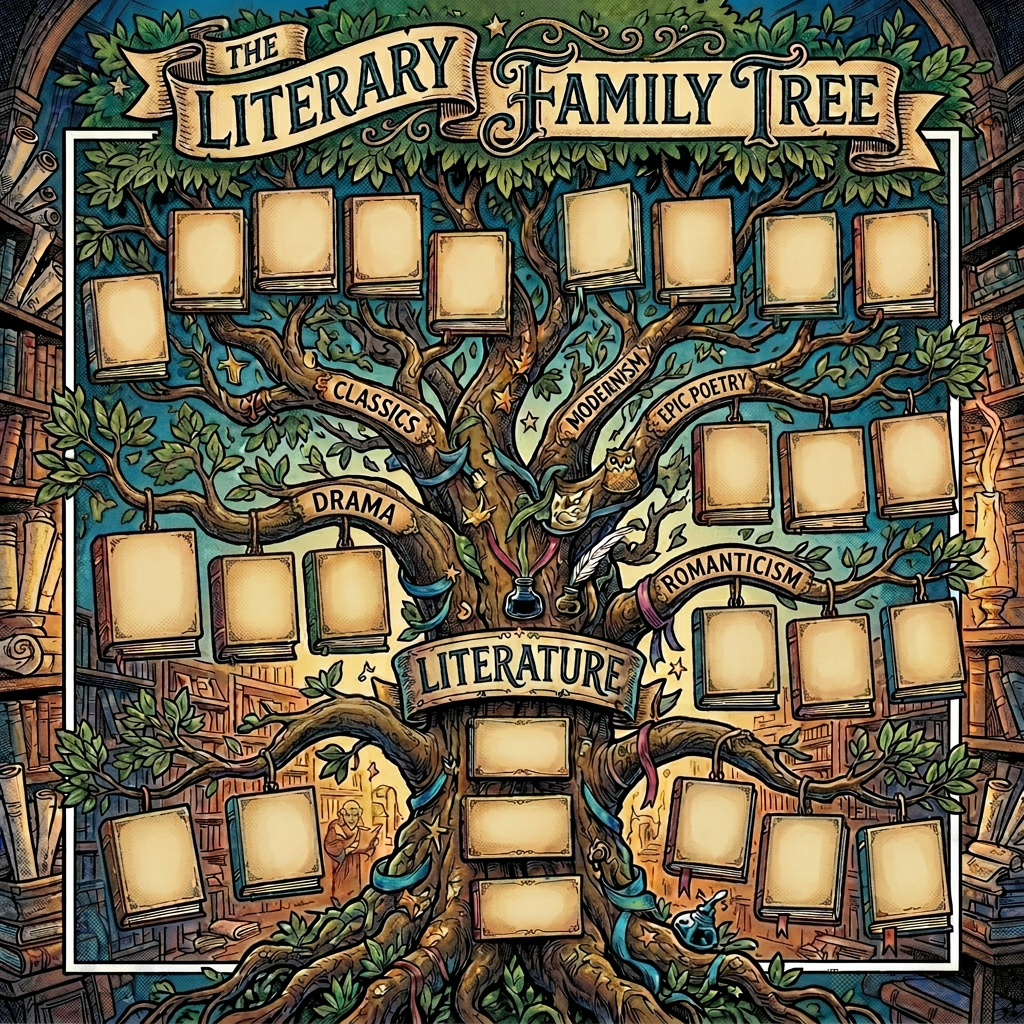
What if…what if someone wrote a book called Literary Kin? That has Word Raccoon spinning and asking if she saw Oreos in the kitchen because she eats ideas sometimes. There are cookies, but she’s not getting them tonight.
She knows why not.
One recommended practice for improving your writing is to copy by hand a book you admire, I’ve been told more than once. I’m not sure Word Raccoon has that kind of patience, but I love the idea. Certainly you could copy out sentences and paragraphs; I do that when I’m reading a book I admire, retracing a sentence, seeing how it functions within the section, the chapter, the book.
But who has the time to copy out an entire book?
Also, there is the anxiety of influence. I think it might be a mistake to imitate anyone else too closely when voice is our biggest asset as a writer. Most anyone who tries can string together sentences. Not everyone sounds distinctly themselves, but everyone should try.
WR says I’m sounding starchy again. That happens when my thoughts climb in altitude. (Or when I’m recording poetry. Reciting in front of an audience? Intoxicating. Recording myself? Ugh. I’m working on it.)
Don’t mind her. She’s peevish because she wanted pink but they were out, so she got blue. Not that she really minds. Yes, that’s meant to be vaguebook.
For now.
Journals full of poem ideas for you,
Drema
P.S. Did you know pocket soup was apparently a thing? Tasting History with Max Miller over on YouTube says so! WR says we are absolutely writing a poem about that, as long as she doesn’t have to ever eat it from a pocket!