On Happier in Hollywood this week, host Liz Craft recommended a 2026 Oscar-winning short, The Singers, based on Ivan Turgenev’s eponymous short story, which is currently on Netflix. She said her mother has watched it six times already. (It’s only 18 minutes long.)
While this is a modern-day take on it, you’d benefit from reading the story first. I encountered it last summer when I was listening to George Saunders’s excellent craft book, A Swim in a Pond in the Rain. I was pretty sure I wanted to order the book for myself, but it came available first on Libby as audio, so I borrowed it and quickly listened to it. So good!
I ordered it for my library. Immediately.
His book’s subtitle is “In Which Four Russians Give a Master Class on Writing, Reading, and Life.”
The cover, however, doesn’t actually use the Oxford comma, and I have no idea why not, or whether anyone else has noticed. (I’m sure they have. Maybe there have been comma conspiracies written about it. Personally, I’m a fan. Of the comma, I mean.)
But the title page inside does use it. So likely we’re dealing with a design issue.
I see. Pardon the rabbit hole.
Anywho, as I am taking a break from Netflix soon, I watched it right away. Then I watched it again.
Gorgeous.
I so badly want to say something, anything, about it, but I can’t without spoiling it. Do wait for your expectations to be subverted.
There. I hope I haven’t said too much.
I wish I could be there to see every one of my blog readers’ reactions to the short film.
All three are well worth your time: the Saunders book (so good!), the Turgenev short story, and the Netflix short.
Word Raccoon is irritated. She is sick. She does not want to be sick, because weren’t we just sick a few months ago? Sigh. Her throat wants a pot of tea and a box of popsicles simultaneously.
Yesterday, she spent most of the day reading Listen for the Lie, a fast, fun read about a true podcaster looking for the truth in a murder case. Recommended by someone, somewhere.
We used to listen to lots of true crime podcasts, thinking we could solve unsolved cases. We decided we cannot. And that they’re a little too sad to listen to nowadays on the regular.
In keeping with our intention to touch our poetry every day in April, no matter how we feel, we read the group prompts today and then “prompt”ly ignored them as we shifted into a different poem, thumbs on our phone, notes app open.
Here’s the first of my “notebook” poems I’m going to share. This is it just as it came out, and me feeling my way through early drafts. More drafts to come, I’m sure.
I don’t remember what the prompts were, but I remember thinking that I wanted to write about something else that sticks in my craw. (Is that a cliché? WR does not care. She just wants her throat to feel better.)
That something else? The acknowledgement of reality vs. hope.
Be kind to my little baby poem as I move through it, please. Here it is exactly as I drafted it in bed. (The capitalization is automatic in the app as I change lines, so IDK where I will end up with that.)
Speaking what is
Does not break
Hope’s bones.
Reality is concrete,
Like the patio
Outside my grandmother’s
Chicken house.
And yet, she always looked
For eggs.
That’s it. That’s the whole thing. Now let’s wander through it, see if we can tighten it a bit.
I think I would be tempted to italicize what is to highlight that we are talking about reality.
Speaking what is
I’m on the fence about keeping Hope’s with a capital H. I’m thinking yes? Seems very Emily Dickinson. Those other accidental capitals? Eh, we don’t need those.
Concrete. I went from non-concrete to, well, concrete, a physical image. Not mad about that. It was intentional, obviously.
Patio – actually, I was picturing the concrete porch to my grandmother’s house, painted brick red. In my mind, I moved the “patio” out back to the…
I say chicken house. Don’t we usually say “hen house” or “chicken coop?” Yet it came out chicken house. Not sure how I feel about that. Might change it.
I really like that last couplet, “And yet, she always looked/For eggs.” But I would lowercase the “for.” Tempted to say more about the eggs, change the verb to something more vivid like “hunt,” or “search?”
Let’s see where we are now:
Speaking what is
does not break
Hope’s bones.
Reality is concrete,
like the patio
outside my grandmother’s
chicken house.
And yet, she hunted
for eggs
every morning.
Okay, I definitely changed that last stanza. I think I’m in danger of overexplaining.
Hmm…what I’m trying to say is that my grandmother (great-grandmother, actually) never knew if there would be eggs. Maybe they’d stopped laying as they would occasionally. Maybe a dog had wedged its way into the chicken coop and terrorized and maimed some of them, as sometimes happened, too. But she went to that house with her cup of feed extended, clucking to them as if they were her friends, her wrists thick, one weighed down with a silver-banded watch, and she reached down into their hiding spots.
She hoped for eggs. She believed she would find them, and she usually did, gently putting them into her apron pockets. (I loved her colorful aprons: rainbow colored, or roses, or just pink-and-white gingham.)
I’m definitely not thinking about my grandmother’s hair, past her waist, the way she’d make two braids and pin them on either side of her head in a crown. How I wished she’d do that with my hair, but I never asked.
Definitely not remembering her biscuits and sausage patties, yes, those eggs fried as if she were a short order cook. (When she was growing up, she and her mother would get up way early in the morning and make breakfast for all the family members and field hands farming, a whole bunch, from what I understand. They’d make full breakfasts, and she always cooked with confidence and speed. And skill!)
How she cried one day when her favorite chicken, the one with the black ruff, was mauled. How she championed her “banty rooster,” regardless of what the neighbors thought of it.
This poem has more to say, maybe, I don’t know. But right now, I’m going to make a cup of tea, take a warm shower, and decide if I want to read or play with words.
Unfortunately, I’ve finished Portlandia. What a trip.
I knew Word Raccoon was going to try to sleep in, even though she was well aware that we had a hair appointment this morning. Even though, furthermore, she knew I wanted to finish reading my book. (I did this afternoon…whoa! No spoilers, but…whoa!)
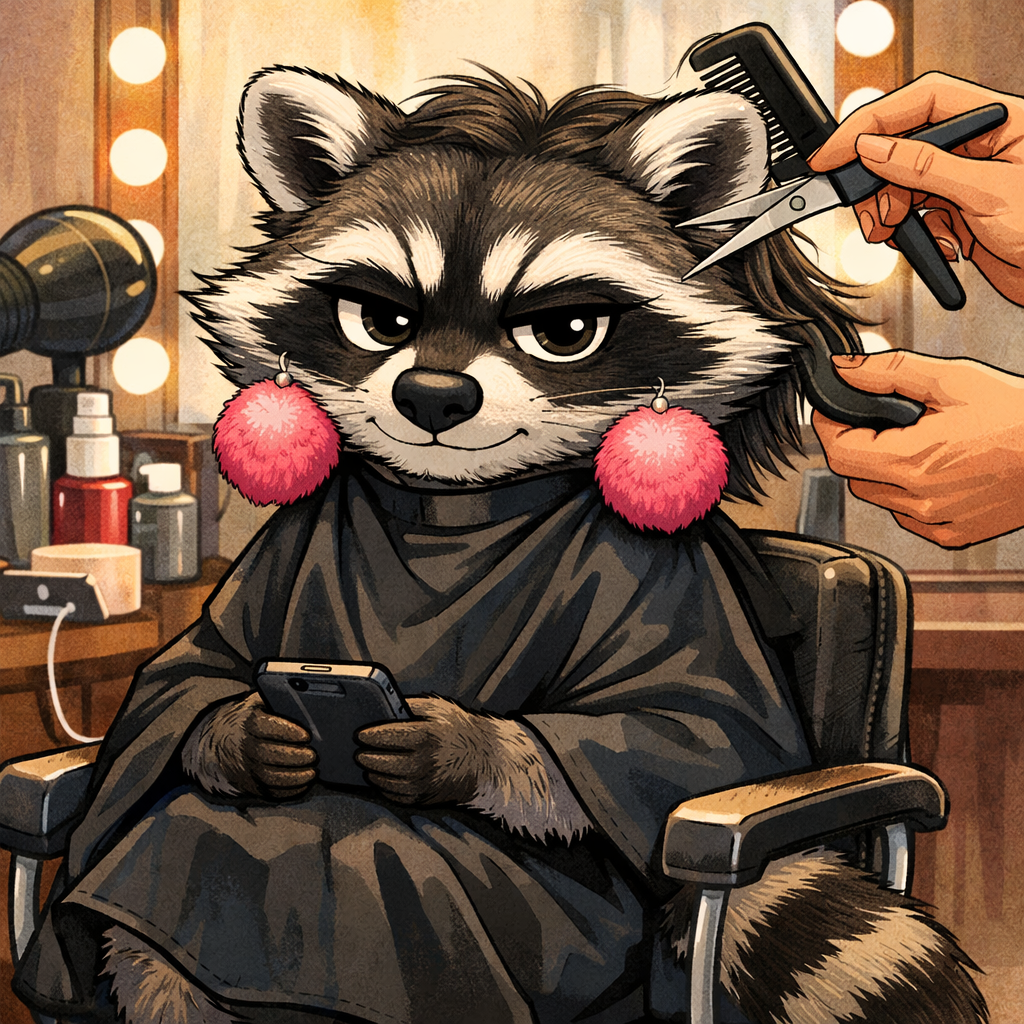
Most people have a mental list of what they need to prepare for the hair salon. Word Raccoon, however, has specific requirements and doesn’t always remember things your average person might.
Here’s the checklist I made her run through:
Eat breakfast. Our hair appointments last 2 ½ hours. Nourishment is required. Leftover Mexican food? Fine. Just eat.
Do NOT wear a “good” blouse. Also do not wear scrubbies, because we have standards.
Remember that the salon is ALWAYS cold. No matter the season. No dresses, no skirts, no shorts. Wear long sleeves. Consider a sweater, but see above.
Y’all, the thermostat read 62 degrees in there this morning! It was up to a balmy 64 before we left…the hot towel around our hair was our favorite part of the visit. No, seeing our stylist after so long actually was. And that other stylist, too.
Do not wear jewelry. Earrings? Asking for it. Necklace? Might be okay, but play it safe. Bracelet? Probably passable. Anklet? The early 2000’s are calling; why do you still have anklets, Sis?
Shoes – comfy, not sandals that will fall off your feet when she hikes you up in the chair like a toddler. No heels. But cute, because the rest of you will be draped in a cape, and something had better be featured.
Arrival time: no sooner than 5 minutes before your appointment. Since they are by appointment only, chances are, no one will be there yet, which is fine. Just be sure WR stays content until then.
Pack snacks. More than you would think. Because all of that chatting and consulting and book/TV talk will take it out of you, and WR requires snacks to regulate. Today I brought raisins, pretzels, and one of her ubiquitous protein bars just in case. Sound like a toddler’s food? Agreed!
Speaking of books and movies, if you bring a book, be prepared to give a synopsis of it to anyone who sees it in your hands. If you are going to mention a TV series, either get the title right, WR, or at least the platform it’s on! (WR seldom remembers either.)
A charger. Sure, there’s a phone charging station, but what if it’s spoken for? You KNOW your phone battery will mysteriously drain while there. Maybe it’s all of the scrolling you do while you’re processing. (Which WR calls “marinating,” much to her stylist’s delight.)
Wash your car beforehand! Yes, even if it does mean you won’t get a chance to run in and get a Coke Zero before your appointment. You know your stylist has water and coffee, and probably has at least Diet Coke hiding in the back. (The old place had wine…shhh…) You want that chariot to shine.
Know what you want! My stylist has saved me from many a bad hair decision, though she has allowed me many different fun colors. (I suspect it’s because she knows they wash out of my hair within a week, even if they are “permanent.”)
She hears me out and tells me just why I shouldn’t (I swear this was before the trend) color one side of my hair black. She did allow me to get chunky “Lost” style highlights, though they weren’t as irregular as I wanted; she’s more conservative than I am, hair wise. I told her she can’t let me become boring. What she really does is keep WR from taking over.
(Don’t tell my stylist, but I think she took more hair off the bottom than I asked today…I said two inches even though she was showing me like four and I think she split the difference…but I got my layers back that I wanted to enhance my curls, so there’s that.)
Send phone calls to voicemail if you receive any while you’re in the chair. Wait, who gets phone calls nowadays? (I actually did today while in the chair, and I dared WR to answer it as I sent it to voicemail. The voicemail was followed up immediately with an email, which is our preference anyway.)
Be prepared to discuss your health and medication if it’s affecting your hair. Don’t be shy – she’s a professional.
It goes without saying that you should be polite and friendly to others in the salon, but also mind your beeswax, right? Topical discussions = insert yourself freely. Whispered conversations? Pretend you are reading.
Tip generously. Always. We like this person, she’s worked hard for us, and she once styled our hair for free for a TV interview!
I would say make your next appointment before you leave, but there’s a new system here where I use a QR code to make my own. Had to put a reminder on my calendar, but it’s kinda nice to not have to juggle things at the counter. As it was, I left my book and glasses at the hair station as I was leaving. Oops.
Have dinner planned ahead, the day of your appointment. Better yet, plan on going out. Because your hair is going to look the best it will this go-round. (Our neighbor happened to bring over potato soup for us yesterday, so no cooking for us today. And long live neighbors who bring you food gifts for no reason!)
Overall, I must say that WR was quiet and read with absorption over my shoulder most of the appointment, though she did want to wander around and talk and guarded the length of our hair a bit too ferociously.
She did really, really want to ask them to shut the window, too, but I figured fresh air might be good for her. Her throat begs to differ.
Now if only these curls last until Saturday’s fundraiser.
Just barely out of arm’s reach at the table is an Ian McEwan novel. I had to push it away or I will devour it for breakfast. Yesterday, when I went to the library to pick up another book that I was mildly pleased to find they had on their shelves, allowing me to skip the long Libby line, I passed the “New Books” shelves and saw McEwan’s name.
I’ve read several of his books and I very much like his style. But Reader. READER!
I made the mistake of sitting down with it when I only had ten minutes to take a quick peek. I didn’t even look at the other book (not even telling you its name because who cares now) because I thought it might be too tempting and I might not want to stop reading. Ha!
McEwan’s book, What We Can Know, had me at the description. And then I thought, okay, you talk a big thing, but can you deliver, Sir?
Within three pages, I was asking my invisible staff to cancel all my calls. When I heard the groceries arrive, I groaned and wondered just how long frozen peas could sit on the counter before they’d be ruined.
This book!
I read a few more pages later in the afternoon, hoping it might loosen its hold enough that I would be able to at least cook dinner, which I kept renegotiating in my mind, wishing a chopped protein bar perhaps on a fancy saucer would be as acceptable to all concerned as it always is to absorbed-in-a-task Word Raccoon.
Thinking quickly, I realized I had everything for burritos. Problem solved.
I feel like McEwan came to my house and touched every one of my books and sat down and said, “Let me write one just for you.”
In it, poet Francis Blundy writes “A Corona for Vivien,” his wife. He sees it as his (forgive the pun) “crowning” achievement. He prints it ceremoniously on vellum, ties a ribbon around it, burns all other copies of it as well as his notes to make it a singular gift, and reads it at her birthday party.
The poem, that only “existing” copy, goes mysteriously missing for over 100 years.
No one except the guests and the poet and his wife know the poem’s contents.
In 2119, after the world has shifted greatly following a nuclear catastrophe, scholar Thomas Metcalfe seeks to find the lost poem.
In a world where researchers have access to every email, every text message, video, etc. that persons of note have received or created, not a trace of the missing poem or how it has gone missing (so far as I have read), has been found.
This novel feels tailor-made for me on every front. Poetry? Absolutely. Learning about a maybe-new-to-me-form of poetry? Double check. Post-apocalyptic living? I used to tell my dolls stories about life after a nuclear attack. (That’s what happens when your father interviews to be a fallout shelter manager in his youth and tells you stories.) Check.
His writing is absorbing, and I find myself revisiting my “white space” thinking regarding my own efforts. He writes about food in such vivid terms that he makes me want to find an immediate source for a brace of quail. (Never made quail, probably never will, but I want a brace now. Do you know what a brace is? I don’t. I want to look but I have a picture in my mind and I don’t want it ruined by the truth.)
Told from viewpoints from these alternating timelines (sort of), there is a debate between two scholars in 2119 regarding how much supposition is permissible in academia, and this tangles deliciously with the book’s plot. Or I suspect that’s what’s happening. I’m only 77 pages in and I tell you, it is all I can do to get Word Raccoon to put it aside while I obediently (maybe) follow the calendar’s tasks for the day and slot in a welcome but unexpected dinner invitation from my son.
Something about this novel tells me it’s going to be important to my own writing. I have that tingling feeling that says “Pay attention,” that excitement in my chest, the way I can’t sit still.
I am grateful for these sparks. And while I may be stingy with details in my own fiction, I hoard them in real life. Maybe I need to revisit the idea of distributing them better in my novels and poetry, though.
Now how am I supposed to make it through the day knowing this book must remain shut for the next few hours?
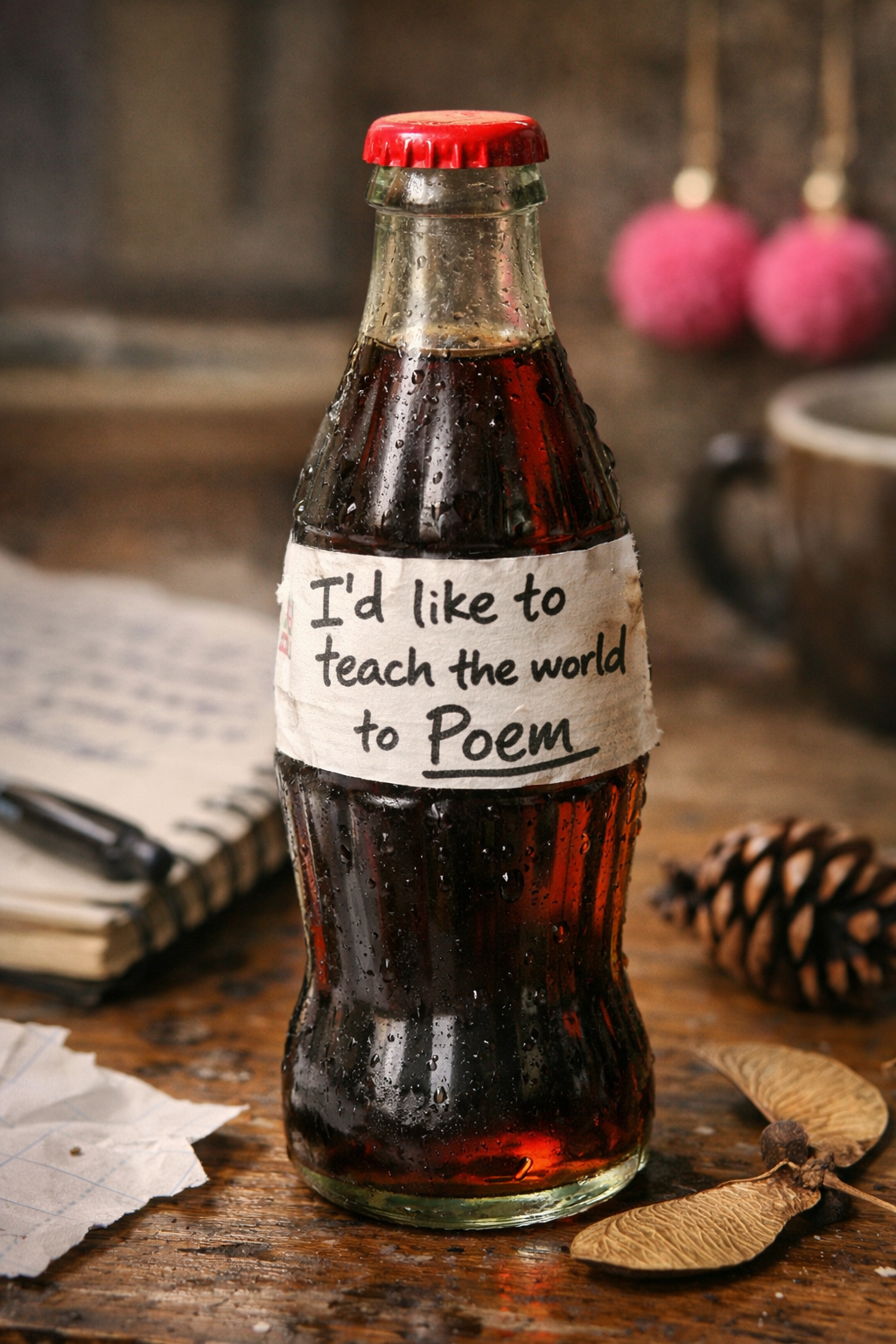
Word Raccoon stayed up too late, and then when she woke, she squawked to learn we are out of Coke Zero.
This required me to make coffee. Too early. (Or tea, but let’s be honest, tea does not give quite the same boost.)
I have promised the raccoon that we will have Coke Zero if she can just get her shiz together enough to get to the café.
Also, I have promised her poetry. We have not read today’s prompt and she won’t follow it anyway, but it will spark something, and that’s where we live, in the sparks.
She’s also cranky because although we thankfully have a hair appointment later this week, we haven’t seen our stylist in quite a while because she had to have surgery, and we miss both her and fresh hair.
We are grateful she is better. She offered to hand us over to someone else. She has been our stylist for years, so no.
But also, we told her she can reschedule us if she’s not up to it. We’re desperately hoping she is.
Right now, WR is twirling the sycamore seed pod she triumphantly picked up after guest lecturing in her friend’s Creative Writing class.
The students were the best. They even asked us to come back. And they wrote us sweet cards that we are absolutely going to hang in the kitchen.
WR showed up, I’m afraid, while I was reading “Renewal,” which absolutely was the right pick, sorry I doubted her, though we did have to explain Logan’s Run to the class.
What I didn’t expect was how quickly the room opened up.
We talked about publishing, a side quest I didn’t know we’d be going on but was glad we did. One student even quoted me back to myself on her card. Aw…
At the end of class, I was asked to read a poem the professor had prepared. I’m embarrassed to say I hadn’t heard of it, though it apparently went viral some time ago.
I scanned it quickly. WR said yes yes yes because it’s highly performable, “The Invitation” by Oriah Mountain Dreamer. WR put on her most performery voice (LOL) and whaled on it.
Having read it, I was jealous I hadn’t written it. It’s so me.
The questions were thoughtful, focused. The kind that make you hope you can rise to meet them.
We talked about how comedy is slippery but powerful if handled carefully. About taking chances because no one gets hurt if you get it wrong. About blooming whenever you bloom.
I told them I’ve given myself permission to write anything I want now. Even punk poetry. The editor of the student journal perked right up at that, LOL. I said yes, I’ll send something for next year.
We talked about persistence too. How many times the poem I read had been sent out before it found a home. How I knew it deserved one anyway. How even if it hadn’t, it held a truth I’d been carrying since childhood, and that was enough.
I mentioned, lightly, that poetry held me through some dark hours. (They’re young. I kept it short but honest.)
We circled around what we’re really after as writers, which is a reader who wants to come back. Not just understand, but re-enter. To be pulled by curiosity, or recognition, or even a small, useful confusion.
At one point, two students mentioned birds in their stories, and I said I just love birb sightings, in and outside of literature. They laughed. Bless them.
We moved easily between novels, short stories, poems. I was aware and thankful that my repertoire has grown.
One student asked how to choose among his ideas. He starts things, doesn’t finish. I told him to finish one. Imperfectly. To give himself a deadline.
Another asked how to get her poetry published. I was glad, deeply glad, that I could answer.
Someone asked about my agent, and I explained how I found her, and also why I didn’t send my second novel her way. Not because she wouldn’t have read it, but because I knew it was a niche passion project and I wanted to try it on my own.
I shared just a little about my current WIP. That it’s set on a university campus, that it involves a missing literary object, that it’s part mystery, part something else I’m still figuring out.
Afterward, in the hall, they asked if I would come back.
I said happily, if their professor wanted.
Ah. I forgot how fun teaching can be.
(Not sorry to not have to do the admin, though. Gross.)
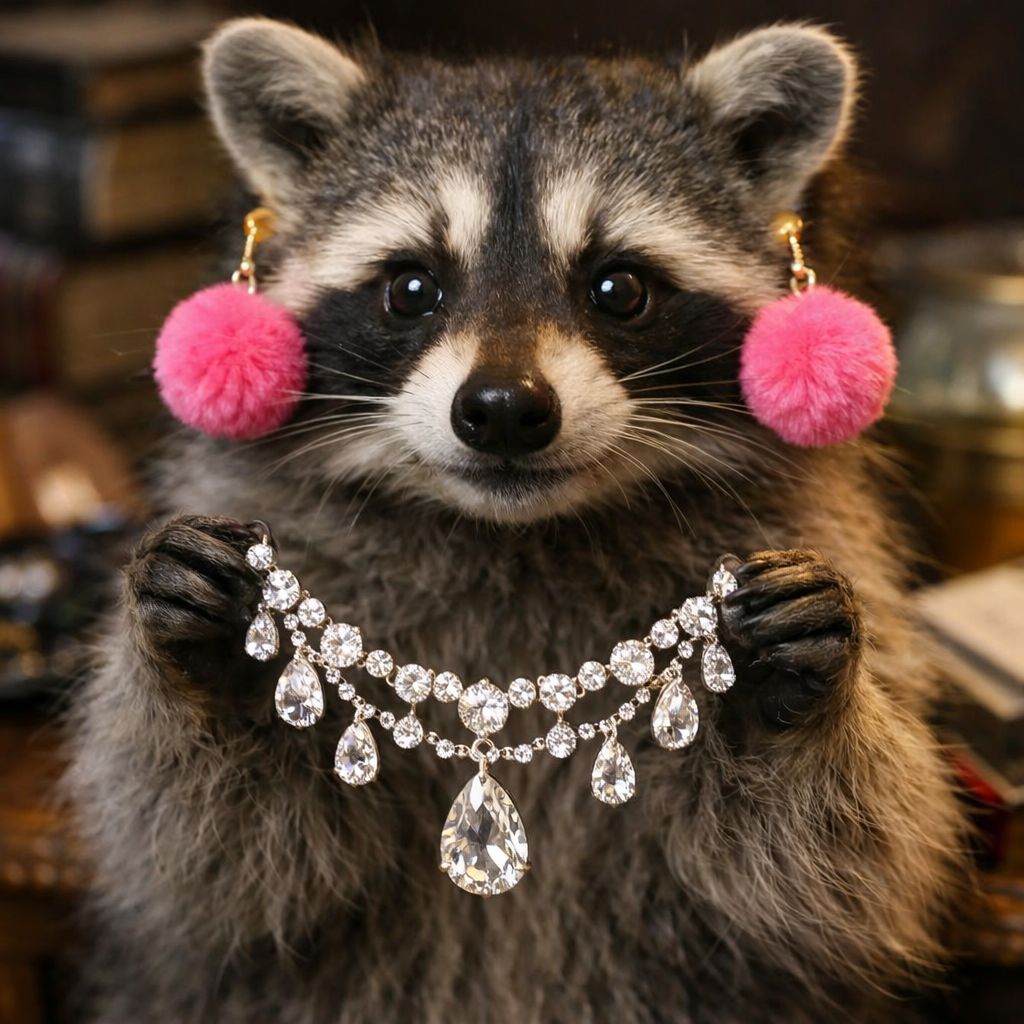
WR did wear her signature earrings, though I tried to tell her they were ostentatious. She did not care. She said if I couldn’t see that the color of the flowers on our Easter dress matched them, then I was missing an opportunity.
From the art to the conversations to the seed pods and pinecones she gathered, Word Raccoon is pleased.
Now she has work to do today.
Does she want to do it?
She does not.
She says it can wait. But we pledged to at least touch poetry every day, even if only for a few minutes, so we’re starting there, before the world makes its demands.
And, she says, did someone mention Coke Zero?
(I swear, I need to get her a sponsorship. And a glass of water.)
I’m guest lecturing in a friend’s creative writing class tonight, and the stories she has assigned are two I’m very familiar with: “The Lottery” and “The Necklace.” In preparation, I am reviewing them this morning.
What strikes me most, looking at them side by side, is how both hinge on transformation.
In “The Lottery,” it is the reader’s dawning realization that this is no harmless community gathering. The tone shifts under our feet. And the woman, (spoiler) as she is being stoned, says it’s not fair, though we understand she has likely participated in the tradition until now.
Jackson gives us almost nothing to soften the blow, pardon the terrible pun. No explanation, no moral framing. Why do they do this? We are left to speculate. Population control, ritual, something old and unquestioned. We hear that other villages are abandoning the practice, but the older generation dismisses that as foolishness.
So we are left with that icecube-down-the-back-of-the-neck sensation as we realize what this lottery (not one you want to win) is.
Word Raccoon covered her eyes and cried out when she got it.
(When I first learned the premise of The Hunger Games, I immediately thought of “The Lottery.” I might bring that up tonight, though I am not entirely sure the reference still lands. Do students still know it?)
Oh, right. Transformation.
In “The Necklace,” it is our understanding that shifts as we realize (spoiler again), along with Mathilde, that the lost necklace was costume jewelry all along.
WR moaned and pitched a fit and asked what is wrong with people. She also wants to ask why people write such stories, but if she does, I will point her right back to her own poetry, so…
This story must have left an impression on my mother when she read it in junior high, because she told it to me as I was growing up. I remember being excited to encounter the original later, as if I were meeting a story I already knew in a more formal setting.
Transformation again, but of a different kind.
What stayed with me was the danger of requiring external validation and wealth. It is one thing to enjoy admiration. It is another to depend on it. Mathilde’s desire to appear as something she is not sets the entire tragedy in motion. Had she not placed herself in that position, she might have been spared a decade of labor for something that had already, quite literally, vanished.
And what vanishes with it is not just money, but youth, beauty, possibility.
We watch her hopes dissolve, but also her physical self. Time does what time does, but here it feels accelerated, almost punitive. Reality does not simply arrive. It crashes.
Word Raccoon is shaking her head mightily. She does not approve of superficiality, especially when she sees the heartache that can ensue.
A passing stranger recently admired a piece of her jewelry, something that looks more expensive than it is, and she immediately corrected the impression. Costume jewelry, she said, kindly but firmly. Oh no, we are not wearing thousands of dollars on our fingers.
We do not require such things. We do not ask for them. We do not need them. We do not particularly enjoy being the caretakers of valuable objects either, especially since we are still looking for a pink ice necklace we lost decades ago, not to mention a ruby ring. Sigh.
Mathilde begins with so little, yet insists on performing a life she does not have. That insistence, call it ambition, call it longing, call it illusion, ultimately crushes her. Her penalty, however, seems harsh.
So what are we meant to take away?
Perhaps that is the wrong question.
I am interested in how these stories work on us as readers.
Word Raccoon is taking this all in, as she is more accustomed to poetry. She says if I do not read “Renewal” to this class tonight instead of one of my short stories, she might disown me. I have to agree with her that the poem leans a little dystopian. A little Hunger Games, perhaps.
What I begin to notice, looking at these two stories together, is that they do not handle transformation in the same way at all.
In “The Necklace,” transformation is something the character lives through. It takes time. Years, in fact. We watch Mathilde descend into a life she never imagined for herself, one shaped by labor, deprivation, and the slow erosion of the self she once believed she possessed. The change is gradual, almost procedural. Cause leads to effect, and effect compounds. By the end, the transformation feels inevitable, even if the final revelation quietly rearranges everything we thought we understood.
In “The Lottery,” the transformation is not lived so much as revealed.
The village does not change. The ritual does not change. The people do not change, at least not in any visible way. What changes is our understanding. We move from curiosity to unease to something much worse, and it happens quickly. The shift takes place not in the world of the story, but in us.
Word Raccoon would like to point out that this is extremely rude. She was covering her eyes by the story’s end, and I do not blame her.
You think you are attending a small-town gathering. You are not. You think you understand the rules. You do not. And by the time you catch up, it is too late to feel comfortable again.
That distinction feels important.
One story asks what happens when a character makes a choice and has to live with it.
The other asks what happens when we realize, too late, what kind of world we have been observing.
In one, transformation is the result of time and consequence.
In the other, transformation is the result of recognition.
And this may be why something like “it was all a dream” would feel so unsatisfying in these stories. It tries to undo the transformation instead of completing it. It returns everyone to where they started, as if nothing has been risked or changed, and Word Raccoon refuses to accept a refund on emotional investment.
But both of these stories refuse that kind of escape.
Mathilde cannot return to who she was before the necklace was lost. Even the final revelation does not restore her youth or her ease or her illusions. If anything, it sharpens the loss.
Word Raccoon still finds her hackles rising at the premise of that story. A young wife wants one night of beauty and pays for it for the rest of her life? Maupassant, she says, we need to talk.
And in “The Lottery,” there is no return at all. Once we understand what is happening, we cannot unknow it. The story ends, but the recognition stays with us, unsettled and difficult to shake.
So perhaps transformation, at its most effective, is not about change for its own sake, but about irreversibility.
Something shifts, and the shift holds. The character cannot go back. The reader cannot go back.
And whatever has been revealed, whether slowly over years or all at once in a single moment, remains.
Word Raccoon, having rifled through all available drawers, agrees that if you are going to change something, you should at least have the decency to let it stick.
Now, am I ready for tonight? WR is more concerned with what she’s wearing. Vain beast. Did you learn nothing from “The Necklace,” WR?
I’m using any excuse to sit on the porch this Saturday afternoon, even though it’s raining. There’s no lightning, and it’s enclosed, so I’m good.
Word Raccoon is always raving about the light out here. She’s not wrong.
We could be reading. We could be writing. We might.
But also, we are listening to YouTube videos while we contemplate what we’re wearing for going out tonight. WR insists on her Coke Zero earrings.
We are wondering if anyone will notice if we hunch over our Notes app tonight and write poems to the music.
We cannot drink because of the arthritis med. We are not in the mood for bar food. (Except maybe fries.)
Our medicine has been changed and hasn’t really kicked in yet, so can we dance? Possibly(probably) not.
Today’s podcast of interest: I listened to the hosts of The Secret Life of Books discussing literary honeymoons and how they never turn out happy. I’d never considered them. It was a fascinating conversation.
Early this morning we wrote a poem based on the group prompt. We will not be sharing the poem here, but it was more foundational (?) than I expected.
We also submitted to two places before cleaning house so we wouldn’t feel as if were were totally out of the submission business.
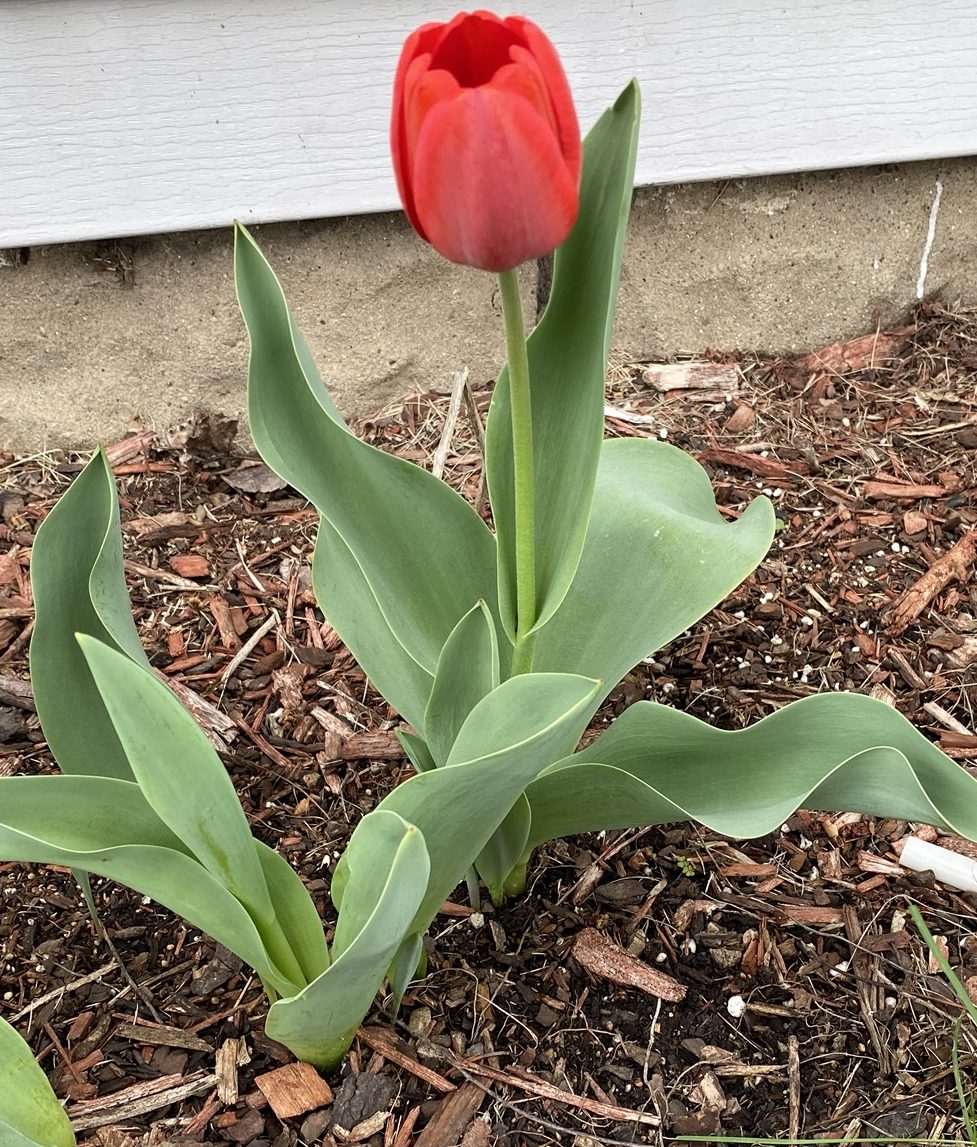
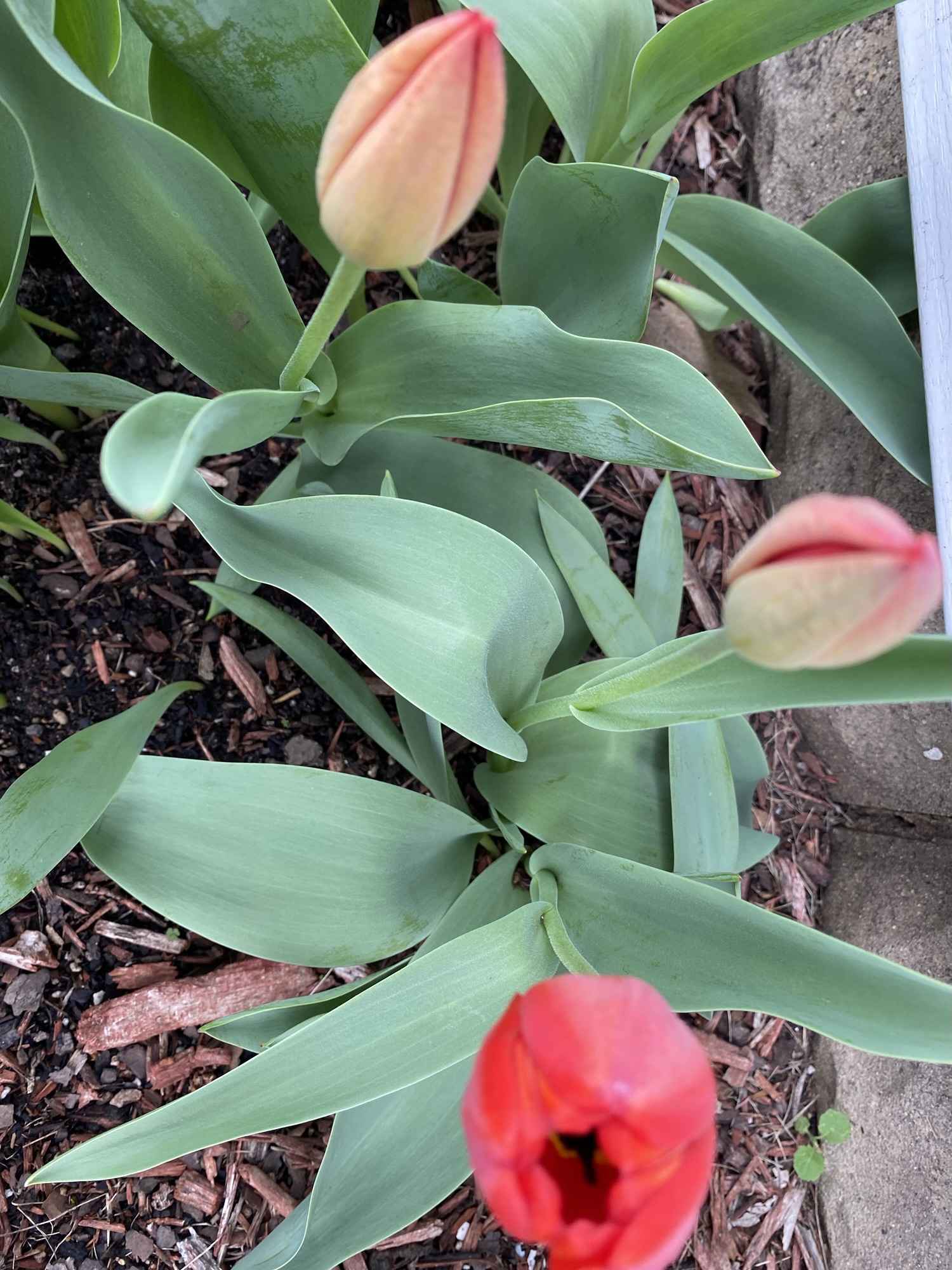
The tulips are fully bloomed now. Such pretty red flowers swaying in the wind, glistening with raindrops. We have some yellow ones indoors, and I’m planning to save the bulbs to plant in the fall.
The outdoors ones always feel a little suddenly open to me, like no matter how much attention I try to pay to them, I arrive at a performance already in progress. I wish they would stay where I could see them everyday.
When Word Raccoon likes something, she maybe likes it too much. She wants to fill her arms with blooms.
This morning I received a rejection from a “big name” publication.
To be expected.
First of all, the email landed in my spam, which I am now afraid not to check regularly since I’ve had acceptances land there, too.
What was really unexpected, though, was that it arrived with eleven other email addresses attached, all of us gathered together in a kind of accidental literary circle.
No BCC used. Just… all of us like awkward students at a dance.
Word Raccoon leaned over my shoulder, squinted at the email, and said, “Well. This is new. Are we meant to start a support group?”
I don’t know what the etiquette is here, but I must admit, ten out of ten, would not recommend.
It may have been a mistake. I’ve been that person, the one to embarrass myself by hitting “reply all” when I’ve had a poem accepted, gushing with thanks when there’s a group of us. But it’s rare that there’s more than one email address attached, and I’ve tried to be more careful since then.
As to this event, do I:
Reply all and say, “Better luck to us all next time”?
Ask if they’d like to form a small but scrappy alliance that possibly starts an underground zine?
Send them a link to this post? (Absolutely not.)
Start writing poems about our rejection as a group project and publish these poems in an anthology? (That actually sounds…almost tempting, a little Salon des Refusés of our own.)
WR is already drafting a group message titled:
“Rejected But Still Hot: A Community Initiative.”
I told her absolutely not.
She told me I lack whimsy.
I told her she lacks discretion.
Someone come and take Word Raccoon for the day, would you! She’s wearing me out.
Still, there’s something intimate about being rejected in the round.
As I said, on occasion I’ve received mass acceptances, which also felt a little odd, but so much better than this.
This feels like:
Dear Drema and Also These Eleven Other Souls Who Now Know You Dared Cross Our Email Threshold and FAILED…”
Word Raccoon really, really, does want to start that online support group, or at the very least reach out to everyone except the email’s author and declare said author a ding dong.
(Again, it may have been a mistake or someone’s limited familiarity with the “BCC” function. Or an exhausted editor wading through a stuffed inbox at 2 am. I am not unsympathetic.)
Not completely unsympathetic.
While not all of the email addresses contain actual names, some do, and Word Raccoon is begging to google them.
Who are they?
What did they send?
Is there someone in there already writing a blog post about this very thing?
No, WR, NO!
Now I wish I had created an email address just for submitting the way some of these folks clearly have. Not exactly this, but some of their email addresses are kinda like:
Word Raccoon has one final suggestion before I close this out.
She would like me to end with:
“To my fellow ‘rejects:’ I will not Reply All, but know that in another life, we might have been a very powerful group chat.”
I told her that was… actually not bad.
She’s insufferable when she’s right.
At any rate, back to the work. Probably.
P.S. One of the rejected poems has already been accepted elsewhere.
Word Raccoon is giggling at that. I don’t blame her.
We are submitting tonight (Friday), trying not to put our arms protectively around our time this weekend and refuse to let it all disappear, as it will.
Even the great Amy Tan once said that you can’t write every minute of every day.
A band is practicing nearby, down the alley, and WR really wants to go investigate, but no.
I somehow missed yesterday’s poem and prompt email from the writing cohort. I checked for it a few times and when I didn’t see it, I freewheeled into poetry myself. I wrote down some lines that came to me. I may have drafted another poem too, though at the time I wasn’t entirely sure what I’d done.
As soon as I opened my email this morning, I saw today’s prompt. Later, when I went looking for it again, I couldn’t find it. Hunting for the sender’s name revealed not only today’s email but yesterday’s as well.
That’s what I get for having two main email addresses. Some people’s connection to me goes back to the old inbox, and I still send junk mail there, so yes, I maintain it. I also signed up to Submittable with it a jillion years ago, and just try changing your email over there.
I dare you.
This morning, immediately upon reading the poem of the day and yesterday’s prompts, I started writing something based loosely on an unpleasant experience I had the other day, where I felt like I was being Judgey McJugerDrema. (It was all internal, but I knew what I was thinking.)
Word Raccoon fussed and told me that writers really can’t afford to prejudge. We’d lose all our best material.
She’s not wrong. She learned that from a beautifully open-minded mentor.
At any rate, I was ashamed of myself and was trying to write it out.
Turns out it was deeper.
Of course it was. It always is.
I wrote the bones of a second poem, so skeletal it could double as a Halloween decoration. (Too much? It’s early.)
Then another came out, definitely needing a polish. WR put her hands on her waist and asked if we could possibly write about something, anything else?
I told her we already had this morning, but she rolled her eyes and said I knew what she meant.
I did, but she can just…
Hey, I’m already wearing her pirate racoon shirt (HER fault I own it,entirely). What more does she want?
Once at the café, an hour early because this holiday weekend is about to get busy, I triumphantly grabbed a Coke Zero, and Word Raccoon did a little dance of thanks for the amused barista.
We were already fueled by The Book Review Podcast which we listened to while getting ready, and we finished the last few minutes of it with breakfast. It was delightful, both witty and informative, had me scrambling for the Libby app to request books before they’ve even been released.
They also had poet Ada Limón on, which was extra inspiring. She read a poem that she said a tree gave her that had Gilbert Cruz teared up.
Same, Gilbert. Same.
Though my writing time is likely to be nonexistent this weekend, at least today I did the admin:
Proofread a poem for an anthology and gave the thumbs up
Wrote to thank another journal for updating me on the issue’s publication date (April 21!),
Recorded a rejection (wah)
Checked to see if I had even submitted to a contest I received the results of in an email. (I had not, but ya for those who won.)
I’m looking forward to a lovely Easter buffet at a restaurant in a nearby town. We discovered it last year and haven’t looked back. (Family dinner will be next week.)
Reese’s peanut butter eggs and Peeps to you, Dear Readers.
I’d also offer my handmade chocolates, but not this year. Don’t tell Word Raccoon but I’m not making them. Maybe next Easter.
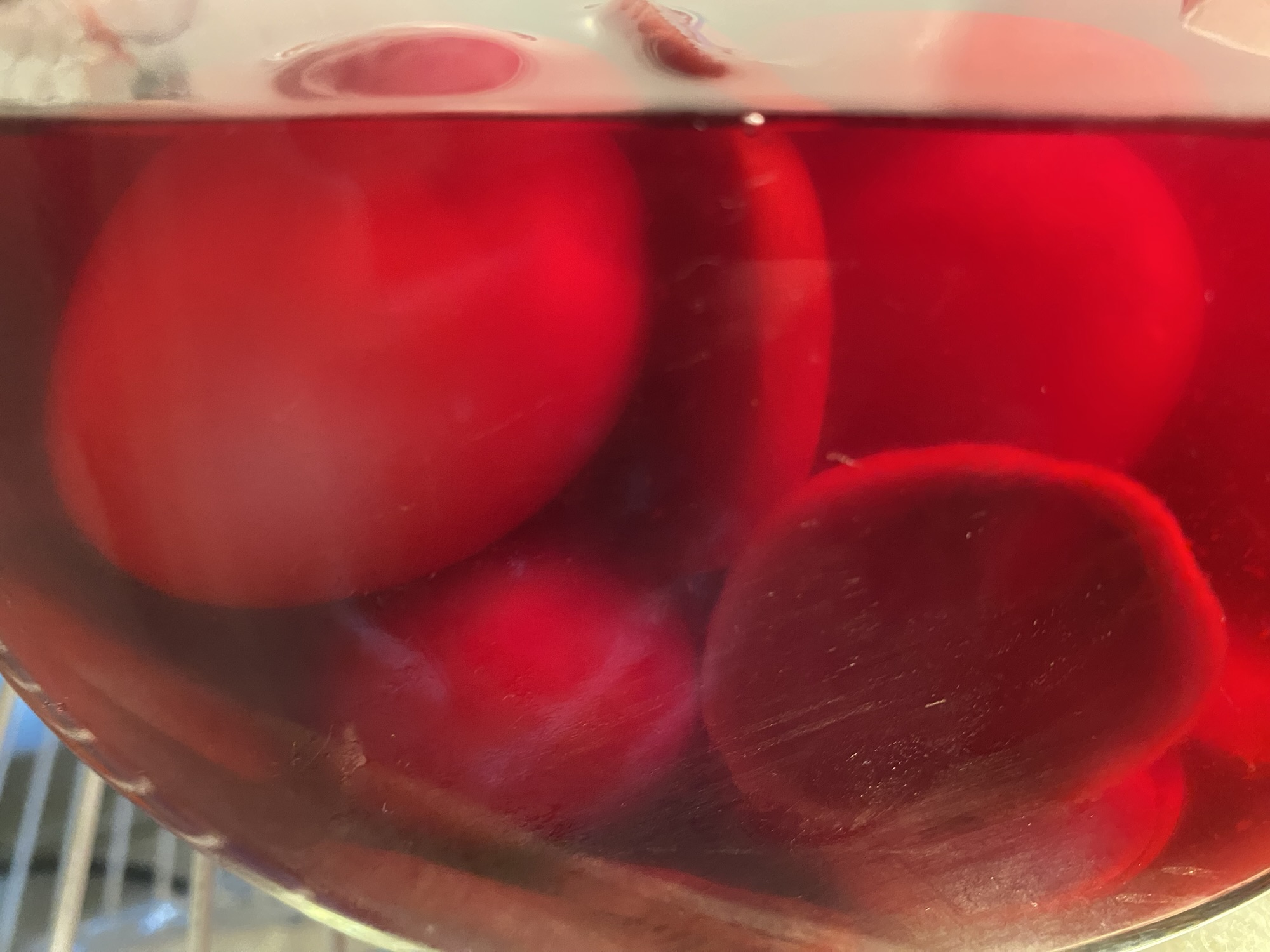
My efforts this year, pickled three days ago. Bad picture, good eggs already.
If you’ve had more than enough candy this season already, here’s something a little different. I did make my dad’s traditional pickled eggs, though most children don’t want those in their Easter basket. (I wouldn’t have minded.)
While I am VERY beet averse, mercifully they lend color more than taste in this situation. You want to make them a few days ahead so they have time to pickle and turn that cheerful shade of pink that says festive and not vegetable-forward.
This is my adaptation of his recipe. (Very Southern-flavored.)
Pickled Eggs (the pink kind):
6–12 hard-boiled eggs, peeled
1 can beets (which, TBH, taste like dirt to me, which is why I don’t eat them)
1/2 cup apple cider vinegar (he used white, but I prefer the milder apple cider vinegar )
1/4 cup water
1/4 cup sugar (maybe more if you’re not a fan of sour)
1 tsp salt
Warm the beet juice, vinegar, water, sugar, and salt just enough to dissolve everything. Let it cool slightly, then pour it over the eggs in a jar until everything’s covered. Refrigerate.
Note: you can taste the brine and adjust to taste, no harm, no foul.
Wait at least 2–3 days before eating, though they get better (and pinker) as they sit.
You can salt and eat them plain, or slice them and add them to a salad. Some brave souls use them to make deviled eggs. I’ve never tried that.
If you’re Drema, you throw the beets out when the eggs are pickled. Not that you have to.
Did you ever feel like life handed you an opportunity and then said, “Just kidding”? I half have a chance at taking a trip that would be ideal for me. A bucket list trip, actually. But then life calls and says, “Hey, but like… is this the time? And the cost…”
I’m negotiating. What’s the going price for kidneys these days? I have two. Who needs two? (Terrible joke, I know. And I did once volunteer to be tested to donate for someone who needed one, so maybe I get a pass on making a joke about something that is not really funny.)
Word Raccoon is offering to sell her treasure to fund the journey, but I’m thinking no one wants used earrings so much.
I’m dreaming, as always, today while trying to do pesky admin things, wondering why I don’t have an assistant for that, and also, why is today so gray?
I had committed earlier to going to the gym regardless of the weather, and did I want to? Absolutely not. I went anyway.
But gray days can brighten with writing and reading.
Right?
Right?
Yesterday I attended a webinar about newsletters, in part because it has been suggested that Word Raccoon should have her own. She used to, but kinda stopped. During the call, several Substacks were mentioned, (though the call was not just about Substack newsletters,) and I subscribed to so many that my inbox is now crying, Ma’am. Enough.
I do like the Substack app. I’ve been keeping an eye on it from early on, reading others’ newsletters and interacting with artists. It’s for more than creatives, but you can curate your list pretty tightly, which I love. It’s like having a chorus of creatives surrounding you every morning.
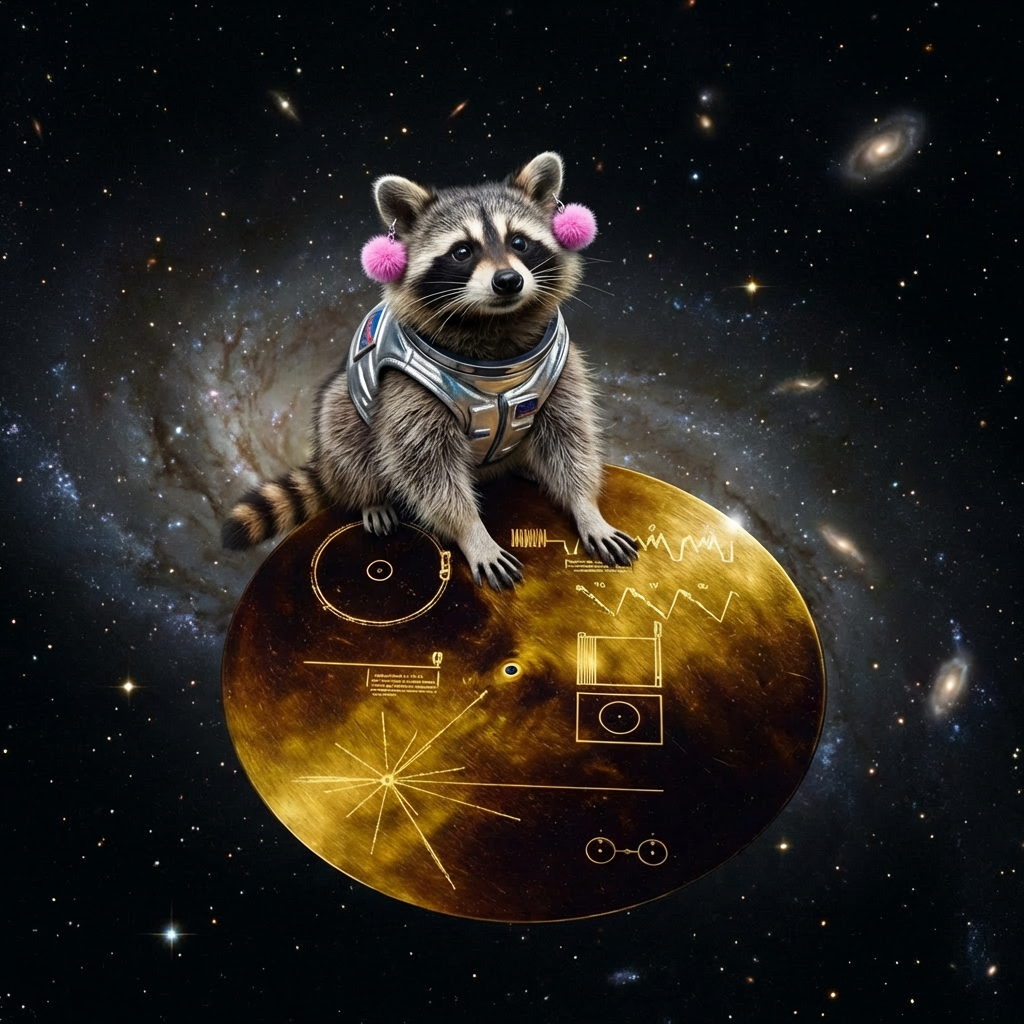
But I’m unlikely to ever abandon this blog, even if I start a newsletter elsewhere. It’s been my beacon to the world since 2012, I think. It’s my space capsule of optimism, like the Voyager Golden Record, saying, “I hope you can hear this. I hope that you are reading, or that you might someday.”
It’s afternoon now, and a load of laundry is drying. I have to mail the title of the now-scrap van to the recycling company. I am guest lecturing in a friend’s university class Monday, so I should prep for that, too.
It promises to be an afternoon of misc. before the real writing begins. WR is getting insistent about doing something fun. Or at least eating something.
Her first impulse was to grab a protein bar. I replenished the supply yesterday and now the freezer is choking on them. Word Raccoon grabs them when she’s too engrossed to be arsed with cooking or even thinking about food. Or when she wants a cookie but knows just cookies will cause her to swoon with weakness later.
I told her she doesn’t need so many, but she does not listen. Right now she’s gone from “oh, look, cooking is so cool and adventurous” to “Just feed me, okay?”
I don’t fight her. I respect the raccoon’s mood, knowing at some point she’ll be making prime rib again (rarely, get it?) or even a fancypants croquembouche. She loves a challenge, but seldom makes something twice once she’s conquered it, unless it’s an everyday recipe.
I’m already arguing with her about lunch. Lettuce, and cucumbers are lurking in the fridge, begging to be used. Grape tomatoes are on the counter, and hey, they’re beginning to be in season enough that they have taste! I even have some of her favorite salad mix-ins in the cabinet, but she is frowning and staring at the protein bars like she’s in love.
At the very least, she ought to do some reading today. I sat down to read with her yesterday and she yeeted two of the library books practically across the room, saying one was overly sentimental and the other too hard to define, and she wasn’t in the mood to play guess-the-genre.
We dumped them and a third one she refused to even open into the library drop box on our way to the gym.
Yeah, that’s what I’m dealing with over here. But secretly, I’m kinda excited, because when she gets in this mood, she gets real productive, real fast.
Ok, since I have now talked her into the salad (whew) and the gym, after the post office I’ll set her loose with a blank page.
 dremadrudge.com
You must be logged in to post a comment.