I just placed next week’s grocery order, and from that alone I can tell what kind of writing week Word Raccoon has planned coming up.
Apparently the creative process can be diagnosed from a grocery cart.
She didn’t ask for complicated ingredients. She’s not making sauces from scratch. She’s not baking bread.
She is digging out the Dutch oven for pork loin. She did ask for semi-convenience foods, things that come together quickly but aren’t just “toss it in the oven” boxed items. (Though let’s be honest, sometimes they’re necessary.)
She’s also making sausage meatballs and spaghetti this week topped with an easy marinara recipe Jennifer Garner mentioned online. (So apparently WR is making homemade sauce after all. Eh, it’s supposed to be simple.)
What will she not be doing?
She will NOT be asking you-know-who for recipes. We are still recovering from the meatloaf incident.
This week has been one of those “Good grief, is it mealtime again already?” weeks. And it’s been (as I’ve mentioned) pretty poetry dense. Looks like I’ll at least get fed better next week. Here’s hoping for all the writing. I’m forecasting a medium-effort week on that front, looking at her grocery order.
At any rate, you have to feed your writing, am I right?
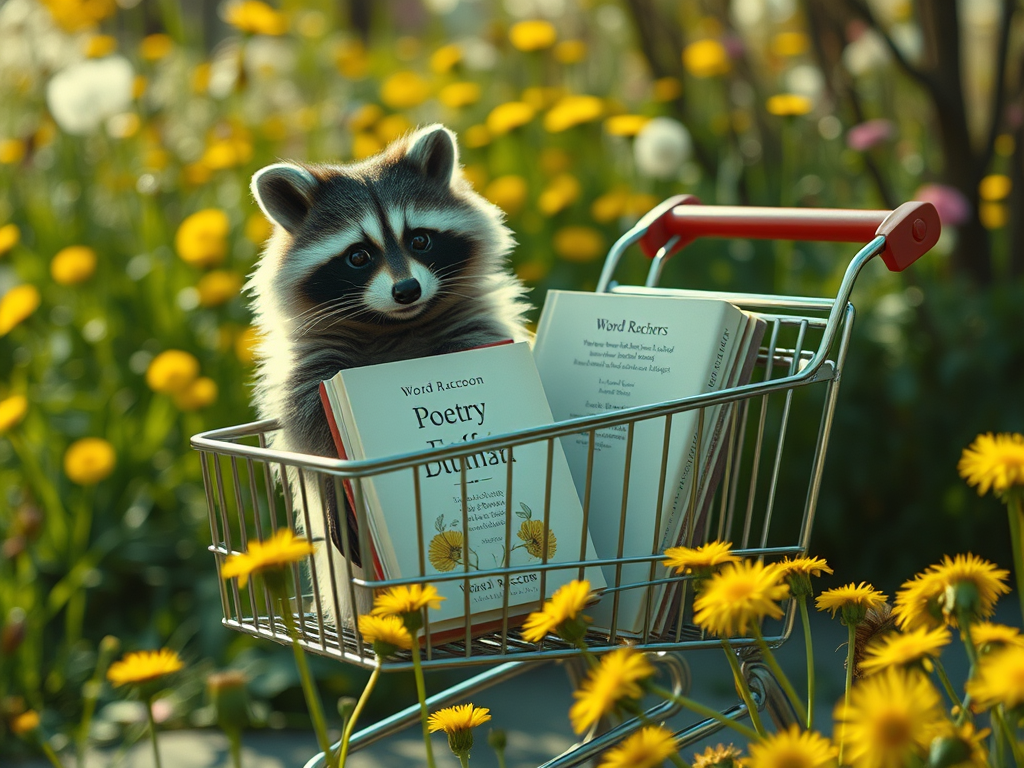
Speaking of cooking, Word Raccoon, that writing scamp, has cooked up a submission strategy. (I KNOW how flimsy my transitions are, but I’ve always got so much to say, LOL. But I equally enjoy listening, so there’s that.)
She is beginning to recognize, at a glance, poems of hers that particular editors might like. She’s building relationships with them and their journals. WR is clapping. She’s a social creature.
When she gets a “We like your voice. Please send more in the future,” she makes a note.
When she gets a kind rejection or an “Oh, so close,” she marks that down, too, and considers that venue a friendly place to revisit.
When she gets a sincere “If only we had the space,” or “It made it all the way to the top of the pile,” she notices.
When she gets noticed in a competition, she follows up with the journal during their regular submission period.
Now she often knows what they’re looking for. She’s starting to recognize when something she’s written matches a journal’s tempo.
That is very different from writing to the market. No, no. She does not do that. She writes what she must, and then she thinks of a good home for it.
Also, there’s this. While I do have a handful of poems I am very protective of, I do not withhold my “better” poems and do not send underdone ones out.
Have I sent out work before it’s polished, not realizing I hadn’t given it enough time?
Sure.
Did I do it on purpose?
Not except for those early days when I didn’t know how to evaluate what I had and was too scared to ask anyone. I figured letting editors decide was one way to find out.
My Writing Mother says something to the effect of: “Notice what a journal is publishing. They say they want something different. They don’t. If you have something similar to what they’ve published, send it to them.”
Gosh, I heart her.
At any rate, I currently have a spate of quiet, tender poems and places I’d love to see them land. They’re not necessarily the biggest, splashiest markets, because that doesn’t matter, but places that will hold these poems gently.
One poem is “Grief Does Nothing for the Dead.” It has an unquiet part in the middle, but so does death. I feel like it’s time for that one to find a resting place.
Today I ran across one I wrote the day my eldest sister’s great-grandchild was born, almost two years after my sister passed. The poem is short and pungent. It has a strange line, but it feels just right to me:
If your finger goes straight through
I’d stop if I were you.
If I try to explain, I will have shared the whole sad, sharp little poem.
The one I mentioned writing yesterday, “Receded,” is about how spring doesn’t always do what it’s meant to. I don’t usually send poems out so quickly, but this one is, I think, I hope, ready.
When I first started writing poetry in earnest, it felt like sending them out was a way of giving away the emotional heat and charge so I didn’t have to carry them alone.
That’s not how it works.
As you gain experience, your ability to hold that charge strengthens.
You learn to shape it. You learn to universalize it. Which is ironic, I know.
It feels like I’m currently sweeping my poetry catalog. Like out with the dead leaves, uncover the tiny shoots and watch them unfurl.
(Have you ever watched videos of plants pushing through the ground, unfurling, life insisting its way into existence? Riveting.)
I want some appropriate spring metaphor for harvesting to compare poetry harvesting to, but it’s not fall, and all I can think of are clichés.
Word Raccoon just popped up onto a chair beside me. She asked if I know that the word cliché originally referred to a metal printing plate that stamped the same words over and over again. So a cliché was literally something repeated mechanically. Which explains a lot, actually.
Here’s my attempt to avoid one.
Have you ever tasted wild-harvested dandelion greens? (See, there’s harvesting in spring, too.)
That’s a fancy way of saying that in the mountains where I grew up you’d go out into the yard, pluck them from wherever they’ve decided to grow, bring them home, and cook them. (No recipe today. Ask me why not.)
But my point: they aren’t planted. No one rows them out neatly. Boom. They just appear.
Poems are like that sometimes.
You don’t always cultivate them like tomatoes in cages. Sometimes they just show up all over the yard of your mind, wildlike.
Word Raccoon, of course, has already grabbed a basket. She’s heading out into the yard now, though I’m pretty sure it’s too early for dandelion greens, WR.
I just hope she remembers to come back inside before dinner.
While I won’t be cooking the greens (for reasons I will leave to your imagination), I will be sending the poems out.
 dremadrudge.com